

The long wait is over.
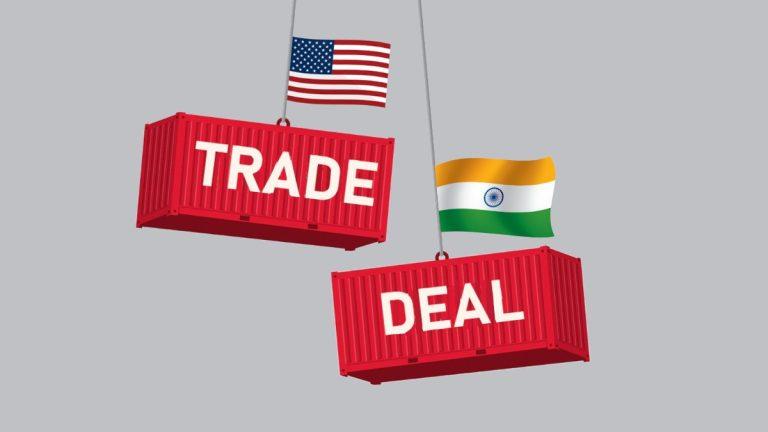
The India–US trade deal explained story is now moving from uncertainty to clarity. After months of tariff tensions, the White House in early February announced a sharp reduction in tariffs on Indian exports.
This marks a clear shift from the aggressive tariff hikes seen in August 2025, when penalties were imposed — including those linked to India’s imports of Russian crude oil.
From a market sentiment perspective, this is not just about trade. It touches exports, oil strategy, GDP growth and India’s global positioning.
Let’s break down what really changes now.
Market Performance: Trade Sentiment Turns Constructive
The easing of trade tensions has improved macro comfort.
Export-linked sectors that were directly affected by the earlier 50% peak tariffs now see relief. A lower tariff framework reduces uncertainty — and markets prefer clarity.
The focus now is on:
- Tariff repositioning versus Asian peers
- Export competitiveness
- Energy sourcing shifts
- GDP growth outlook
This is more than a headline. It’s structural.
What Changed in the India–US Trade Deal?
Here’s what stands out in the revised trade framework:
- Peak tariffs reduced from ~50% to 18%
- Nearly 45% of Indian exports were already exempt from earlier 50% tariffs
- India commits to $500 billion imports from the US over 5 years
- Expected effective tariff rate now around 12–13%
- Section 232 tariffs of ~25% continue on select sectors
- Electronics (40–45% of exports) largely exempt
That’s the backbone of the India–US trade deal explained in numbers.
How India’s Tariff Position Now Compares in Asia?
Earlier, peak tariffs of around 50% put India at a disadvantage.
Now, with tariffs falling to 18%, the gap with Asian peers narrows sharply.
This improves:
- Export visibility
- Relative competitiveness
- Pricing flexibility
Also, India’s real effective exchange rate has weakened about 12% in the past 14 months, cushioning export pressures further.
The tariff reset plus currency movement creates a balanced equation.
India’s Tariffs on US Imports — What Shifted?
India has made concessions.
In 2024:
- India’s effective, trade-weighted tariff on US imports stood at 7.3%
- Agricultural products faced tariffs of around 14.6%
These are expected to fall meaningfully under the revised arrangement.
Result? US exports to India could rise.
Section 232 Tariffs: What Continues?
Not everything is relaxed.
Section 232 tariffs of around 25% remain in place on:
- Automobiles
- Auto components
- Iron
- Steel
- Aluminium
So, while the broad framework softens, selective pressure remains.
India’s Effective Tariff Rate — Where Does It Stand Now?
Based on current structures:
- Reciprocal tariff: 18%
- Combined with existing MFN rates
- Net effective tariff settles around 12–13%
Electronics, which account for 40–45% of India’s exports, are largely exempt.
However, Section 232 tariffs keep the overall rate above 12%.
This is the practical math behind the India–US trade deal explained.
The $500 Billion Import Commitment — Is It Large?
India has committed to importing $500 billion worth of US goods over five years.
That translates to:
- $100 billion per year
Put this in context:
- India’s total import bill: ~$750 billion
- US goods currently: ~6% of imports
On scale, this appears achievable within India’s import basket size.
The composition will matter — especially energy.
Impact on Current Account Deficit (CAD)
Will higher US imports widen India’s deficit?
The situation appears balanced.
Why?
- Higher US imports could replace imports from other countries
- India is reducing Russian oil dependence
As per data:
- India imports ~27% crude from Russia
- Down from 30% in August 2025
Crucially, December 2025 is already estimated to be in surplus on services.
That cushions the current account position.
Oil Equation: Russian Crude and GDP Impact
Energy has been central to trade discussions.
India’s shift away from Russian oil is gradual:
- Current share: 27%
- Previously: 30% (August 2025)
Estimated GDP impact from oil shift:
- Around 3–9 basis points
With global crude prices relatively contained, macro pressure remains limited for now.
Sectors That Stand Out After Tariff Cuts
The tariff reduction is not sector-neutral.
Labour-intensive industries that were directly impacted earlier now regain breathing space.
Key beneficiaries:
- Textiles
- Gems and Jewellery
These sectors were sensitive to the 50% tariff peak and now gain relative competitiveness.
Add currency support, and export sentiment improves further.
FDI Angle: US Investments in Focus
The United States remains a key source of capital.
In 2024:
- Gross FDI inflows: ~$50 billion
- US contribution: ~$5.5 billion
Greater market access and trade alignment could strengthen long-term investment flows.
Technology and supply-chain partnerships may deepen.
Agriculture — Is Opening Inevitable?
This remains a sensitive area.
Currently:
- India imports about $2 billion of agricultural goods from the US
- Exports from India are significantly higher
Imported items include:
- Almonds
- Fruits
- Nuts
- Berries
Potential additions could include:
- Corn
- Soy (for cattle feed or price buffers)
The extent of opening remains watchful.
GDP Growth Outlook: What Shifts Now?
With tariff uncertainty easing, growth expectations gain comfort.
Current GDP projections:
- FY26: 7.6%
- FY27: 6.8%
Upside potential:
- Around 20–50 basis points in FY27, depending on final deal specifics
Reduced uncertainty itself is a growth catalyst.
RBI Policy Implications
With external trade tension moderating:
- Rate cut urgency may reduce
- Liquidity support could continue
- Macro stability remains priority
Trade clarity supports monetary flexibility.
India–US Trade Deal Explained: The Bigger Picture
At its core, this deal resets sentiment.
From 50% tariffs to 18%.
From uncertainty to framework.
From oil tension to measured shift.
Key data recap:
- Peak tariff cut: 50% → 18%
- Effective tariff rate: 12–13%
- Import commitment: $500 billion / 5 years
- US share of India imports: 6%
- Russian crude share: 27% (from 30%)
- GDP outlook: 7.6% (FY26), 6.8% (FY27)
This is not a final agreement. The fine print still matters.
But directionally, the India–US trade deal explained story reflects easing friction and improving balance.
For markets, stability often matters more than perfection.
And right now, stability is back on the table.
Summary
The India–US trade deal explained in simple terms:
- Tariffs reduced significantly
- Export competitiveness improves
- $500 billion US import plan spreads over five years
- Limited current account stress
- Oil dependence slowly realigned
- Growth risks tilt upward
It’s not dramatic. It’s strategic.
And for India’s trade equation, that makes all the difference.
Source: Livemint