

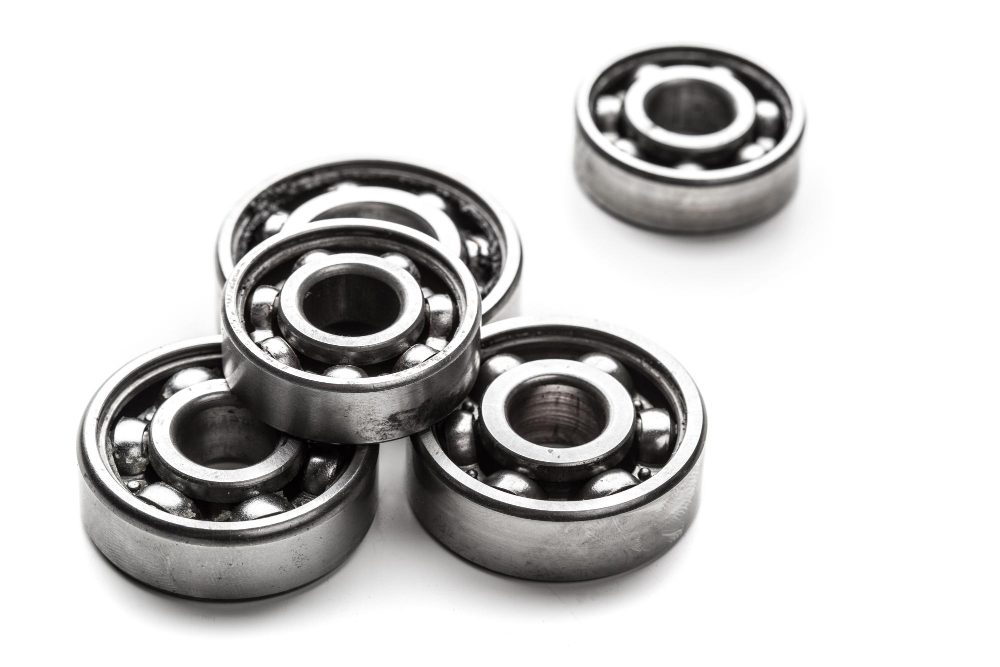
Bearings stocks are shares of companies that manufacture and distribute industrial bearings, ball and roller bearings, and precision engineered components used in machine tools, automobiles, railways, and wind turbines. If you struggle to find quality bearing stocks india investments, this guide shows you the top bearing companies in india with clear financial data and actionable insights. Bearings stocks matter because they drive productivity in capital goods, automotive, aerospace, and renewable sectors. Long-term investors seek the best bearing company in india because these stocks offer durable demand, margin strength from precision engineering, and solid export potential. India's rising industrial growth, automation-led demand, and global competitiveness make bearings stocks an attractive choice for equity investors seeking exposure to manufacturing momentum.
Best Bearings Stocks Comparison Table - February 2026
Company Name | Sector | Latest Price (₹) | Market Cap (₹ Cr) | P/E Ratio | ROE (%) | ROCE (%) | Debt-to-Equity | Dividend Yield (%) |
SKF India Ltd | Bearings | 1708.70 | 8447.46 | 17.28 | 21.43 | 28.93 | 0.00 | 0.85 |
Timken India Ltd | Bearings | 3154.05 | 23724.36 | 55.13 | 17.00 | 21.15 | 0.00 | 1.11 |
SKP Bearing Industries Ltd | Bearings | 161.95 | 268.84 | 90.41 | 5.87 | 11.96 | 0.56 | 0.68 |
Grindwell Norton Ltd | Abrasives | 1677.15 | 18569.40 | 47.73 | 17.37 | 23.16 | 0.00 | 1.01 |
Wendt (India) Ltd | Abrasives | 6824.25 | 1364.85 | 61.07 | 17.32 | 22.67 | 0.00 | 0.73 |
Detailed Analysis of Top Bearings Stocks
SKF India Ltd - Leading Diversified Bearing Manufacturer
Bearings stocks like SKF India offer broad exposure to industrial and automotive segments. SKF India Ltd manufactures precision bearings, seals, and related products for diverse end-markets including machine tools, industrial machinery, railways, and automotive applications. The company benefits from diversified customer base and long-term OEM contracts that provide revenue stability. With a P/E ratio of 17.28 and ROE of 21.43 percent, SKF India demonstrates solid profitability metrics. The company's strong ROCE of 28.93 percent indicates efficient capital deployment. SKF India maintains zero debt, offering financial flexibility for growth investments and dividends. Recent quarters show the company navigating industrial cycles while maintaining margin resilience through product mix optimization. The stock's positioning as global technology leader through licensing agreements provides competitive moat. For investors seeking quality bearing stocks india exposure, SKF India represents a mature, cash-generative business with export credentials. The company's ability to serve both OEM and aftermarket channels reduces revenue concentration risk and supports consistent earnings delivery.
Timken India Ltd - Precision Engineering Excellence
Bearings stocks focused on precision engineering like Timken India attract growth-oriented investors. Timken India Ltd specializes in tapered roller bearings, housed units, and automotive bearings serving automotive OEMs, industrial machinery, and aftermarket segments. The company commands premium valuation with a P/E ratio of 55.13, reflecting investor confidence in growth prospects and technology leadership. With ROE of 17.00 percent and ROCE of 21.15 percent, Timken India demonstrates steady capital efficiency. The company maintains zero debt, ensuring financial stability and reinvestment capacity. Timken India benefits from technology transfer relationships with global parent company, providing product innovation edge. The best bearing company in india often combines domestic strength with global technology, and Timken India exemplifies this approach. Recent performance shows strong order book development in automotive and industrial segments, supporting earnings visibility. Export revenues contribute meaningful proportion to total sales, offering diversification beyond domestic markets. Investors evaluating the best bearing company in india should note Timken's precision focus and premium margin profile. The company's ability to command pricing power reflects product quality and technical superiority in specialized bearing applications.
SKP Bearing Industries Ltd - Value Play in Growing Market
Bearings stocks with attractive valuations like SKP Bearing Industries present opportunities for value investors. SKP Bearing Industries Ltd manufactures ball bearings, roller bearings, and precision components for automotive and industrial applications. Trading at a P/E ratio of 90.41, the stock reflects early-stage valuation dynamics, though investors should note ROE of 5.87 percent and ROCE of 11.96 percent remain below peer levels. The company operates with controlled debt at 0.56x debt-to-equity ratio, preserving balance sheet strength. SKP Bearing represents emerging bearing companies in india building manufacturing footprint and expanding customer base. The company's smaller scale compared to SKF or Timken offers potential for margin expansion as operational efficiency improves. For investors seeking exposure to smaller bearing stocks india players with growth potential, SKP Bearing provides leveraged participation in bearings demand. Recent quarterly results show the company addressing quality certifications and expanding OEM relationships. The key investment consideration lies in monitoring ROE improvement trajectory as scale increases. Dividend yield of 0.68 percent suggests company prioritizes reinvestment for growth. Investors should track order book expansion and customer wins as barometers of future profitability.
Grindwell Norton Ltd - Abrasive Solutions for Industrial Base
Bearings stocks ecosystem includes supporting suppliers like Grindwell Norton, which manufactures abrasive products used in bearing manufacturing and precision machining. Grindwell Norton Ltd produces grinding wheels, coated abrasives, and super-abrasive tools serving automotive, bearing manufacturers, and general industrial customers. The company trades at P/E ratio of 47.73 with ROE of 17.37 percent and ROCE of 23.16 percent, indicating solid profitability metrics. Zero debt capital structure provides financial safety and flexibility. Grindwell Norton's products serve as critical inputs for bearing manufacturers, creating indirect exposure to bearing companies in india growth. The company benefits from rising manufacturing standards and automation trends that increase abrasive consumption. Export revenues form significant portion of sales, offering currency diversification benefits. Recent performance demonstrates resilience through industrial cycles, supported by essential nature of grinding products. Dividend yield of 1.01 percent reflects established dividend policy rewarding patient shareholders. For portfolio managers building exposure to bearings stocks ecosystem, Grindwell Norton offers complementary benefits to pure-play bearing stocks. The company's diversified customer base reduces concentration risk while serving multiple industrial segments beyond just bearings.
Wendt (India) Ltd - Specialized Abrasive Technology
Bearings stocks supply chain includes specialized abrasive manufacturers like Wendt India, supporting precision manufacturing processes. Wendt (India) Ltd produces super-abrasives, grinding tools, and precision equipment serving bearing manufacturers, automotive, and aerospace sectors. The company trades at elevated P/E ratio of 61.07, reflecting premium market position in specialized abrasive segment. ROE of 17.32 percent and ROCE of 22.67 percent demonstrate efficient capital utilization in niche market. Wendt maintains zero debt, ensuring financial strength and capacity for technology investments. The company's focus on high-technology abrasive solutions provides competitive moat difficult for competitors to replicate. Wendt India benefits from rising quality standards in bearing manufacturing and precision engineering. Export revenues contribute significantly to total sales, offering growth visibility beyond domestic market. Recent quarters show strong pricing power and margin sustainability through industrial cycles. Dividend yield of 0.73 percent indicates balanced approach between shareholder returns and growth investment. For investors analyzing bearings stocks from supply chain perspective, Wendt India represents specialized technology player supporting bearing industry productivity improvements. The company's positioning with global bearing manufacturers provides stable demand foundation.
Why Bearings Stocks Matter for Your Portfolio?
The investment case for bearings stocks rests on multiple structural drivers supporting long-term demand growth. Bearings form critical components across diverse industries, creating resilient customer base spanning automotive, industrial machinery, railways, aerospace, and renewable energy. As India's manufacturing sector expands and automation accelerates, bearing demand grows proportionally. The sector combines defensive characteristics through aftermarket demand with cyclical participation in new industrial capex. Precision bearing manufacturers command premium margins, creating value for equity investors. Think of bearings like the heart of industrial machinery—without them, systems cannot function efficiently, making replacement demand steady and predictable.
Industrial manufacturing expansion drives structural demand for bearing stocks india. Rising manufacturing PMI and capacity additions in capital goods sectors support equipment sales that incorporate bearings. Government initiatives promoting domestic manufacturing and infrastructure development create favorable backdrop for bearing consumption. Export opportunities have expanded as Indian bearing manufacturers gain global competitiveness in quality and cost. The China-plus-one manufacturing shift benefits Indian bearings stocks by attracting global OEM business. Companies with strong export credentials enjoy higher growth visibility and earnings stability from diversified revenue sources.
Automation and precision engineering trends strengthen demand for specialized high-performance bearings. Rising quality standards in automotive and industrial applications require advanced bearing solutions commanding premium pricing. Technology-driven bearing manufacturers differentiate products through superior performance characteristics and specialized applications. This trend supports margin expansion for innovation-focused companies. Companies investing in R&D and maintaining technology partnerships with global leaders emerge as winners. The best bearing company in india typically combines manufacturing excellence with technical innovation, allowing premium valuation multiples.
Renewable energy sector expansion creates new demand streams for bearing stocks. Wind turbines require specialized large-diameter bearings manufactured by only handful of global suppliers. India's renewable energy targets ensure sustained demand for wind turbine components. Solar manufacturing expansion also incorporates bearing components in tracking systems and manufacturing equipment. This emerging segment offers growth upside for bearing manufacturers expanding specialty product portfolios. Companies winning renewable energy orders benefit from higher volumes and better margins.
Long-term OEM contracts with automotive and industrial companies create earnings stability for bearings stocks. Original equipment manufacturers source bearings through formal supplier agreements spanning multiple years, ensuring predictable revenue streams. This contrasts with spot market exposure, reducing earnings volatility. Companies maintaining strong OEM relationships enjoy competitive moats protecting market position. Supplier diversification risk remains low for OEMs, benefiting long-term contract holders. The balance of OEM and aftermarket revenues matters significantly—pure-play OEM suppliers face demand cyclicality, while diversified models show greater stability.
Top Growth Drivers for Bearings Stocks in 2026
Manufacturing sector growth represents primary catalyst for bearings stocks expansion. India's manufacturing PMI recovery, capacity additions in automotive and capital goods sectors, and government support for domestic production create favorable environment. Companies reporting improved order books and expanding capacity utilization benefit from higher volumes. Revenue growth acceleration follows capacity expansion with lag, creating visibility for future earnings growth. Investors should monitor quarterly order books and sales growth trends as leading indicators of future performance.
Automotive sector momentum sustains bearing demand across OEM and aftermarket channels. Both internal combustion engine and electric vehicle production incorporate bearing components, ensuring demand regardless of powertrain transition. Aftermarket demand grows as vehicle parc expands, creating recurring revenue stream. Automotive OEM capacity additions in India support bearing manufacturers winning supply orders. Rising vehicle exports create additional demand for Indian bearing companies supplying global automotive plants. Companies diversifying across ICE and EV powertrains reduce transition risk while capturing full market opportunity.
Infrastructure development including highways, railways, and metro construction creates industrial machinery demand incorporating bearings. Government capex on infrastructure supports machine tool and equipment sales. Railway freight corridor expansions require specialized bearings for rolling stock and rail machinery. Metro rail projects across Indian cities drive demand for transportation equipment incorporating bearings. Investors tracking infrastructure project announcements gain early insights into future bearing demand cycles.
Export competitiveness improvement positions Indian bearing manufacturers for global market share gains. Quality improvements, cost competitiveness, and technology partnerships enable Indian bearings stocks to compete globally. Global supply chain diversification trends favor Indian manufacturers as alternatives to traditional suppliers. Companies reporting rising export volumes and improving export realization indicate successful market penetration. Export growth rates typically exceed domestic growth, offering higher earnings expansion potential.
Technological innovation and specialized bearing development support margin improvement for bearings stocks. Companies developing products for specific applications command premium pricing over commodity bearings. Innovation investments in materials, designs, and manufacturing processes create competitive advantages. Technology licensing partnerships with global bearing companies provide access to cutting-edge solutions. Companies emphasizing R&D spending and patent filings demonstrate commitment to sustained competitiveness. Product mix improvement toward higher-value bearings directly translates to margin expansion and earnings growth.
How to Evaluate Bearings Stocks Like an Experienced Investor?
Revenue growth consistency reveals bearing company operational health and market position strength. Analyze multi-year revenue CAGR, comparing each company against sector average. Companies maintaining 10-15 percent annual growth rates demonstrate strong market demand and competitive positioning. Examine revenue breakdown by customer segments and geographies to understand growth drivers. Cyclical vs. stable revenue ratio matters—companies with balanced OEM and aftermarket revenue show greater stability. Check quarterly revenue trends to identify seasonal patterns and underlying momentum. Compare revenue per employee as efficiency metric. Higher revenue per employee indicates better operational leverage. Companies showing improving revenue per employee while maintaining quality deliver superior returns.
Profitability metrics separate quality bearing stocks india from mediocre performers. Compare EBITDA margins across peer companies—precision bearing manufacturers typically maintain 12-18 percent EBITDA margins. Net profit margins of 8-12 percent indicate healthy profitability after tax and interest. Companies improving margins quarter-over-quarter demonstrate operational excellence or positive pricing dynamics. Analyze gross margins by product segment to identify high-margin product mix. Companies with expanding gross margins show pricing power and cost control. Monitor cash conversion ratios—quality companies convert earnings into cash flow reliably. Companies reporting high cash conversion suggest earnings quality and sustainable profit levels.
Return on equity and return on capital employed assess management's capital deployment efficiency. ROE exceeding 15 percent indicates good shareholder value creation. ROCE above 20 percent demonstrates capital productivity superior to cost of capital. Companies improving ROE and ROCE year-over-year show strengthening business fundamentals. Compare company returns against cost of capital—spread above cost indicates value creation. Track return trends across cycles to identify whether returns remain stable or deteriorate during downturns. Quality bearings stocks maintain high returns through business cycles, reflecting durable competitive advantages.
Balance sheet strength determines company resilience and flexibility during stress periods. Debt-to-equity ratios below 1.0 indicate conservative capital structures providing safety margins. Zero debt companies like SKF and Timken offer maximum financial flexibility. Examine interest coverage ratios to confirm debt servicing capability. Companies with interest coverage above 5.0 times carry minimal debt distress risk. Monitor cash balances and working capital positions. Companies maintaining cash reserves and positive cash conversion cycles enjoy operational independence. Analyze free cash flow generation—sustainable dividends require reliable cash generation after capex and working capital investments.
Order book analysis reveals forward earnings visibility for bearings stocks. Growing order books indicate secured future revenues reducing earnings uncertainty. Order book-to-revenue ratios above 0.5x years suggest 6+ months of forward revenue visibility. Monitor order book growth rates—double-digit order book growth supports revenue acceleration. Customer concentration matters—companies with diversified customer bases show lower vulnerability to single customer loss. Track customer wins in new segments as indicators of market share gains. Long-term supply agreements with OEMs provide superior revenue stability compared to spot orders.
Export revenue proportion indicates market diversification and growth potential for bearing stocks india. Companies with 30+ percent export revenue enjoy geographic diversification reducing home market cyclicality. Higher export revenue typically carries premium margins reflecting quality and technology positioning. Monitor export growth rates separately—export growth exceeding domestic growth indicates successful global market penetration. Track foreign exchange exposure and hedging policies to understand currency risk management. Companies increasing exports into developed markets demonstrate product competitiveness at global quality standards.
Valuation multiples provide context for entry timing and value assessment. Compare P/E ratios against historical average and peer companies—expensive multiples offer lower margin of safety. PEG ratios incorporating growth rates offer better value perspective than P/E alone. Price-to-book multiples reflect tangible asset backing and intangible value creation. Companies trading below book value may offer value, but check ROE to understand valuation drivers. Compare enterprise value-to-sales multiples across peers to identify relative valuation. Track dividend yield relative to cost of capital—higher dividend yields offer income component with growth participation. Use relative valuations rather than absolute numbers to identify attractive bearings stocks candidates.
Key Risks Affecting Bearings Stocks Performance
Cyclical demand risk remains inherent to bearings stocks due to capital goods cyclicality. Industrial capex cycles drive machinery and equipment demand incorporating bearings. Economic slowdowns reduce capex spending, negatively impacting bearing volumes. Companies with high OEM exposure face sharper demand fluctuations during downturns. Aftermarket demand provides cushion against cyclical swings through replacement needs. Investors should monitor manufacturing PMI, capex intentions surveys, and order book trends as leading cyclical indicators. Diversified companies with stable aftermarket revenue bases weather cycles better than pure OEM suppliers.
Raw material price volatility impacts bearing manufacturer profitability significantly. Steel and specialty alloy prices affect input costs directly. Rising commodity prices compress margins unless manufacturers achieve price increases with customers. Companies with commodity hedging programs manage risk better than unhedged competitors. Examine gross margin trends—expanding margins despite rising input prices indicate pricing power. Contracting margins during commodity inflation suggest competitive weakness. Long-term supplier contracts with price escalation clauses protect margin floors. Monitor raw material cost trends and company hedging disclosures to assess margin risk.
Global trade slowdowns reduce export demand for bearings stocks heavily dependent on overseas markets. Protectionist trade policies and tariffs impact export competitiveness. Global recession reduces machinery and equipment orders, affecting bearing demand. Companies with concentrated exports to single geographies face higher trade policy risk. Diversified export markets reduce vulnerability to localized trade disruptions. Monitor global manufacturing trends and trade policy developments as external risks. Companies adjusting export destinations in response to trade changes demonstrate flexibility.
Technological disruption could emerge from new bearing designs or materials reducing demand for traditional products. Composite materials or alternative bearing technologies might displace conventional bearings. Companies not investing adequately in R&D face competitive obsolescence risk. Track company patent filings and R&D spending trends to assess innovation commitment. Partnerships with global technology leaders provide innovation access and reduce obsolescence risk. Companies developing next-generation bearing products ahead of market changes enjoy first-mover advantages.
Currency risk affects companies with significant export revenues. Rupee appreciation reduces export competitiveness and foreign earnings value. Rupee depreciation benefits exporters but increases import costs for imported components. Companies managing currency exposure through hedging strategies reduce earnings volatility. Monitor forex exposure and hedging ratios in financial statements. Companies with natural hedges through local sourcing reduce currency vulnerability. Currency movements create timing considerations for investing in bearings stocks.
Competitive pricing pressure from global imports and domestic competitors threatens margin sustainability. Chinese bearing manufacturers offer lower costs threatening price-sensitive segments. Consolidation among bearing manufacturers globally could increase competitive intensity. Companies competing on cost alone face squeeze from low-cost competitors. Differentiation through technology, quality, and specialization provides protection against price competition. Monitor market share trends and competitive win rates as indicators of competitive position. Companies maintaining stable market shares despite competition demonstrate competitive strength.
Frequently Asked Questions About Bearings Stocks
What are bearings stocks and why should investors consider them?
Bearings stocks represent shares of companies manufacturing and distributing bearings and precision engineered components used across industries. Investors consider bearings stocks because they offer exposure to India's manufacturing growth, provide durable demand across economic cycles through aftermarket requirements, and benefit from automation trends driving precision engineering demand. The sector combines stability through recurring maintenance demand with growth potential from industrial expansion and export opportunities.
Which are the best bearing stocks in India to invest in 2026?
Top bearing stocks include SKF India Ltd offering diversified industrial and automotive exposure, Timken India Ltd providing precision engineering excellence with technology advantage, and SKP Bearing Industries Ltd representing emerging growth player. Each offers different risk-return profiles—SKF and Timken suit conservative investors seeking established players, while SKP Bearing appeals to growth investors seeking valuation leverage. Grindwell Norton and Wendt India provide indirect bearing companies in india exposure through abrasive product supply into bearing manufacturing.
How do I evaluate bearing companies in India before investing?
Evaluate bearing companies in india using revenue growth consistency, profitability metrics (EBITDA and net margins), return ratios (ROE above 15 percent, ROCE above 20 percent), balance sheet strength (debt-to-equity below 1.0), order book growth indicating forward visibility, export revenue diversity, and valuation multiples relative to peers. Compare companies across these metrics to identify standout opportunities. Monitor quarterly results for earnings quality, cash conversion, and management guidance confirming growth trajectory.
Do bearings stocks provide good dividend income?
Dividend yields for quality bearings stocks typically range 0.70-1.10 percent, modest compared to high-yield sectors but respectable for growing companies. Mature companies like SKF India and Timken India maintain established dividend policies rewarding shareholders. Dividend growth potential exists as companies expand earnings—total returns combine dividend yield with capital appreciation. Growing dividends over time offer inflation protection. Investors seeking pure dividend income better pursue dedicated dividend-paying sectors, while bearings stocks appeal to growth investors accepting moderate income for capital appreciation potential.
Are bearings stocks defensive or cyclical in nature?
Bearings stocks exhibit mixed characteristics—both defensive and cyclical. Aftermarket demand for bearing replacements and maintenance provides defensive element through recurring replacement cycles. OEM demand for new equipment incorporates cyclical component tied to industrial capex cycles. Diversified bearing manufacturers balancing OEM and aftermarket revenue show greater stability than pure OEM suppliers. During economic slowdowns, aftermarket demand declines slower than OEM demand, providing relative resilience. Companies with global diversification and multiple end-market exposure weather cycles better than concentrated players.
Conclusion
Bearings stocks offer compelling exposure to India's industrial manufacturing growth, combining durable aftermarket demand with cyclical capex participation. The sector benefits from automation trends, export competitiveness improvement, and renewable energy expansion creating diverse growth avenues. SKF India and Timken India represent quality large-cap choices with technology moats and proven profitability, while SKP Bearing Industries offers emerging growth potential at attractive valuations. Grindwell Norton and Wendt India provide complementary ecosystem exposure through abrasive product supply supporting bearing manufacturing precision requirements. Successful bearings stocks investment requires disciplined financial analysis comparing revenue growth, profitability metrics, return ratios, and balance sheet strength across peers, combined with understanding macroeconomic drivers supporting bearing demand cycles. Begin your investment journey by opening a trading account to access real-time stock data, screening tools, and research capabilities enabling comprehensive analysis of bearing company fundamentals before committing capital.




 Easy & quick
Leave A Comment?