

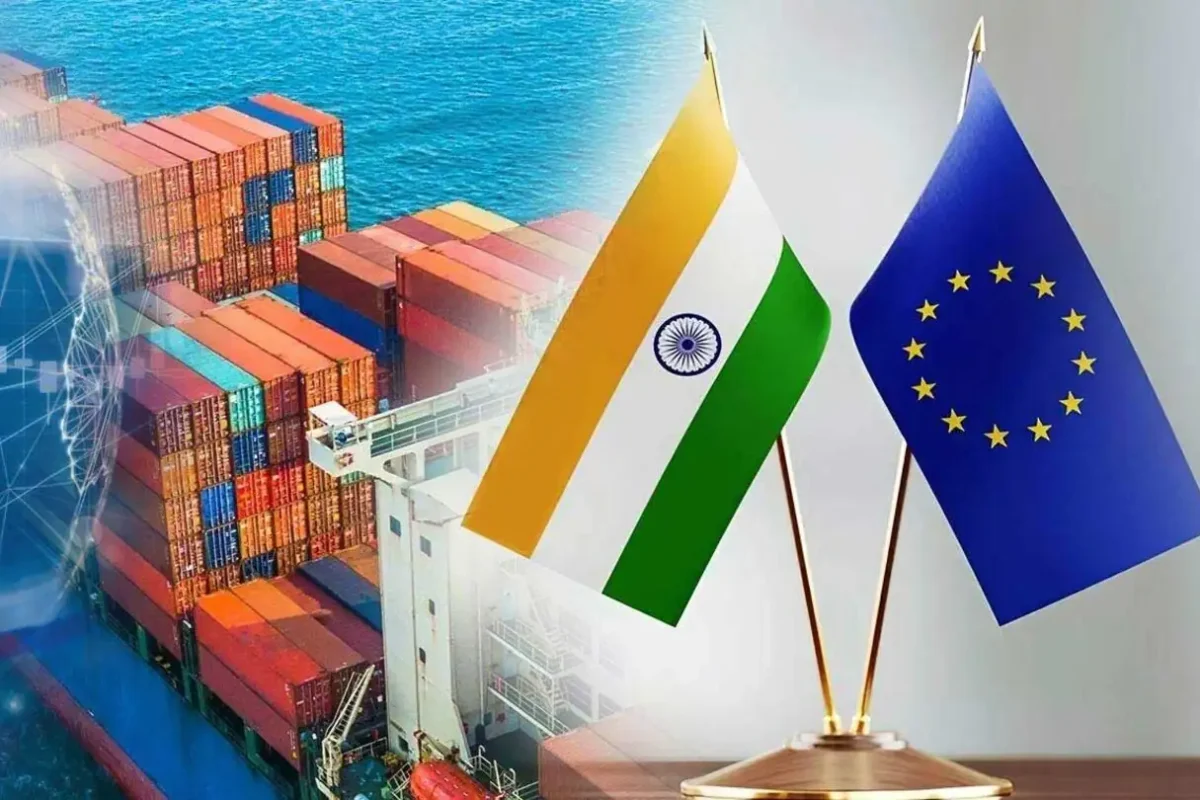
The India-EU trade deal is back in focus as Indian stock markets reopen after the Republic Day break. Global cues are uneasy. Trade tensions are rising again. And investors are scanning for anything that offers balance in an uncertain world.
Last week ended on a cautious note. Domestic equities slipped under pressure. Foreign money continued to move out. Geopolitical risks stayed high. Budget 2026 was around the corner. Corporate earnings for the December quarter were mixed. Together, they shaped a fragile mood.
But amid all this noise, one theme stood out clearly — the growing relevance of the India-EU trade deal.
Market Performance: Why Sentiment Turned Cautious?
Friday’s sell-off wasn’t driven by one single trigger. It was a slow build of multiple worries coming together.
Key factors weighing on the market included:
- Persistent FII outflows
- Rising global geopolitical tensions
- Caution ahead of Union Budget 2026
- Mixed December quarter earnings
- Renewed fears around global trade disruptions
This wasn’t just a local reaction. Global capital flows were shifting. Trade uncertainty was back in headlines. And risk appetite softened across markets.
Main News: India-EU Trade Deal Gains Urgency
At the center of attention is the 16th India-EU Summit, currently underway, with European leaders in India. The long-discussed India-EU Free Trade Agreement (FTA) is once again part of serious conversations.
The timing matters.
Global trade is becoming more fragmented. Protectionist signals are resurfacing elsewhere. In that backdrop, progress on the India-EU trade deal is being seen as a potential stabilising force.
The deal aims to:
- Strengthen bilateral trade ties
- Improve access to European markets
- Support supply-chain diversification
- Deepen India’s role in global value chains
For investors, the narrative is simple. When global trade faces stress, diversified partnerships matter more.
Why the India-EU Trade Deal Matters Now?
The renewed focus didn’t come in isolation. It followed fresh concerns over US trade policy.
US President Donald Trump’s recent tariff threats unsettled global markets. He floated the idea of a 10% tariff on European countries, triggering fears of another trade confrontation.
Markets reacted fast.
- Risk appetite weakened
- Trade uncertainty resurfaced
- Investors reassessed global exposure
In this environment, stronger India-EU economic engagement is being viewed as a buffer — not a growth fantasy, but a practical layer of insulation.
Bond Markets Signal a Shift in Risk
The ripple effects weren’t limited to equities.
Global bond and currency markets showed clear signs of shifting sentiment earlier in the week.
What stood out:
- US Treasury bond prices fell
- Bond yields moved higher
- US dollar weakened against several major currencies, including the Swiss franc
While markets steadied later, the message was clear. Capital can move fast when uncertainty rises.
In typical risk-off phases:
- Bonds attract flows
- Safe-haven currencies gain strength
- Emerging markets face pressure
This dynamic was visible again, reinforcing why global trade signals now influence bonds just as much as stocks.
Company & Economy Link: Where India Fits In?
For India, this environment creates a delicate balance.
On one side:
- Strong long-term growth narrative
- Expanding domestic economy
On the other:
- Sensitivity to global capital flows
- Pressure during risk-off phases
- Currency volatility affecting returns
That’s why the India-EU trade deal carries weight beyond trade numbers. It is about positioning India within a shifting global supply network, especially when tariffs and protectionism dominate headlines elsewhere.
Summary: What Investors Are Watching Closely?
As markets reopen, attention is split between global risk and local signals.
Key takeaways:
- Global trade tensions are influencing equity, bond, and currency markets
- The India-EU trade deal has gained strategic importance at the right time
- Progress on the FTA could help balance external shocks
- Bond market moves highlight shifting global risk appetite
- Investors are entering the week with caution, not complacency
In a market shaped by uncertainty, direction often comes from policy, not price charts. Right now, the India-EU trade deal sits at that crossroads — closely watched, quietly critical, and deeply relevant to how India navigates the next phase of global trade realignment.
Source: Livemint



 Easy & quick
Leave A Comment?