

India’s growth outlook is facing fresh pressure.
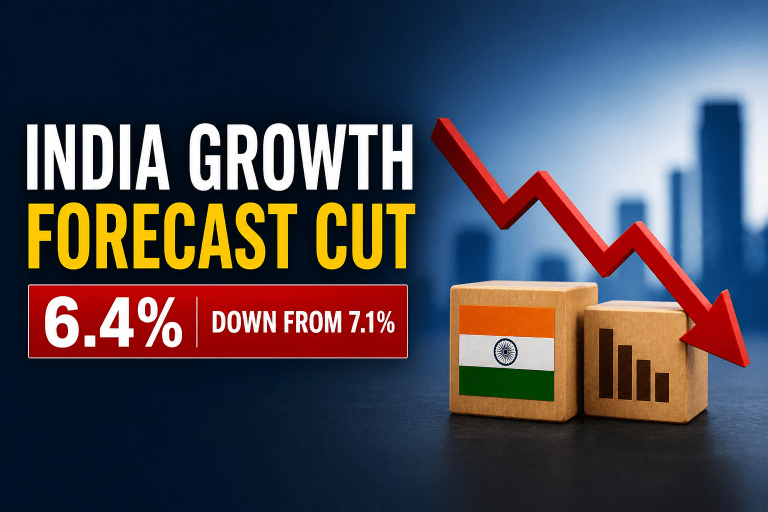
Standard Chartered Bank has downgraded India’s GDP forecast to 6.4% from 7.1%, highlighting rising risks from oil prices, global tensions, and domestic demand slowdown.
But what does this mean for the stock market, economy, and investors?
Let’s break it down.
Quick Summary
Standard Chartered cut India’s FY27 growth forecast to 6.4% due to high crude oil prices (~$90/barrel), weak consumption, and global uncertainties, signaling potential pressure on markets and inflation.
Why Was India’s Growth Forecast Cut?
1. Rising Crude Oil Prices (Biggest Risk)
- Forecast assumes oil at ~$90/barrel
- Higher oil prices increase:
- Inflation
- Import bill
- Corporate costs
Since India imports most of its oil, this directly hits growth.
2. Global Geopolitical Tensions
- Ongoing Middle East conflict is disrupting:
- Supply chains
- Energy markets
Prolonged conflict = prolonged economic pressure
3. Early Signs of Slowdown
High-frequency indicators already show weakness:
- Lower project announcements
- Reduced consumption (especially fuel)
- Rising input costs for companies
4. Weak Monsoon Risk
- Poor rainfall can:
- Increase food inflation
- Reduce rural demand
Dual hit: lower growth + higher inflation
Impact on Stock Market
Short-Term: Volatility Likely
- Growth downgrade → negative sentiment
- FII flows may turn cautious
Markets may react with:
- Profit booking
- Sectoral corrections
Sector-Wise Impact
Under Pressure
- Oil-sensitive sectors (aviation, paints, logistics)
- Consumption stocks (FMCG, auto)
Mixed Impact
- Banking (depends on credit demand & inflation)
Relatively Stable
- Energy companies (benefit from higher prices)
- Export-oriented sectors
Impact on Economy
Growth vs Inflation Trade-off
- Slower GDP growth → weaker demand
- Higher oil prices → higher inflation
This creates a stagflation-like risk scenario
External Sector Pressure
Higher oil prices can:
- Widen current account deficit
- Put pressure on INR
- Increase fiscal burden
What About RBI Policy?
- RBI may face a dilemma:
- Control inflation (rate hike)
- Support growth (rate pause/cut)
If inflation rises sharply → rate hikes possible
Big Picture for Investors
What This Signals
- Economy still growing, but slower
- External risks (oil, geopolitics) dominating
What to Watch
- Oil price trajectory
- Monsoon outcome
- Inflation trend
Final Takeaway
The downgrade to 6.4% is not a crisis—but a caution signal.
Key insight:
- India’s growth remains strong globally
- But external shocks (oil + geopolitics) are becoming major risks
For investors, this is a phase to:
- Stay diversified
- Avoid overexposure to cyclical sectors
- Focus on fundamentally strong companies
Frequently Asked Questions
Why did Standard Chartered cut India’s growth forecast?
Due to high crude oil prices, global tensions, and weak consumption indicators.
Is 6.4% growth bad for India?
No, it is still strong globally, but lower than expectations.
Will this impact stock market?
Yes, it may cause short-term volatility and sectoral shifts.
Disclaimer
This content is for informational purposes only and does not constitute investment advice. Please consult a SEBI-registered financial advisor before making investment decisions. Investments in securities markets are subject to market risks.