


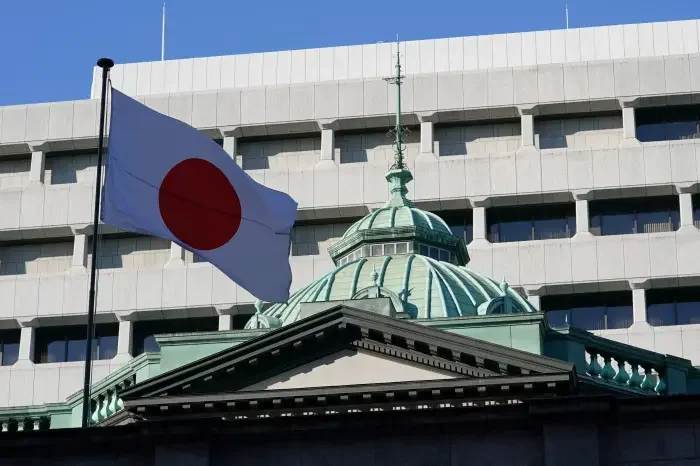
After years of ultra-loose money and near-zero borrowing costs, Japan has crossed a historic line. The Bank of Japan (BOJ) has raised its key policy rate to 0.75%, marking the highest Bank of Japan interest rate since 1995.
This move was widely anticipated. Still, when it finally arrived, it sent a clear message: Japan’s long era of emergency-level monetary support is steadily coming to an end.
From currency moves to bond yields and Asian equity markets, the impact of this BOJ rate hike was felt immediately.
Market Performance: Yen Softens, Bonds React, Asia Stays Firm
Markets responded quickly once the Bank of Japan's interest rate decision was announced.
- The 10-year Japanese government bond yield rose 3.5 basis points, touching 2%, a level last seen in May 2006
- The yen weakened shortly after the announcement
- Asian equity markets largely held onto gains
Key regional market moves:
- Japan’s Nikkei index climbed 1.3%
- South Korea gained 0.8%
- Taiwan’s benchmark index advanced 1.3%
- MSCI Asia-Pacific (ex-Japan) rose 0.7%
- Chinese blue-chip stocks added 0.6%
Despite the historic nature of the BOJ interest rate hike, risk sentiment across Asia remained stable, supported by global cues.
Main News: Bank of Japan Raises Interest Rate to 0.75%
The Bank of Japan increased its overnight call rate to 0.75%, up from 0.5%, following a two-day policy meeting. The decision was passed unanimously, underscoring strong internal alignment within the central bank.
This is a landmark moment for Japan’s monetary policy. For decades, Japan operated under:
- Near-zero interest rates
- Aggressive bond-buying programs
- Heavy monetary stimulus to fight deflation
The latest BOJ rate move signals that the central bank is now more confident about Japan’s economic and inflation backdrop.
Why This BOJ Interest Rate Decision Matters
Raising the Bank of Japan interest rate to a 30-year high is not just a routine policy adjustment. It reflects a deeper shift in how the central bank views inflation and growth.
Recent inflation data showed:
- Japan’s core CPI rose 3.0% year-on-year in November
- Inflation remained unchanged from the previous month
With prices holding above historical norms, the BOJ appears comfortable continuing its slow exit from ultra-easy policy.
Bond Market Reaction: Yields Touch Multi-Year High
Japan’s bond market reacted swiftly to the BOJ interest rate hike.
- The benchmark 10-year JGB yield moved up to 2%
- This level had not been seen in nearly 18 years
Higher yields reflect expectations that:
- Policy normalization is continuing
- The era of deeply negative real rates is fading
Still, even after this hike, real interest rates in Japan remain negative, keeping financial conditions accommodative by global standards.
Currency Movement: Yen Weakens After Rate Hike
In the immediate aftermath of the Bank of Japan interest rate announcement, the yen weakened.
This reaction reflected:
- The hike is largely priced in
- Market focus shifting to future policy signals rather than the hike itself
The currency move showed that traders were already looking ahead, waiting for more clarity on how far and how fast the BOJ interest rate could rise.
Company & Institutional Details: BOJ Leadership in Focus
The rate decision was taken under the leadership of BOJ Governor Kazuo Ueda, who is scheduled to explain the policy move in a formal media briefing later in the day.
The focus remains firmly on:
- How the BOJ views inflation persistence
- The pace of further normalization
- The long-term neutral level for Japan's interest rates
While no forward commitments were made, the decision itself keeps the door open for gradual tightening.
Summary: What the BOJ Rate Hike Signals for Japan
The Bank of Japan's interest rate hike to 0.75% marks a defining moment in Japan’s monetary history.
Key takeaways:
- BOJ rate now at the highest level since 1995
- Decision passed unanimously
- Bond yields touched 2%, last seen in 2006
- Yen softened, equities stayed resilient
- Inflation remains at 3.0%, supporting policy normalization
This move reinforces a clear shift: Japan is slowly, carefully stepping away from decades of ultra-easy money, reshaping how markets view the world’s last holdout of near-zero rates.




 Easy & quick
Leave A Comment?