

Introduction
Ever wondered why the stock market reacts sharply when the RBI changes interest rates or when inflation numbers surge? Why does the Nifty 50 jump or crash even when your favourite companies appear fundamentally strong? The answer lies in the powerful relationship between macroeconomic indicators and market sentiment.
The Nifty 50 index, India’s most widely followed benchmark on the NSE, reflects the performance of the country’s largest and most influential companies. These companies operate within an economic framework shaped by interest rates, inflation, and GDP growth. When these economic levers move, the Nifty 50 responds—sometimes subtly, sometimes dramatically.
This article breaks down, in simple, practical terms, how each of these macroeconomic forces affects the Nifty 50, how different sectors respond, and how traders and long-term investors can use this knowledge on platforms like the Samco App to make more informed decisions.
Understanding the Nifty 50 Index
The Nifty 50 index comprises the top 50 companies listed on the NSE, representing major sectors of India’s economy—banking and financial services, IT, energy, FMCG, automobiles, metals, pharmaceuticals, and more. It serves as a real-time barometer of India’s economic health and investor confidence.
Because these companies account for a significant share of India’s GDP and market capitalisation, the Nifty 50 often reflects broader economic trends. When the economy expands, corporate earnings strengthen, leading to a rise in the index. Conversely, when economic uncertainty rises—whether due to high inflation, rising interest rates, or weak GDP growth—Nifty 50 companies typically face margin pressure, demand slowdown, and valuation corrections.
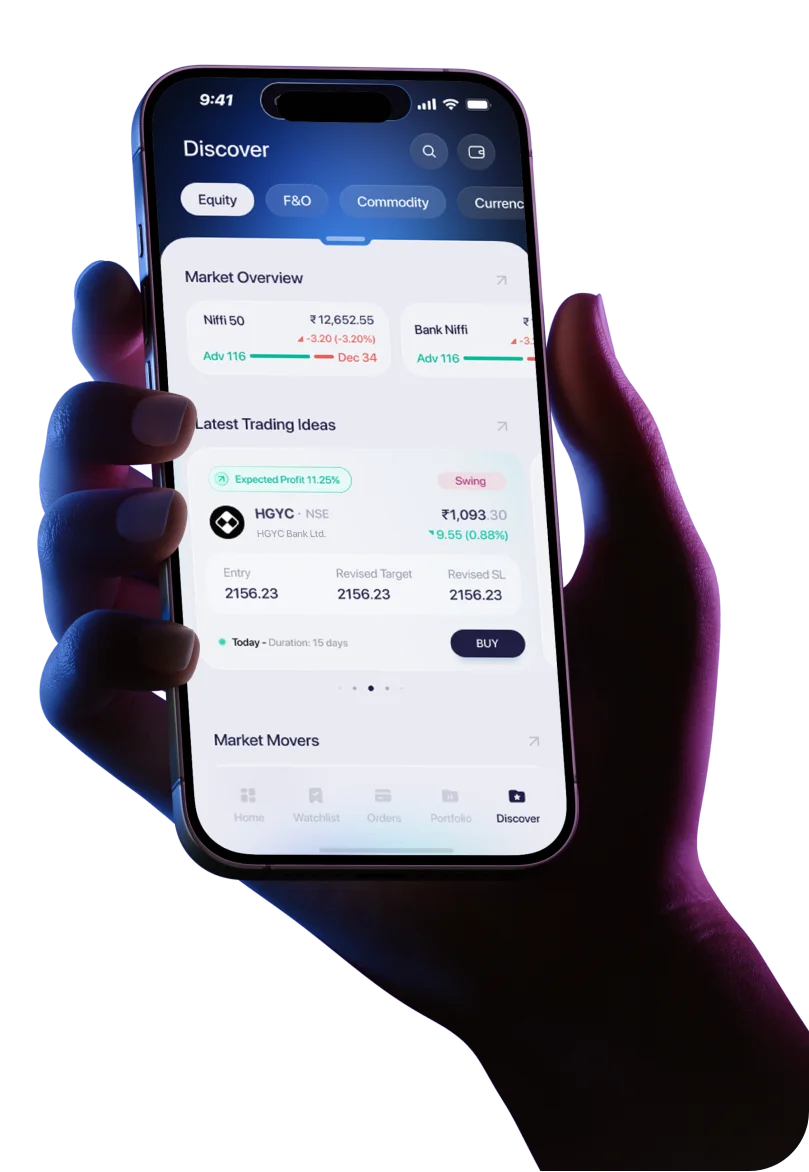
For traders and investors, platforms like SAMCO and the Samco App make it easy to track Nifty 50 movements, analyse sector trends, and trade the index or its constituent stocks.
How Interest Rates Impact the Nifty 50
Interest rates, set by the RBI through the repo rate, influence borrowing costs across the economy. When the RBI hikes rates, loans become costlier for individuals and businesses. And when rates fall, borrowing becomes cheaper, encouraging consumption and investment.
- Higher Interest Rates = Higher Borrowing Costs
Rate hikes increase the cost of capital for Nifty 50 companies. Corporations spend more on interest payments, shrinking profit margins and lowering net profits. This often leads to downward pressure on stock prices and, in turn, the Nifty 50 index.
- Impact on Consumer Demand
Costlier EMIs reduce spending on autos, homes, appliances, and consumer durables. With demand falling, companies report slower revenue growth, which is affecting valuations and the Nifty’s movement.
- Shift in Investor Sentiment
When fixed-income returns rise, investors may shift money from equities to safer debt instruments. This can trigger short-term corrections in the Nifty 50.
- Real-World Example
During the 2022 rate-hike cycle, the Nifty experienced multiple corrections as the RBI raised the repo rate aggressively to curb inflation. Rate-sensitive sectors such as real estate, autos, and banking were among the most affected.
- Sectoral Impact
- Most Impacted: Banking, NBFCs, real estate, auto
- Potential Beneficiaries: PSU banks and insurers (higher interest spread environment)
The Samco App allows investors to track interest-rate-sensitive sectors and monitor live RBI policy updates, helping them make data-backed allocation decisions.
How Inflation Influences the Nifty 50
Inflation measures the rate at which the general prices of goods and services rise. Moderate inflation is normal, even healthy. But high inflation can destabilise economic activity.
- Higher Inflation = Lower Purchasing Power
When inflation rises, consumers reduce spending on discretionary items, leading to slower revenue growth for Nifty 50 companies, especially in retail, auto, and consumer durables.
- Margin Pressure on Corporations
High input costs (crude oil, metals, commodities) shrink profit margins. Companies either raise prices—risking lower demand—or absorb costs, hurting profitability.
- Market Sentiment During High Inflation
If inflation remains consistently above RBI’s comfort zone, markets anticipate future rate hikes, which leads to volatility or correction in the Nifty.
- Real-World Example
During periods when crude oil surged sharply, inflation jumped, leading to weaker corporate earnings and temporary Nifty corrections.
- Sectoral Impact
- Beneficiaries: Energy, commodities, select FMCG (pricing power)
- Negatively Impacted: Autos, consumer durables, aviation, retail
Using the Samco App, traders can analyse inflation-sensitive stocks and track commodity trends, helping them prepare for inflation-driven market shifts.
The Role of GDP Growth in Driving the Nifty 50
GDP is a direct measure of the total value of goods and services produced in the country. Higher GDP means the economy is expanding, businesses are earning more, jobs are being created, and consumer sentiment is strong.
- Strong GDP Growth = Bullish Nifty
When GDP grows at a healthy pace, corporate earnings rise across sectors. Investors anticipate higher profitability, leading to bullish sentiment in the Nifty 50.
- Weak GDP Growth = Market Uncertainty
Slower GDP growth leads to muted earnings, lower investments, and cautious consumption—causing Nifty underperformance.
- Data Example
Historically, during years of strong GDP growth (7%+), the Nifty 50 has delivered strong double-digit returns. In contrast, periods of weak GDP growth or contraction resulted in muted or negative returns.
- Key Sectors Impacted
- Positively impacted when GDP rises: Banking, IT, infrastructure, capital goods
- Most exposed during slowdown: Metals, real estate, autos
With the Samco App, investors can track GDP announcements, analyze sectoral earnings, and adjust portfolios accordingly.
Interrelation Between Interest Rates, Inflation, and GDP
These three macroeconomic pillars are deeply interconnected:
- High inflation often forces the RBI to raise interest rates
- Higher interest rates slow borrowing, investment, and spending
- Slower spending reduces corporate earnings, lowering GDP growth
- Weak GDP growth usually results in subdued stock market performance
Alternatively:
- Low inflation allows moderate interest rates
- Moderate rates encourage consumption and investment
- Higher consumption boosts earnings, driving GDP growth
- Strong GDP growth usually supports a bullish Nifty 50
Understanding this flow helps traders anticipate market cycles—especially when using macro-tracking tools available on SAMCO.
Impact on Sectoral Performance and Nifty Composition
Different sectors within the Nifty 50 respond differently to economic cycles.
- Cyclical Sectors
Move with the economy:
- Banks
- Autos
- Metals
- Infrastructure
- Real estate
These outperform during strong GDP growth and low-interest environments.
- Defensive Sectors
Stable even during slowdowns:
- FMCG
- Pharma
- IT
These shine when inflation rises or GDP growth slows.
- Sector Rotation
As macro trends change, investors rotate into sectors that benefit from the prevailing environment. For example:
- High inflation → FMCG outperforms
- Strong GDP growth → Banks & infra rally
- Rate hikes → IT and FMCG turn defensive
Samco’s research reports help investors identify these rotations early and adjust their portfolios.
How Traders and Investors Can Use This Knowledge
Understanding macroeconomics is not just for economists—it’s a powerful tool for every market participant.
Here’s how to use it:
- Track RBI Announcements
Policy decisions affect interest rates and, indirectly, Nifty performance.
- Monitor Inflation Trends
Commodity cycles, crude oil prices, and supply chain issues move inflation. Use Samco’s dashboards to track these inputs.
- Understand the Economic Cycle
Position portfolios based on whether the economy is in an expansion, slowdown, or recovery phase.
- Use Samco App Tools
Samco’s stock screeners, sector heatmaps, and economic alerts help traders instantly connect macro trends with actionable opportunities.
- Build Diversified Portfolios
Avoid overexposure to rate-sensitive or inflation-sensitive sectors. Diversification smooths volatility.
FAQs
- What happens to Nifty when RBI raises interest rates?
Nifty often corrects because borrowing becomes costlier, demand slows, and corporate profits weaken. - Does high GDP always mean Nifty will rise?
Generally yes, because higher GDP boosts earnings, but global events can still create volatility. - How does inflation affect long-term investors?
High inflation reduces purchasing power and corporate margins, but investing in sectors with pricing power can hedge inflation. - Which sectors perform best during rising interest rates?
Banks, insurers, and PSU financials often benefit from higher interest spreads.
Conclusion
The Nifty 50 doesn’t move in isolation; it responds dynamically to changes in interest rates, inflation, and GDP growth. By understanding how these macroeconomic forces influence corporate earnings, sector performance, and investor sentiment, individuals can navigate the stock market more confidently and tactically.
Staying updated with these indicators—paired with powerful tools on the Samco App—helps traders and long-term investors make smarter, data-driven decisions. In a world where markets react instantly, informed investing is not just an advantage — it’s a necessity.