


PSU Bank Stocks Under Pressure Amid Multiple Macro Risks
Public Sector Bank (PSU) stocks witnessed a sharp selloff on 9 March 2026, as several macroeconomic and sector-specific risks hit the banking sector simultaneously. The Nifty PSU Bank index dropped significantly, reflecting investor concerns about rising crude oil prices, increasing bond yields, and tightening liquidity conditions in the financial system.
The sudden decline highlights how global geopolitical tensions and domestic financial conditions can quickly affect banking-sector sentiment.
Oil Shock From Middle East Conflict Triggers Market Concerns
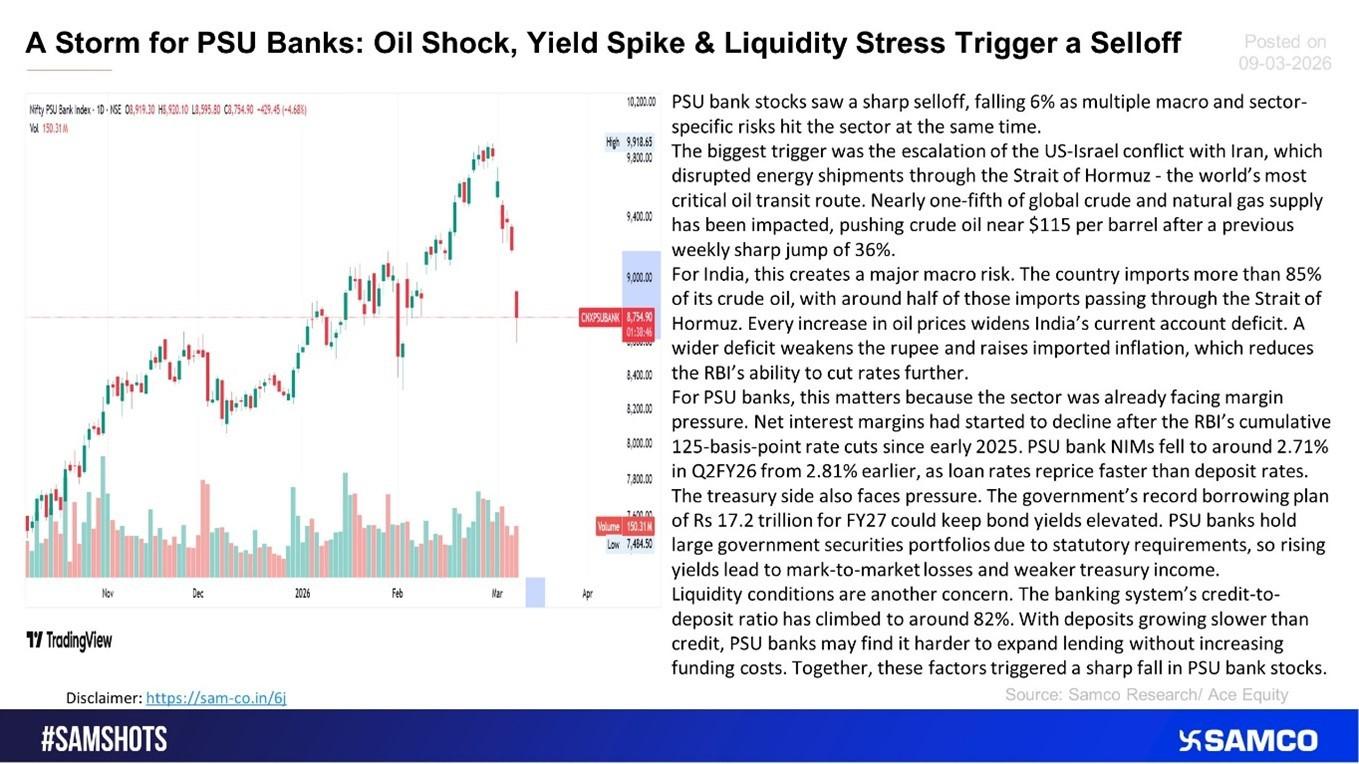
One of the biggest triggers behind the selloff was the escalation of the US–Israel conflict with Iran, which disrupted energy shipments through the Strait of Hormuz, the world’s most critical oil transit route.
Nearly 20% of global crude oil and natural gas supply passes through this channel, and any disruption has an immediate impact on energy markets.
As a result, crude oil prices surged close to $115 per barrel, following a sharp 36% jump during the previous week.
Why Rising Oil Prices Are a Major Risk for India?
For India, elevated crude oil prices pose significant macroeconomic challenges because the country imports more than 85% of its crude oil requirements.
Around half of India’s crude imports pass through the Strait of Hormuz, making the economy particularly vulnerable to geopolitical disruptions in the region.
Higher crude oil prices can:
- Widen India’s current account deficit (CAD)
- Put pressure on the Indian rupee
- Increase imported inflation
- Reduce the RBI’s ability to cut interest rates
These factors can weigh heavily on financial markets and banking sector profitability.
Declining Net Interest Margins Add Pressure on PSU Banks
PSU banks were already facing margin compression before the recent market selloff.
Following the Reserve Bank of India’s cumulative 125-basis-point rate cuts since early 2025, net interest margins (NIMs) across PSU banks began to decline.
According to sector estimates:
- PSU bank NIMs fell to around 2.71% in Q2 FY26
- Previously, margins were around 2.81%
This decline occurred because loan rates reprice faster than deposit rates, putting additional pressure on banking profitability.
Rising Bond Yields Impact Treasury Income
Another challenge for PSU banks is the government’s record borrowing plan of ₹17.2 trillion for FY27, which may keep bond yields elevated.
PSU banks typically hold large portfolios of government securities due to statutory liquidity ratio (SLR) requirements.
When bond yields rise:
- Bond prices fall
- Banks incur mark-to-market (MTM) losses
- Treasury income weakens
This creates another layer of pressure on PSU bank earnings.
Liquidity Stress Emerging in the Banking System
Liquidity conditions in the banking sector are also tightening.
The credit-to-deposit ratio in the banking system has climbed to around 82%, indicating that loan growth is outpacing deposit growth.
This imbalance can lead to several challenges:
- Higher funding costs for banks
- Difficulty in expanding lending
- Pressure on profitability and balance sheets
If deposit growth continues to lag behind credit demand, PSU banks may face structural liquidity constraints.
Market Outlook for PSU Bank Stocks
The recent selloff in PSU bank stocks reflects a combination of global and domestic risks, including:
- Rising crude oil prices
- Geopolitical tensions in the Middle East
- Declining bank margins
- Higher bond yields
- Tightening liquidity conditions
Unless these pressures ease, PSU bank stocks may remain volatile in the near term.
Investors should closely track oil prices, bond yields, RBI policy signals, and liquidity trends to assess the sector’s future outlook.





 Easy & quick
Leave A Comment?