


What is a Dividend?
When you buy the equity shares of a company, you become a part-owner of the business. As a shareholder who has invested in the company, you are entitled to a share in the profits it generates.
A dividend is the portion of profits that a company distributes to you as a reward. It gives you a direct financial benefit linked to the firm’s success without having to sell your underlying holdings. The dividend you receive is always proportionate to the number of shares you own in the company. The greater the shares, the more dividends you are entitled to.
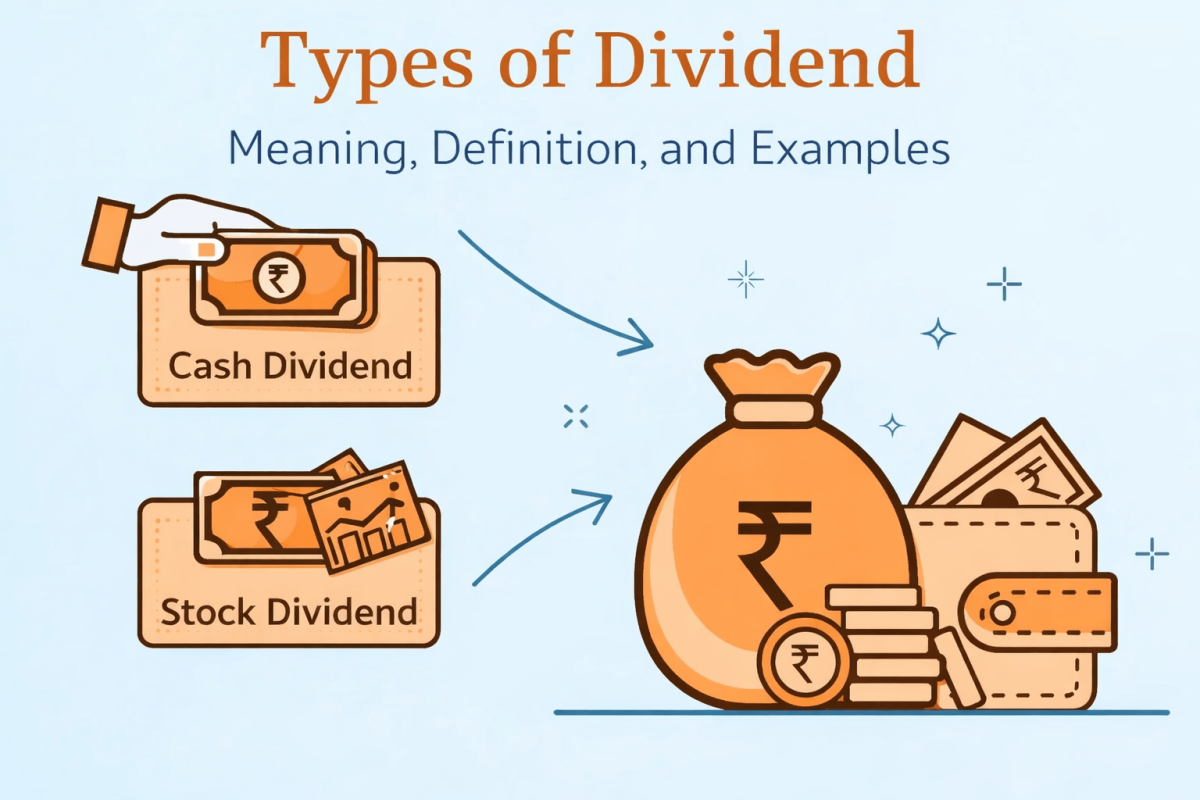
A key part of understanding what a dividend is involves the distinction between cash and non-cash distributions. While most dividends given to shareholders are in the form of cash, a company might sometimes choose to give non-cash dividends. In the case of a non-cash distribution, the company could either issue bonus shares or other assets, depending on the dividend policy in place.
Why Do Companies Pay Dividends?
There are several reasons why a company might choose to pay dividends to its shareholders. Some of the key reasons are explained below.
Reward Shareholders
Shareholders provide the capital that fuels business operations and take on the risks of ownership. A periodic dividend payout acts as a tangible reward for the loyalty and financial commitment of the shareholders.
Signal Financial Stability
Consistent dividend payments suggest that a business is healthy and is generating reliable cash flow. It also indicates that the leadership feels positive about future earnings and sustainability.
Share Excess Profits
If a company has more profits than it needs for research or expansion, it may choose to distribute dividends to its shareholders. This prevents the hoarding of capital that might otherwise sit idle.
Build Investor Trust
Regularly receiving dividend income fosters a strong bond between the shareholders and the company. It proves that the directors prioritise investors’ interests and are committed to maintaining them.
Why Dividends Matter to Investors
Dividend payouts are very important to investors, especially those who have a long-term investment horizon.
Regular Income Generation
A steady dividend provides you with predictable cash flow without requiring the sale of your shares. This is particularly beneficial if you seek a reliable stream of dividend income to cover your expenses or act as a secondary source of income.
Stability During Volatile Markets
With share prices fluctuating wildly, a consistent dividend payout provides a sense of security and reduces the overall risk within your investment portfolio.
Long-Term Wealth Compounding
Dividends can help accelerate long-term wealth compounding, especially if you use them to purchase more shares. Reinvestment of dividends allows you to benefit from the mathematical power of compounding.
Dividend-Focused Investing Mindset
A dividend-focused investing mindset shifts focus toward fundamental business health and long-term sustainability rather than chasing short-term market trends or speculative gains. It encourages you to prioritise investing in high-quality companies with a robust dividend policy.
Types of Dividend
If you intend to invest in a company, familiarising yourself with the different types of dividends allows you to better predict how a business will share its success with you.
Cash Dividend
Cash dividends are the most popular way for investors to receive a dividend payout. The company transfers money directly to the linked bank accounts of investors or via cheques. As an investor, you get a tangible return on your investment that you can either spend or reinvest elsewhere as you see fit.
Interim Dividend
An interim dividend is announced and paid before a financial year concludes. It usually follows the release of quarterly or half-yearly results. The payout is made from the partial profits that the company has generated up until the point of distribution.
Final Dividend
A final dividend is declared at the end of a financial year. Unlike other types of dividends, this payment requires the formal approval of shareholders at the annual general meeting. It is paid out from the total profits made during that specific financial year.
Special Dividend
Companies may sometimes distribute a special dividend when they experience an exceptional event, such as the sale of a business unit or record-breaking profits. These are non-recurring payments that are usually not mentioned in the dividend policy. It is generally given out to shareholders when the business has surplus cash it cannot use.
Bonus Dividend
Instead of cash, a company might issue bonus shares to its investors for free. The shares are often issued based on the existing holdings. Bonus dividends are a sign of internal strength and are often funded using a company’s free reserves or retained earnings of previous years. Bonus share issues do not affect the total value of a shareholder’s investment.
Stock Dividend
A stock dividend is very similar to a bonus dividend, as it also involves issuing additional shares rather than cash. The only difference between the two is the way they are funded. Stock dividends are often funded using the current year’s profits. Furthermore, stock dividends may have a dilutive effect on the share price.
Comparison: Different Types of Dividends at a Glance
Here is a table that quickly compares the different types of dividends across four key particulars.
Particulars | Cash Dividend | Interim Dividend | Final Dividend | Special Dividend | Bonus Dividend | Stock Dividend |
Payment Method | Cash payment | Cash payment | Cash payment | Cash payment | Additional shares | Additional shares |
Frequency | Regular | Once or more than once during the financial year | Once at the end of a financial year | Occasional or one-time | Irregular | Irregular |
Investor Benefit | Immediate liquidity and cash flow | Faster access to profits | Yearly income | Significant one-time gain | Increased share count without cost | Increased share count without cost |
Common Usage | Stable, mature companies | Companies with strong mid-year profits | Companies with year-end profits | Companies with asset sales or huge profits | Companies that wish to convert profit reserves to share capital | Growth firms that want to preserve cash |
Dividend Yield vs. Dividend Amount
The dividend amount and the dividend yield are two metrics you must look into when analysing a company.
The dividend income is the absolute total cash you receive per equity share. Meanwhile, the dividend yield is the percentage of the company’s current share price that you get as a dividend.
A high dividend yield might seem attractive, but it can often be misleading. This is especially true if the stock price has plummeted due to business distress.
Therefore, it is important to prioritise the sustainability of the dividend policy over a superficially attractive yield percentage.
Risks and Limitations of Dividends
While dividends are often a sign of corporate strength, it is never a certainty. Here are some key risks associated with them.
Dividend Cuts
A company can reduce or stop a dividend payout at any time if its financial health declines. Such a move often causes the share price to drop.
Profit Dependency
Dividend distributions rely entirely on the ability of the firm to generate a surplus. If earnings fall, the business might struggle to maintain its existing dividend policy.
Market Conditions
During economic downturns, companies often choose to retain cash to survive. This frequently leads to a suspension of dividend payouts to ensure the business remains solvent.
Regulatory or Business Changes
New taxes or industry laws can make a dividend more expensive for a firm to pay. Such shifts might force a change in how they share profits.
How Investors Should Look at Dividends
To make the most of your investment journey, you must view a dividend as a tool for strategy rather than just a bonus.
Focus on Consistency Over Size
A massive one-time dividend payout is often less valuable than a smaller, steady one. Seek companies that have a long history of making reliable and uninterrupted payments.
Understand the Company’s Dividend Payout Policy
Review how much of the net profit a firm distributes. A sustainable dividend policy ensures the business retains enough capital to fund its future growth and operations.
Align Dividends With Financial Goals
Choose stocks based on whether you need immediate dividend income or long-term growth. Your selection should match your personal timeline and your specific tolerance for risk.
Conclusion
Understanding dividends and their various types is essential to building a more resilient and predictable portfolio. While it can provide you with an alternative income source, you must remember that it is only one component of your total returns alongside capital appreciation. By making informed choices today, you can ensure that your long-term investment strategy remains both profitable and sustainable.
FAQs
What is a dividend in simple words?
A dividend is a portion of a company's earnings that is shared with its investors as a reward for owning its shares.
How many types of dividends are there?
There are as many as six different types of dividends, which include cash, interim, final, special, bonus, and stock dividends.
Is dividend income guaranteed?
No. Dividend income is not guaranteed. A company can adjust its dividend policy and reduce or stop payments at any time based on its financial performance.
Which type of dividend is best for investors?
The best type of dividend varies from investor to investor, depending on their needs. Cash provides immediate funds, while bonus shares can increase your long-term holding value.




 Easy & quick
Leave A Comment?