

Market Performance Overview
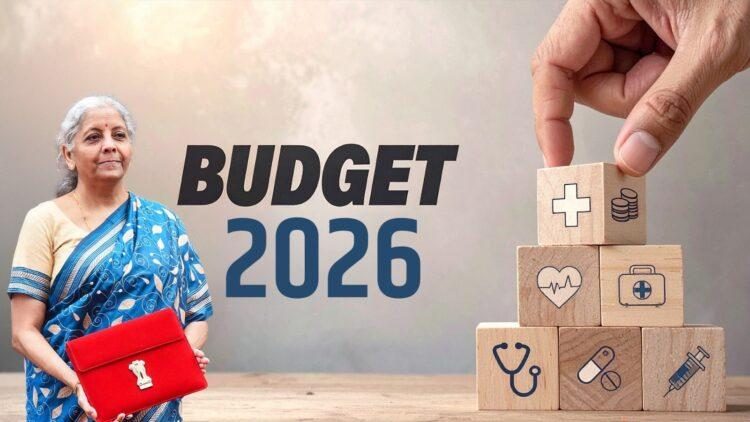
The Union Budget 2026 was presented with a clear focus on maintaining economic momentum while maintaining fiscal discipline. The budget continues the government’s approach of supporting growth through infrastructure spending, gradual fiscal consolidation, and targeted policy measures.
Instead of headline-grabbing shifts, Budget 2026 builds on existing themes, offering continuity and clarity across sectors that influence long-term market sentiment.
Union Budget 2026: Key Announcements That Matter
Government Capex Increased to ₹12.2 Lakh Crore
Capital expenditure once again stood at the centre of the budget narrative.
The government proposed capital spending of ₹12.2 lakh crore for FY27, up from ₹11.2 lakh crore in FY26. This reflects a sustained push toward infrastructure-led development.
Over the years, public capex has risen steadily, and Budget 2026 reinforces that direction without sharp deviations.
Fiscal Deficit Remains on a Controlled Path
Fiscal consolidation continues gradually in Budget 2026.
Fiscal deficit (FY26 RE): 4.4% of GDP
Fiscal deficit (FY27 BE): 4.3% of GDP
The debt position also shows marginal improvement.
Debt-to-GDP (FY26 RE): 56.1%
Debt-to-GDP (FY27 BE): 55.6%
The numbers indicate a measured balance between growth spending and fiscal prudence.
Government Borrowing Numbers for FY27
Borrowing plans were outlined with clarity.
Net market borrowings: ₹11.7 lakh crore
Gross market borrowings: ₹17.2 lakh crore
The remaining funding is expected to come from small savings and other sources, offering visibility to debt markets.
Seven New High-Speed Rail Corridors Announced
Infrastructure expansion extended beyond roads and conventional railways.
The budget proposed seven high-speed rail corridors, aimed at improving inter-city passenger travel:
Mumbai – Pune
Pune – Hyderabad
Hyderabad – Bengaluru
Hyderabad – Chennai
Chennai – Bengaluru
Delhi – Varanasi
Varanasi – Siliguri
The focus remains on faster and environmentally sustainable mobility.
Steps to Strengthen the Corporate Bond Market
Budget 2026 introduced measures to support deeper participation in the bond market.
Key initiatives include:
A market-making framework for corporate bonds
Access to funds and derivatives linked to corporate bond indices
Incentives for large municipal bond issuances
Continued support for smaller cities under existing schemes
These steps aim to improve liquidity and participation in debt markets.
High-Level Committee on Banking for ‘Viksit Bharat’
A new committee will be formed to review the banking sector.
Its objective is to:
Review the overall banking system
Align banking reforms with India’s next growth phase
Ensure financial stability, inclusion, and consumer protection
This signals continued attention to banks' role in economic development.
NRI Investment Limits Increased
Budget 2026 revised investment limits for non-resident individuals.
Individual NRI investment limit: Raised from 5% to 10%
Overall investment limit: Increased from 10% to 24%
The change provides higher participation flexibility within the existing investment framework.
Securities Transaction Tax (STT) Increased
The budget proposed a hike in STT for derivatives trading.
Futures STT: Increased to 0.05% from 0.02%
Options STT:
On premium: 0.15%
On exercise: 0.15%
These changes directly impact futures and options transactions.
Push for Medical Tourism Through Regional Medical Hubs
Healthcare infrastructure received targeted attention.
The government proposed supporting states to establish five regional medical hubs in partnership with the private sector.
These hubs will include:
Integrated healthcare facilities
Medical education and research centres
AYUSH facilities
Diagnostics, rehabilitation, and post-care infrastructure
The initiative aims to strengthen India’s medical tourism ecosystem.
₹1.4 Lakh Crore Finance Commission Grants to States
The budget accepted the Finance Commission's 41% vertical share of devolution.
Total grants to states for FY27: ₹1.4 lakh crore
These grants include allocations for rural and urban local bodies and disaster management.
Tax Holiday for Cloud Service Providers
To support digital infrastructure, the budget announced a long-term tax incentive.
Tax holiday valid till: 2047
Applicable to foreign companies providing cloud services
Services must be delivered using data centres located in India
This supports the development of India’s data and cloud ecosystem.
Income Tax Update in Budget 2026
The Finance Minister announced that the Income Tax Act, 2025, will come into effect from 1 April 2026.
Simplified tax rules and forms will be notified separately, allowing taxpayers adequate time to understand the changes.
Sector-Level Impact Snapshot
Budget 2026 touches multiple sectors without direct company-level announcements:
Infrastructure and capital goods
Railways and logistics
Banking and financial services
Capital markets and derivatives
Healthcare and medical tourism
Data centres and cloud services
Summary: What Union Budget 2026 Signals
Union Budget 2026 stays focused on continuity rather than disruption.
The key themes remain clear:
Rising capital expenditure
Gradual fiscal consolidation
Infrastructure-driven growth
Structural support for financial markets
Long-term focus on healthcare and digital infrastructure
For markets, Budget 2026 delivers stability, visibility, and a clear policy direction—designed to play out steadily over time.
Source: Livemint




 Easy & quick
Leave A Comment?