The PE ratio is one of the most widely used valuation tools in the stock market. Yet, it is also one of the most misunderstood. Many investors look at a stock with a low PE and assume it is cheap. Others see a high PE and conclude the stock is overvalued. Both interpretations can be wrong if the context is ignored.
To use the PE ratio effectively, you must understand what it actually represents, how it behaves across industries and market cycles, and how it fits into real investment and trading decisions. This guide goes beyond basic definitions and turns the PE ratio into a practical valuation framework for Indian investors.
What is PE Ratio?
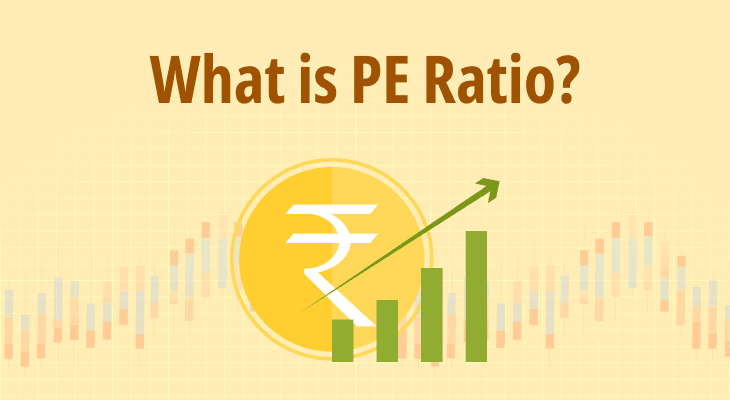
The Price to Earnings Ratio (PE Ratio) tells you how much investors are willing to pay for every ₹1 of a company’s earnings.
In simple terms:
A PE of 10 means the market is paying ₹10 for every ₹1 of profit.
A PE of 30 means investors are paying ₹30 for the same ₹1 of earnings.
From an investor’s perspective, PE reflects expectations.
A higher PE usually indicates expectations of strong future growth, stability, or superior business quality. A lower PE may signal slower growth, business risk, or market pessimism.
PE can be interpreted in two ways:
Absolute PE: Is the stock expensive or cheap on its own history?
Comparative PE: How does the stock compare with peers or the broader market?
Understanding both is essential before making any valuation-based decision.
PE Ratio Formula Explained Clearly
The PE Ratio Formula is:
PE Ratio = Market Price per Share / Earnings per Share (EPS)
Where:
Market Price is the current stock price.
Earnings Per Share (EPS) is the company’s profit divided by total outstanding shares.
Example:
If a stock is trading at ₹400 and its EPS is ₹20:
PE = 400 ÷ 20 = 20
This means investors are paying ₹20 for every ₹1 of the company’s earnings.
Important Insight:
PE can change in two ways:
Price moves while earnings remain constant – driven by sentiment or re-rating.
Earnings change while price stays stable – reflecting business performance.
A rising PE due to strong earnings growth is healthier than a rising PE driven purely by price speculation.
Types of PE Ratio
Understanding different types of PE is critical for correct application.
Trailing PE
Based on past 12 months’ actual earnings.
Most commonly quoted.
Useful for understanding how the stock is valued based on proven performance.
Forward PE
Uses expected future earnings.
Reflects market expectations.
More relevant during growth phases but depends heavily on earnings estimates.
Absolute PE
Evaluates a stock’s PE compared to its own historical range.
Useful for identifying whether a stock is expensive or cheap relative to itself.
Relative PE
Compares a stock’s PE with peers, sector averages, or market benchmarks.
Best used when selecting stocks within the same industry.
Which PE works best?
Stable markets: Trailing and Absolute PE
Growth phases: Forward and Relative PE
PE Ratio Interpretation: How to Read PE Correctly
High PE vs Low PE
High PE: Often indicates strong growth expectations, brand strength, or industry leadership.
Low PE: May reflect undervaluation — or underlying business weakness.
Growth vs Value
Growth stocks trade at higher PEs due to future earnings potential.
Value stocks trade at lower PEs, often due to slower growth or temporary challenges.
Cyclical vs Defensive Sectors
Cyclical stocks may show low PE at earnings peaks and high PE during downturns.
Defensive sectors often maintain steady PE multiples due to earnings stability.
Earnings Quality Matters
Not all earnings are equal. One-time profits, asset sales, or accounting adjustments can artificially reduce PE. Always assess whether earnings are sustainable.
Key Truth:
A low PE does not automatically mean undervalued. It may represent:
Structural business decline
Industry headwinds
Poor capital allocation
Similarly, a high PE is not always expensive if supported by strong growth visibility.
PE Ratio by Industry
PE ratios differ widely across industries because of variations in growth rates, business stability, and capital intensity.
Banking & Financials
Typically trade at moderate PE levels.
Earnings are cyclical and sensitive to interest rates and credit cycles.
Lower PE does not always mean cheap if asset quality is deteriorating.
FMCG
Usually commands high PE.
Stable cash flows, strong brands, and predictable demand justify premium valuation.
IT
Valuations depend on global demand, currency movements, and growth outlook.
High-growth IT firms trade at higher PE, while mature players have lower multiples.
Capital-Intensive Sectors (Infrastructure, Metals)
Often have low PE due to cyclicality, high debt, and volatile profits.
PE must be evaluated alongside balance sheet strength.
Key Takeaway:
Always compare PE within the same industry. Cross-industry PE comparison can lead to misleading conclusions.
NIFTY PE Analysis: What It Indicates About the Market
NIFTY PE represents the valuation of the broader Indian equity market.
Historically:
Low NIFTY PE zones appear during periods of fear, pessimism, or economic slowdown.
High NIFTY PE zones occur during optimism, strong liquidity, and growth expectations.
What High NIFTY PE Signals
Markets are pricing in strong future earnings growth.
Valuations may be stretched.
Returns from fresh investments could moderate.
What Low NIFTY PE Signals
Negative sentiment dominates.
Risk perception is elevated.
Long-term investors may find better entry points.
NIFTY PE does not predict exact market tops or bottoms, but it helps investors understand valuation comfort.
How Investors Can Use NIFTY PE in Decision-Making
For Long-Term Investors
Use NIFTY PE as a valuation backdrop.
High PE: Focus on quality, stagger investments.
Low PE: Increase allocation gradually.
This helps avoid investing aggressively at euphoric levels.
For Medium-Term Investors
Compare sector PEs with NIFTY PE.
Identify sectors trading at a discount during early recovery phases.
For Short-Term Traders
NIFTY PE is not a timing tool.
However, extreme valuation zones often coincide with high volatility, affecting risk management.
In essence, NIFTY PE provides market context, not entry signals.
How PE Ratio Fits into Real Investment Strategies
PE should never be used in isolation. It becomes powerful when combined with:
Earnings growth
Return on capital
Debt levels
Industry outlook
Market valuation
For example, a stock with a PE of 25 may be expensive in a low-growth industry but reasonable in a sector delivering 20–25% earnings growth.
When evaluating stocks for long-term investing, PE ratio should be analysed along with earnings growth, industry benchmarks, and market valuation levels.
This approach ensures that PE acts as a valuation filter, not a stock selection shortcut.
Limitations of PE Ratio
To use PE responsibly, understand what it does not capture:
- Ignores Debt
Two companies with the same PE can have vastly different debt levels. High leverage increases risk but is invisible in PE.
- Depends on Accounting Earnings
Accounting policies, depreciation methods, and exceptional items can distort earnings and therefore PE.
- One-Time Profits Can Mislead
Asset sales or tax benefits can inflate earnings temporarily, making the stock appear cheap.
- Not Suitable as a Standalone Metric
PE does not measure:
Cash flow strength
Competitive advantage
Management quality
Balance sheet resilience
Used alone, PE can lead to value traps.
Conclusion
The PE ratio is not just a formula. It is a reflection of market expectations, business quality, and investor psychology. When interpreted correctly, it helps investors:
Avoid overpaying during market optimism
Identify undervaluation during pessimism
Compare stocks meaningfully within the same industry
NIFTY PE adds another layer by showing whether the broader market is expensive or reasonably valued, guiding allocation decisions across market cycles.
But remember: PE is a starting point, not a decision tool.
Its real power lies in context — growth, industry structure, earnings quality, and market conditions.
Invest with discipline, interpret valuations thoughtfully, and let PE guide your analysis — not replace it.