


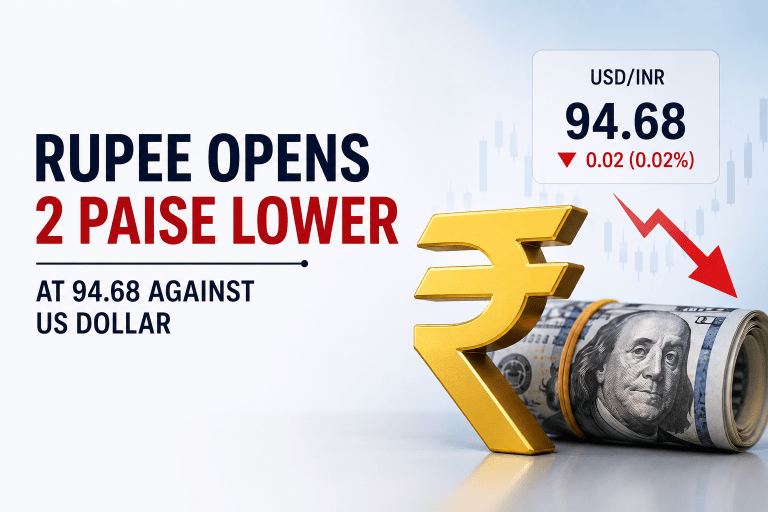
The Indian rupee opened 2 paise lower at 94.68 against the US dollar on Wednesday, reflecting pressure from a stronger US dollar, rising US Treasury yields, and weakness across several Asian currencies. Despite the decline, the rupee has continued to trade within a relatively narrow range over the past few weeks, supported by market expectations of intervention by the Reserve Bank of India (RBI).
Key Highlights
- Rupee opened at 94.68 per US dollar, down by 2 paise.
- Higher US Treasury yields strengthened the US dollar.
- Weakness in Asian currencies weighed on the rupee.
- RBI intervention is believed to have limited sharper depreciation.
- Progress in the proposed India-US trade agreement remains a positive long-term factor.
Why Did the Rupee Weaken?
Several global and domestic factors influenced the opening of the Indian currency.
1. Stronger US Dollar
The US Dollar Index remained firm after stronger-than-expected US economic data and expectations that the US Federal Reserve could maintain a cautious stance on interest rates. A stronger dollar generally puts pressure on emerging market currencies, including the Indian rupee.
2. Rising US Treasury Yields
Higher US bond yields make dollar-denominated assets more attractive to global investors, encouraging capital flows into the US and reducing demand for emerging market currencies.
3. Weakness Across Asian Currencies
The rupee tracked declines seen in several Asian currencies as investors turned cautious amid global macroeconomic developments.
RBI’s Role in Supporting the Rupee
According to market participants, the Reserve Bank of India (RBI) has continued to monitor currency movements closely. Traders believe the central bank has been intervening in the foreign exchange market whenever the rupee approaches the 95-per-dollar level, helping limit excessive volatility.
India-US Trade Deal Could Support the Rupee
While global factors remain challenging, progress in discussions around a proposed India-US trade agreement could improve investor confidence.
A successful agreement may:
- Encourage foreign investment.
- Support India’s export outlook.
- Improve overall market sentiment.
- Provide medium-term support to the rupee.
What Does a Weak Rupee Mean?
A weaker rupee can have mixed implications:
Potential Challenges
- Higher import costs, particularly for crude oil.
- Increased expenses for companies dependent on imported raw materials.
- Pressure on inflation if depreciation continues.
Potential Benefits
- Export-oriented sectors may become more competitive globally.
- IT and pharmaceutical companies with overseas revenue may benefit from favourable currency translation.
The overall impact depends on multiple economic factors and should not be viewed in isolation.
What Should Investors Watch Next?
Market participants may continue tracking:
- US employment and inflation data.
- Federal Reserve policy decisions.
- US Treasury yield movements.
- RBI’s foreign exchange interventions.
- Crude oil prices.
- Progress on the India-US trade agreement.
- Foreign institutional investment flows.
Frequently Asked Questions (FAQs)
Why did the rupee open lower today?
The rupee weakened mainly due to a stronger US dollar, rising US Treasury yields, and weakness across Asian currencies.
What was the opening level of the rupee?
The Indian rupee opened at 94.68 against the US dollar, down by 2 paise from the previous close.
Is RBI intervening in the currency market?
Market participants believe the RBI has been intervening to reduce excessive volatility, particularly near the 95-per-dollar level.
Does a weaker rupee always hurt the economy?
Not necessarily. While imports become more expensive, export-focused businesses may benefit from improved competitiveness. The overall economic impact depends on several domestic and global factors.
Is this article investment advice?
No. This article is intended solely for informational and educational purposes and should not be treated as financial or investment advice.
Conclusion
The Indian rupee’s marginal decline to 94.68 against the US dollar reflects ongoing global currency pressures, including higher US bond yields and a stronger dollar. While RBI support and expectations around a potential India-US trade agreement may provide stability, investors should continue monitoring global economic indicators and official policy developments before drawing conclusions from short-term currency movements.
Disclaimer: This article is for educational and informational purposes only. It does not constitute investment, trading, or currency advice.