
Fertilizer Sector Faces Sharp Selloff Amid Geopolitical Tensions
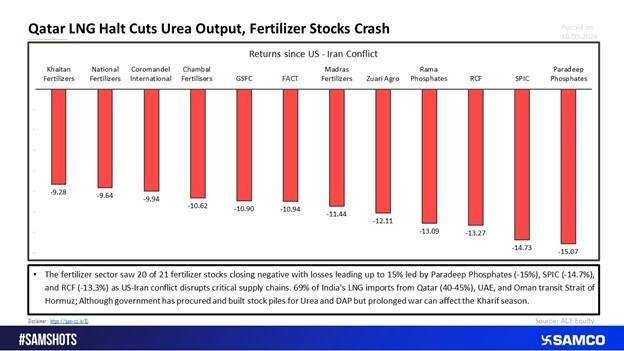
India’s fertilizer sector witnessed a sharp market correction after escalating tensions in the US–Iran conflict disrupted energy supplies in West Asia. Nearly 20 out of 21 tradable fertilizer stocks closed in the red, with losses reaching up to 15%, reflecting growing concerns over potential disruptions in fertilizer production.
The selloff highlights the vulnerability of the fertilizer industry to energy supply shocks, particularly natural gas, which is a key input for urea production.
Strait of Hormuz Disruption Threatens Fertilizer Supply Chain
The crisis has intensified due to risks around the Strait of Hormuz, one of the world’s most critical energy transit routes. A large portion of global LNG shipments and fertilizer-related raw materials pass through this narrow 21-mile-wide channel.
India remains highly dependent on LNG imports from West Asia. In 2025, nearly 69% of India’s LNG imports — around 17.5 million tonnes — came from countries such as Qatar, the UAE, and Oman, with most shipments moving through the Strait of Hormuz.
Any disruption in this region could significantly affect energy availability and fertilizer production capacity.
Qatar LNG Halt Impacts Urea Production
The situation worsened after Qatar Energy reportedly halted some LNG production following Iranian attacks, creating immediate concerns for fertilizer manufacturers dependent on gas supplies.
Qatar typically accounts for around 40–45% of India’s LNG imports, making it a crucial supplier for energy-intensive industries like fertilizer manufacturing.
Some fertilizer producers, including Indian Farmers Fertiliser Cooperative (IFFCO), have already reduced production at certain urea plants due to the uncertainty around LNG supply.
Global Fertilizer Trade Also at Risk
The Strait of Hormuz plays a key role not only in energy supply but also in global fertilizer trade.
Approximately one-third of the world’s fertilizer-related materials — including sulphur and ammonia — move through this route. Disruptions here can lead to higher production costs and supply shortages globally.
This has triggered immediate selling pressure in fertilizer stocks, as investors factor in potential margin pressure and supply constraints.
Timing Critical as India Approaches Kharif Season
The crisis comes at a sensitive time for India’s agricultural sector, just weeks before the Kharif sowing season begins.
During this period, farmers sow key crops such as:
- Rice
- Maize
- Soybean
The Kharif season contributes more than half of India’s annual foodgrain production, making fertilizer availability critical for maintaining agricultural output.
Any disruption in fertilizer supply could increase costs for farmers and potentially impact crop yields.
Potential Impact on Food Inflation
Supply tightness in urea and diammonium phosphate (DAP) could also have broader economic consequences.
Higher fertilizer prices may:
- Increase input costs for farmers
- Put pressure on crop yields
- Lead to higher food prices
For a country with over 1.4 billion people, such developments could contribute to food inflation risks in the coming quarters.
Government Stockpiles Provide Some Cushion
To mitigate supply risks, the government has already procured and built stockpiles of key fertilizers such as urea and DAP.
These reserves could help stabilize supplies in the short term. However, if the geopolitical conflict persists and energy shipments remain disrupted, the fertilizer industry could face longer-term challenges.
Market Outlook
The fertilizer sector’s sharp decline reflects rising uncertainty around energy supply, fertilizer production, and agricultural demand.
While government stockpiles may offer temporary relief, a prolonged conflict in the Middle East could disrupt supply chains and increase fertilizer prices, potentially affecting both agriculture and inflation trends in India.
Investors will closely monitor:
- Developments in the Strait of Hormuz
- Global LNG supply conditions
- Fertilizer production levels
- Government policy responses
These factors will determine the near-term outlook for fertilizer stocks and agricultural markets.