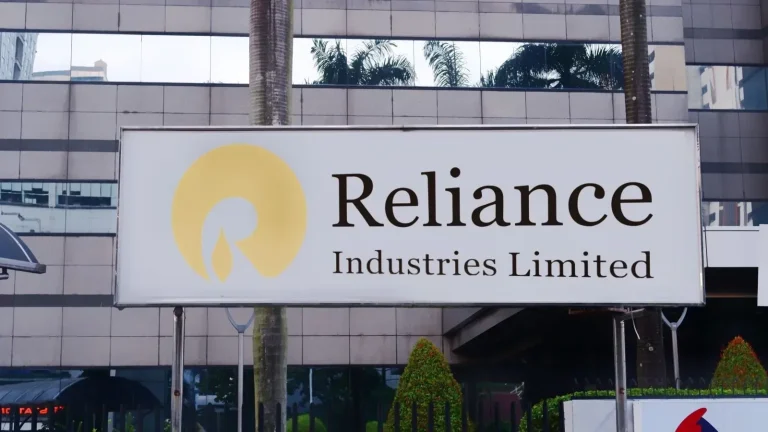
The Reliance Industries share price showed resilience on Friday even as the broader Indian stock market remained under pressure. While the Sensex crashed over 900 points and the Nifty 50 slipped about 1%, shares of Reliance Industries managed to move higher.
At one point during the session, the Reliance share price rose 0.62% to ₹1,400.50 on the BSE. The move stood out on a day when the stock market today witnessed heavy selling across sectors.
The underlying trigger was the surge in crude oil prices, which has been driven by rising geopolitical tensions linked to the US-Iran war.
Market Performance: Reliance Share Price vs Stock Market Today
The broader Indian stock market remained volatile as geopolitical developments continued to weigh on investor sentiment.
- Reliance share price: up 0.62% to ₹1,400.50
- Sensex: down more than 900 points
- Nifty 50: slipped around 1%
Despite the weakness in equities, Reliance Industries stock price held firm. The movement reflects how energy-linked companies sometimes behave differently from the broader market when oil prices rise.
Reliance Share Price Performance Over Time
While the latest session saw modest gains, the Reliance stock price has experienced mixed trends across different timeframes.
- 1 month: Reliance share price down 2%
- Year-to-date: down 11%
- 1 year: up 12%
- 3 years: up 32%
- 5 years: delivered 41% returns
This long-term trajectory highlights the scale and stability of Reliance Industries, led by Mukesh Ambani, even during volatile phases in the stock market today.
Main News: US-Iran War Pushes Crude Oil Prices Higher
The biggest macro trigger affecting the stock market and Reliance Industries share price right now is the escalation in tensions between the United States and Iran.
A key concern for global markets is the disruption risk in the Strait of Hormuz.
- The Strait of Hormuz is responsible for nearly 20% of global oil and LNG supply.
- Any disruption to this route can significantly impact global oil prices and energy markets.
Because of these developments, crude oil prices have surged sharply, creating ripple effects across global financial markets and the Indian stock market.
Higher oil prices generally increase concerns about inflation and economic stability, which partly explains the broader stock market crash seen recently.
Reliance Industries O2C Business in Focus
For Reliance Industries, the rise in crude oil prices has drawn attention to its Oil-to-Chemicals (O2C) business, one of the company’s largest segments.
Refining margins have seen a noticeable improvement as global product balances tighten.
During March 2026 so far, key refining spreads have moved sharply higher:
- Gasoil cracks: around $42 per barrel
- Gasoline cracks: around $16 per barrel
- Jet fuel cracks: around $58 per barrel
These figures represent increases of:
- 147% above long-term averages for gasoil
- 40% above averages for gasoline
- 124% above averages for jet fuel
Such moves indicate stronger refining economics for companies with large refining capacities like Reliance Industries.
Impact on Refining and Petrochemical Margins
Another notable trend has been the rise in petrochemical prices.
- Polyethylene (PE) prices: up 10–15% month-on-month in March
- Paraxylene (PX) prices: also increased in the same range
- Naphtha prices: surged about 34% during March
The supply disruptions linked to Middle East tensions have forced some Asian refiners and petrochemical producers to reduce operations.
Many steam crackers rely heavily on naphtha sourced from the region, and supply concerns have pushed prices higher.
Reliance’s Diversified Feedstock Advantage
One factor that stands out in the case of Reliance Industries is its diversified feedstock structure.
The company’s petrochemical operations use a mix of inputs:
- 30% ethane
- 40% refinery off-gases
- 30% crude-linked naphtha
This diversified structure reduces direct dependence on crude-linked raw materials and can help cushion margins during periods of high oil prices.
Summary
The Reliance share price managed to edge higher even as the broader Indian stock market remained under pressure. The rise came amid a sharp rally in crude oil prices triggered by the ongoing US-Iran war and concerns over supply disruptions in the Strait of Hormuz.
At the same time, improving refining spreads and stronger petrochemical prices have brought renewed attention to Reliance Industries’ O2C business, a key earnings engine for the company.
While the Sensex crash and the decline in the Nifty 50 reflect wider market anxiety, the movement in Reliance Industries share price shows how global energy dynamics can influence individual stocks differently within the stock market today.