


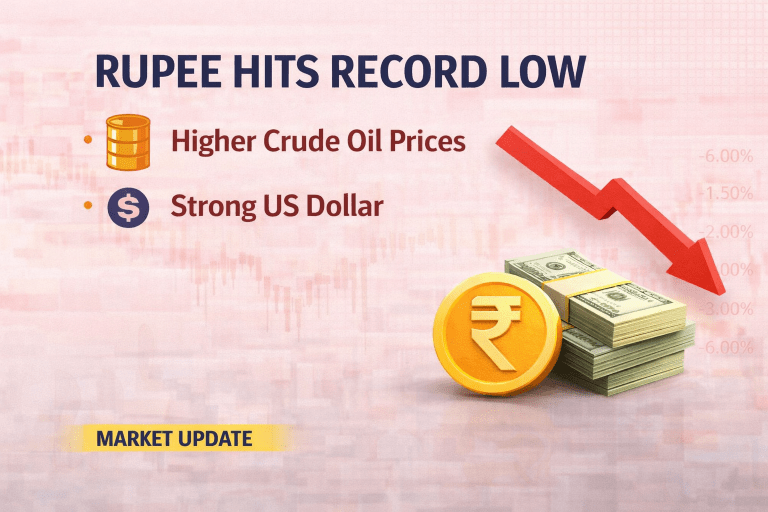
The Indian rupee weakened to a record low against the US dollar on Monday, reflecting pressure from rising crude oil prices and global geopolitical developments.
The domestic currency touched a fresh low of ₹93.84 against the US dollar in early trade, highlighting continued volatility in currency markets.
What Led to the Rupee Decline?
1. Surge in Crude Oil Prices
Crude oil prices moved higher amid escalating geopolitical tensions, increasing concerns over India’s import bill. As a major oil importer, higher crude prices tend to put pressure on the rupee.
2. Strength in the US Dollar
The US dollar strengthened globally, making emerging market currencies, including the rupee, relatively weaker.
3. Global Geopolitical Developments
Ongoing geopolitical tensions contributed to uncertainty in global markets, leading to risk-off sentiment and currency volatility. (livemint.com)
Impact on Indian Markets
The weakening rupee may have broader implications for Indian financial markets:
- Import costs may rise, particularly for crude oil and related sectors
- Inflationary pressures could increase due to higher input costs
- Equity markets may see volatility due to global risk sentiment
Currency movements remain a key factor influencing overall market sentiment.
Global Factors Driving Currency Movement
Several global cues contributed to the rupee’s decline:
- Rise in crude oil prices
- Strengthening US dollar
- Increased geopolitical uncertainty
These factors continue to influence currency markets and capital flows.
Market Snapshot
- Rupee: Falls to ₹93.84 per US dollar
- Trend: Weak
- Key Trigger: Rising crude oil prices
- Global Influence: Strong US dollar, geopolitical tensions
Conclusion
The Indian rupee declined to a record low against the US dollar, driven by rising crude oil prices and global uncertainties. Currency movements are expected to remain closely linked to global developments and commodity price trends.