Banking Stocks Rally After RBI Liquidity Measures
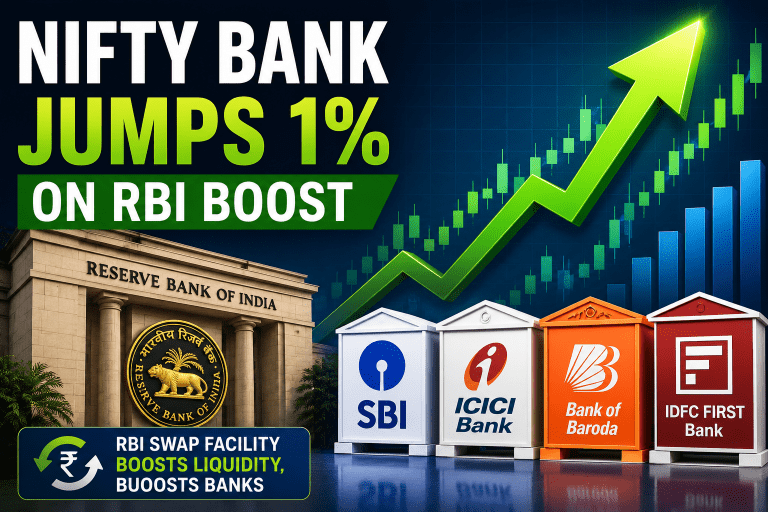
Banking stocks witnessed strong buying interest after the Reserve Bank of India (RBI) announced measures aimed at supporting liquidity in the financial system. The positive sentiment lifted the Nifty Bank index by more than 1%, with several leading public and private sector banks registering gains during the trading session.
Major banking stocks, including IDFC FIRST Bank, Bank of Baroda, ICICI Bank, and State Bank of India (SBI), were among the key contributors to the rally as investors responded positively to the central bank’s liquidity-supportive actions.
What Is the RBI Swap Facility?
The RBI’s dollar-rupee swap facility is a liquidity management tool designed to inject rupee liquidity into the banking system.
Under this mechanism:
- Banks provide US dollars to the RBI.
- The RBI provides rupee liquidity to participating banks.
- The arrangement helps improve liquidity conditions in the financial system.
- It supports smooth functioning of money markets and credit availability.
Such measures are often used by central banks to ensure adequate liquidity while maintaining financial stability.
Why Did Banking Stocks Rise?
Improved Liquidity Conditions
Additional liquidity can support lending activities and improve overall banking system efficiency.
Positive Market Sentiment
Investors often view liquidity-enhancing measures as supportive for the financial sector and broader economic activity.
Lower Funding Pressures
Improved liquidity conditions may help banks manage funding requirements more efficiently.
Support for Credit Growth
Adequate liquidity can facilitate lending to businesses and consumers, supporting economic growth.
Top Banking Stocks in Focus
The rally was broad-based across the banking sector, with key banking stocks attracting investor attention:
- State Bank of India (SBI)
- ICICI Bank
- Bank of Baroda
- IDFC FIRST Bank
- Other major constituents of the Nifty Bank index
The gains reflected optimism regarding the potential impact of RBI measures on banking sector liquidity and growth prospects.
What Does This Mean for the Banking Sector?
India’s banking sector has remained resilient amid changing economic conditions. Liquidity management measures by the RBI are intended to maintain stability within the financial system and ensure smooth credit flow across the economy.
Key factors supporting the sector include:
- Strong credit demand
- Improving asset quality trends
- Digital banking adoption
- Economic growth initiatives
- Regulatory support measures
Factors Investors Should Monitor
Investors tracking banking stocks may consider monitoring:
RBI Policy Announcements
Future monetary policy decisions can influence banking sector sentiment.
Credit Growth Trends
Loan growth remains a key driver of bank earnings.
Deposit Mobilization
Banks continue to focus on maintaining healthy deposit growth.
Asset Quality Metrics
Non-performing asset (NPA) trends remain important indicators of financial health.
Net Interest Margins
Margins play a crucial role in determining bank profitability.
Nifty Bank Outlook
The Nifty Bank index remains one of the most closely tracked sectoral indices in the Indian stock market. Movements in major banking stocks often influence broader market sentiment due to the sector’s significant weight in benchmark indices.
While liquidity measures may provide short-term support, long-term performance will continue to depend on:
- Earnings growth
- Credit demand
- Economic activity
- Interest rate environment
- Regulatory developments
Conclusion
Banking stocks gained momentum after the RBI announced liquidity-supportive measures through its swap facility, helping the Nifty Bank index rise more than 1%. The development highlights the importance of liquidity management in supporting financial stability and banking sector growth.
Investors should continue focusing on banking sector fundamentals, earnings performance, and long-term business prospects rather than reacting solely to short-term market movements.
Disclaimer
This article is for educational and informational purposes only and should not be construed as investment advice, stock recommendations, or a solicitation to buy or sell any securities. Investors should conduct their own research and consult a SEBI-registered investment adviser before making investment decisions.