


ETF investment is one of the simplest ways to invest in the stock market without picking individual stocks. An ETF investment lets you own a basket of securities, from stocks to gold, all in one unit. The main problem most beginners face is choosing between individual stocks, mutual funds, and ETFs. The solution is understanding how ETF investment works so you can pick the right one for your goals. This guide is designed for stock traders, commodity investors, and anyone looking to invest in indices or sectors without the complexity. By the end, you'll know exactly what ETF investment is, how to start, and whether it fits your investment strategy.
What Is ETF Investment?
ETF stands for Exchange Traded Fund. Think of it as a mutual fund that trades like a stock on the exchange. When you buy an ETF investment, you're buying units of a fund that holds a collection of assets. These assets could be stocks from a specific index like Nifty 50, commodity like gold, bonds, or even stocks from a single sector like technology or banking.
The key difference from a mutual fund is that ETF investment units are listed and traded on stock exchanges (NSE or BSE) just like regular shares. You can buy and sell them during market hours at real-time prices. This makes ETF investment flexible, transparent, and easy to access for anyone with a demat account.
Here's a simple analogy: if a mutual fund is like ordering a pizza delivered to your home, an ETF investment is like buying a pre-made pizza from a supermarket shelf. Both give you the same ingredients, but with ETFs, you can pick it up whenever you want during business hours and see the exact price before buying.
How Does an ETF Investment Work?
ETF investment follows a straightforward process. Let's break it down into simple steps.
Step 1: The Fund is Created
A fund house decides to create an ETF investment product. For example, they decide to launch a Nifty 50 ETF. This fund will track the Nifty 50 index, which includes 50 large-cap Indian companies.
Step 2: Assets are Collected
The fund manager buys all 50 stocks in the exact proportion they appear in the Nifty 50 index. If Reliance makes up 10% of the index, the fund holds 10% Reliance shares. These assets are held in trust by a custodian.
Step 3: Units are Created and Listed
The fund divides these assets into units and lists them on the NSE and BSE. Each unit represents a small portion of all the underlying stocks. You can now buy these units like any other share.
Step 4: Real-Time Trading
During market hours (9:15 AM to 3:30 PM), you can buy and sell ETF investment units at live prices. The price changes based on two factors: the underlying assets' value (Net Asset Value or NAV) and market demand. If more people want to buy the ETF than sell it, the price goes up.
Understanding Key Concepts
NAV (Net Asset Value): This is the true value of all assets in the fund divided by the number of units. If the Nifty 50 ETF holds stocks worth ₹10 crore and has 10 lakh units, the NAV is ₹1,000 per unit.
Market Price: This is what buyers and sellers agree the ETF is worth at that moment. The market price can be slightly higher or lower than NAV depending on demand. If everyone wants to buy the Nifty 50 ETF, its market price might be ₹1,005 even if NAV is ₹1,000.
Liquidity: This means how easily you can buy or sell units. Popular ETFs like Nifty 50 ETF have high liquidity. You can enter and exit quickly without affecting the price much.
Tracking Error: This is the small difference between how the ETF performs and how the actual index performs. It happens because the fund pays expenses and may not hold exact index proportions. A good ETF has tracking error below 0.3%.
Types of ETF Investment
Understanding different ETF investment types helps you choose what fits your goals.
Index ETFs
These track major indices like Nifty 50, Nifty 100, or Sensex. They give you exposure to broad market movements. Most beginners start with index ETFs because they're low-cost and stable.
Gold ETFs
These track the price of gold. Each unit represents a fixed amount of physical gold held safely. Instead of buying and storing gold bars, you can own gold through an ETF investment in your demat account.
Sector ETFs
These focus on specific sectors like IT, Banking, Healthcare, or FMCG. If you believe technology stocks will outperform the overall market, a Technology Sector ETF gives you exposure to multiple tech companies without picking individual stocks.
International ETFs
These track foreign stock indices like Nifty Next 50 or international benchmarks. They let you invest in global markets and diversify beyond India.
Bond ETFs
These hold government securities or corporate bonds. They're ideal for investors looking for fixed income with some liquidity compared to buying bonds directly.
Benefits of ETF Investment
Why should you consider ETF investment for your portfolio?
- Low Expense Ratio: ETFs charge only 0.1% to 0.5% annually, much lower than most mutual funds. This means more of your money stays invested and grows.
- Instant Diversification: With one ETF investment unit, you own a basket of 50 or 100 companies. This spreads your risk across many holdings instead of betting on one or two stocks.
- High Liquidity: You can buy and sell popular ETFs anytime during market hours. Unlike some mutual funds that charge exit fees, ETFs offer flexibility.
- Transparency: The holdings of an ETF investment are public and updated regularly. You know exactly which stocks or assets you own.
- Real-Time Pricing: ETF prices update every second during trading hours. You see and control the exact price you pay or receive, unlike mutual funds where you get NAV-based pricing after market close.
- Tax Efficiency: ETFs typically generate fewer capital gains inside the fund because the structure allows for in-kind creation and redemption. This can mean lower taxes for long-term investors.
- Easy Access: If you have a demat and trading account, you can start ETF investment immediately. No separate paperwork needed.
Risks of ETF Investment
Every investment carries risk. Here's what you should watch out for with ETF investment.
Market Risk
When the overall market falls, your ETF investment falls too. If the Nifty 50 drops 20%, a Nifty 50 ETF will also drop about 20%. This is the biggest risk, but it's temporary if you hold long-term.
Tracking Error
Sometimes an ETF investment doesn't perfectly match its index performance. The fund might underperform slightly due to expenses and small timing differences in buying/selling assets. Most quality ETFs keep this below 0.3% annually.
Liquidity Risk
Some newer or smaller ETFs have low trading volumes. If few people are buying or selling an ETF investment, you might struggle to exit quickly or get a fair price. Always check trading volume before investing.
Sector Concentration Risk
If you invest only in a Sector ETF like Banking, your portfolio is exposed heavily to that sector. Banking stocks can fall 30% if interest rates rise. Sector concentration magnifies both gains and losses.
Currency Risk (International ETFs)
If you invest in an International ETF denominated in foreign currency, currency fluctuations affect your returns. A rupee depreciation can hurt returns even if the foreign index rises.
ETF Investment vs Mutual Funds
Both ETF investment and mutual funds are baskets of securities, but they work differently.
Trading Mechanism
With mutual funds, you buy from the fund house directly. Prices are set once daily after market close. With ETF investment, you buy from other investors on the exchange. Prices update every second during market hours, giving you control over entry and exit prices.
Pricing and Timing
ETF investment shows live prices throughout the day. Mutual fund prices are declared only once daily. If the market crashes at 2 PM, you see it instantly in your ETF price. Mutual fund investors won't know the new price until 4 PM.
Demat Account Requirement
You need a demat account to hold ETF investment units. Mutual funds can be held in folios without a demat account. If you already trade stocks, a demat account exists for you anyway.
Expense Ratio
ETF investment typically charges 0.1% to 0.5% annually. Mutual funds charge 0.5% to 1.5% or more. Over 20 years, this difference compounds significantly in ETF's favor.
Intraday Trading Option
You can buy and sell ETF investment units multiple times in a single day. Mutual funds can be traded only once per day at NAV. This flexibility is perfect if you're active in markets.
Dividend and Distribution Handling
Both distribute dividends and capital gains. ETF investment typically offers both dividend reinvestment (IDCW-Reinvest) and payout options. Mutual funds are similar, but ETF options are usually cleaner.
How to Start ETF Investment in India: Step-by-Step Guide
Ready to start ETF investment? Here's the exact process.
Step 1: Open a Demat and Trading Account
You need both accounts to invest in ETFs. A demat account holds your securities electronically. A trading account allows you to buy and sell. Most brokers offer both together. The process takes 5-10 minutes online. You'll need your PAN, Aadhaar, and a bank account.
Step 2: Log Into Your Trading Platform
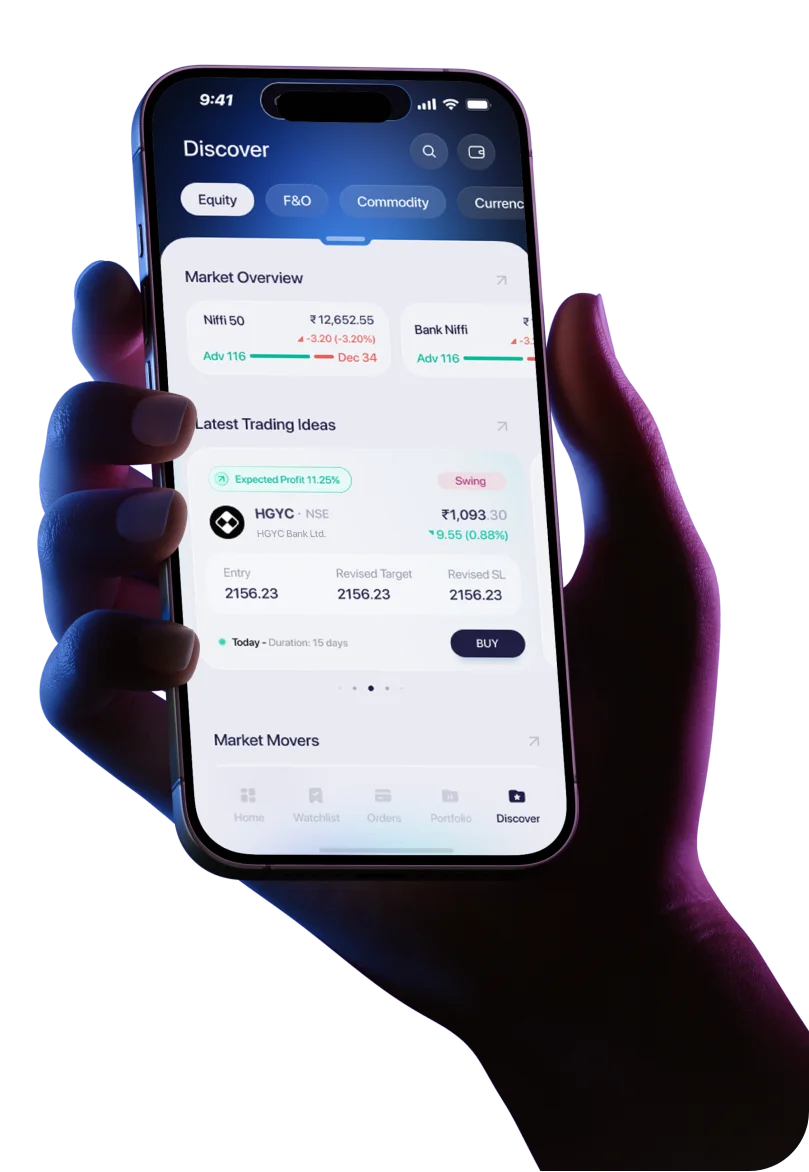
Once accounts are active, log into your broker's trading platform via mobile app or website. This is where you'll search for and purchase ETF investment units.
Step 3: Search for an ETF
Search for ETFs by name or symbol. For example, search "Nifty 50 ETF" or the ticker symbol. Popular index ETFs include Nifty 50 ETF, Nifty Next 50 ETF, and Nifty Low Volatility 50 ETF. Gold ETFs include Gold ETF (SBI), Gold ETF (Motilal Oswal).
Step 4: Check Liquidity and Expense Ratio
Before buying any ETF investment, check two things: daily trading volume (should be above ₹1 crore ideally) and the expense ratio (look for 0.1% to 0.5%). Higher volume means you can sell easily. Lower expense ratio means better returns after costs.
Step 5: Place a Buy Order
On the trading platform, select the ETF and place a "Buy" order. Decide how many units you want and at what price. You can use a "Market Order" to buy at the current price immediately, or a "Limit Order" to set a maximum price you'll pay. For ETF investment, market orders usually work fine for popular ETFs.
Step 6: Confirm and Hold
Once your order is executed, the units appear in your demat account within seconds. The transaction is complete. You now own ETF investment units. Hold them as long as your investment timeline dictates.
Step 7: Track Performance
Monitor your ETF investment regularly. Most trading platforms show real-time values. Compare your ETF's performance against its benchmark index (e.g., Nifty 50). A small underperformance (0.2-0.3%) is normal due to tracking error.
Example of ETF Investment in Action
Let's make ETF investment real with a practical example.
Scenario: You decide to invest ₹10,000 in a Nifty 50 ETF with a NAV of ₹500 per unit. You buy 20 units (₹10,000 ÷ ₹500).
What happens next: Your 20 units now give you ownership in all 50 companies in the Nifty 50 index. Your exposure is proportional to each company's weight. Reliance, TCS, and HDFC Bank are your biggest exposures because they're the heaviest in the index.
Market movement: Over the next 6 months, the Nifty 50 index rises 10%. Your ETF investment units should also rise approximately 10%, assuming tracking error of under 0.3%. Your ₹10,000 investment becomes ₹11,000. You haven't picked a single stock or spent hours researching. The fund manager did it for you at minimal cost.
Dividends: If the 50 companies pay dividends, your ETF collects them and distributes proportionally to all unit holders. If you chose a dividend-payout ETF, you receive cash. If you chose a reinvestment ETF, dividends automatically buy more units.
Selling: After one year, you decide to sell. The Nifty 50 ETF is now trading at ₹550 per unit. You sell your 20 units at ₹550, getting ₹11,000 before taxes. Congratulations, your ETF investment returned 10% in one year with almost zero effort.
Who Should Consider ETF Investment?
ETF investment works well for different types of investors.
Beginners
If you're new to investing, ETF investment is perfect. It removes the burden of picking individual stocks. You get instant diversification and professional management at low cost.
Passive Investors
If you believe in "buy and hold" strategy rather than active trading, ETF investment in index ETFs aligns perfectly with your philosophy. You benefit from market growth without constant monitoring.
Long-Term Investors
For 5-10 year investment horizons, ETF investment compounds beautifully. The low expense ratio saves thousands of rupees compared to mutual funds over decades.
Cost-Conscious Investors
If you hate paying high fees, ETF investment in index ETFs charges only 0.1% to 0.3% annually. This is 50-80% cheaper than most mutual funds.
Diversification Seekers
If you want exposure to multiple sectors, companies, or asset classes with minimal capital, ETF investment delivers. One purchase gives you a ready-made portfolio.
Active Traders
If you like trading but don't want to pick individual stocks, ETF investment lets you trade sectors or indices. You get market exposure with lower volatility than single stocks.
Are ETFs Good for Beginners?
Yes, ETF investment is excellent for beginners, but with an important caveat: you must understand stock market volatility.
Why ETFs are beginner-friendly: They require no stock-picking skills. You don't need to analyze balance sheets or understand P/E ratios. The index tracks the best companies automatically. You get professional management at a fraction of mutual fund costs. You can start with small amounts like ₹500 or ₹1,000 and increase gradually.
The caveat: Markets are volatile. When the Nifty 50 falls 20%, your ETF investment also falls 20%. If you panic and sell at the bottom, you lock in losses. Beginners should have a 3-5 year investment timeline minimum. Treat ETF investment as a vehicle for wealth creation over time, not quick profits.
Real advice for beginners: Start with index ETFs like Nifty 50 ETF or Sensex ETF. Avoid sector-specific ETFs initially because they're more volatile. Invest regularly through SIPs (Systematic Investment Plans) of ₹1,000-₹5,000 monthly. This reduces timing risk and builds discipline. Never invest money you'll need within 3 years. Stay invested through market ups and downs. Ignore daily price movements.
Conclusion
ETF investment is a powerful tool that simplifies how you invest in markets. It combines the simplicity of mutual funds with the flexibility and low cost of stocks. You now understand what ETFs are, how they work, their benefits and risks, and exactly how to invest in them as a beginner or experienced investor in India.
The key takeaway: ETF investment removes complexity from investing while keeping costs low. Whether you're a passive investor wanting index exposure, a trader seeking sector participation, or someone looking to own gold without storage hassles, an ETF investment product exists for your goal.
Start small, think long-term, and let the power of diversification and compound growth work for you through ETF investment. Your future self will thank you for starting today.
FAQs
Q1: What exactly is ETF investment and how is it different from buying individual stocks?
An ETF investment is a fund containing a basket of securities that trades like a stock. When you buy individual stocks, you own one company and face company-specific risk. With ETF investment, you own a diversified portfolio instantly. If one company in the ETF struggles, it barely affects your returns because you own 50 or 100 others. This is the main advantage: automatic diversification without picking individual stocks.
Q2: Is ETF investment better than mutual funds for long-term wealth building?
For long-term investing, ETF investment often outperforms mutual funds due to lower expense ratios. Over 20 years, a 1% cost difference (ETF at 0.2% vs mutual fund at 1.2%) can mean ₹5-10 lakh difference on a ₹10 lakh investment. However, the best investment is the one you'll actually stick with. If you prefer the ease of mutual funds, that's fine too. The difference is smaller than the impact of consistent investing and staying invested.
Q3: Do ETFs pay dividends and how do they work?
Yes, if the underlying companies in the ETF investment pay dividends, the ETF collects and distributes them to unit holders. You have two choices with most ETFs: take dividends as cash (Payout option) or reinvest them to buy more units (Reinvestment option). For long-term investing, reinvestment compounds your wealth faster. The fund handles all the work; you just receive distributions automatically.
Q4: Can I invest in ETFs without a demat account?
No, you cannot invest in ETF investment without a demat account. ETFs are securities that must be held electronically in a demat account, just like stocks. However, opening a demat account takes 5-10 minutes online with zero charges. If you're serious about investing, a demat account is essential anyway. Consider it a one-time setup for accessing all equity investments including stocks, ETFs, and IPOs.
Q5: Are ETFs safe for beginners and how much money should I start with?
ETFs are as safe as the underlying market they track. They're not risky products; market movements create the risk. If you invest in a Nifty 50 ETF, you're betting on the Indian economy's 50 biggest companies. Historically, the Indian stock market has delivered 12-15% annual returns over 20+ year periods. Start with amounts you're comfortable losing: ₹500-₹5,000 monthly is reasonable for a beginner. Increase amounts as your income grows and risk tolerance increases. Never invest money needed within 3 years. ETF investment is safest when you hold through market cycles and add regularly.



 Easy & quick
Leave A Comment?