Introduction
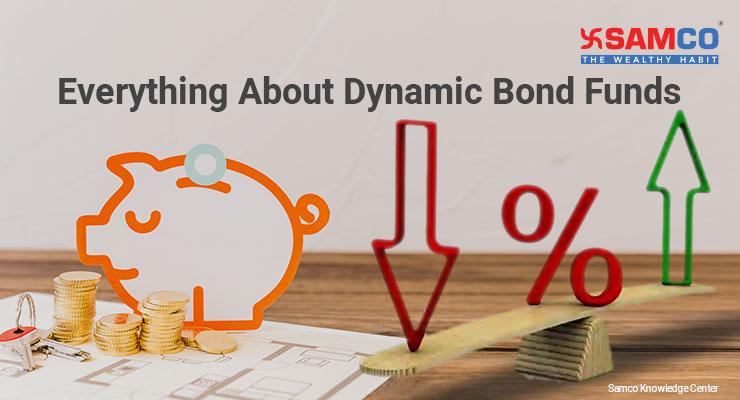
Imagine the star performer in the debt world, let’s call it the “Virat Kohli of Debt Funds”. That’s essentially what a dynamic bond fund can be. Just as Kohli reads the game, adapts his stance, and delivers across conditions, dynamic bond funds adjust their portfolios in response to shifting interest rates and credit markets. In today’s environment of interest-rate volatility, inflation headwinds and evolving debt markets, such flexibility matters more than ever. In this article, we’ll unpack what dynamic bond funds are, how they work, the benefits and risks, when and who should consider them (with examples), and how to choose the right one for your portfolio.
What Are Dynamic Bond Funds?
Dynamic bond funds are open-ended debt mutual fund schemes that invest across bonds of varying maturities and durations and dynamically adjust their portfolio in response to changing interest-rate or credit conditions. Unlike many traditional debt funds, which have mandates limiting maturity or duration (for example, short-duration funds, medium-duration funds or gilt funds with fixed maturity horizons), dynamic bond funds have the flexibility to move between short-term, medium-term and long-term debt instruments depending on the outlook. The “dynamic” element essentially reflects the fund manager’s ability to shift the average portfolio duration, change allocations between government securities, corporate bonds and money-market instruments, depending on macro-economic views, interest-rate trajectory and credit conditions. In the Indian context, these funds fall under the debt mutual-fund regulatory category and are offered by many asset-management companies (AMCs) under names such as Dynamic Bond Fund or Dynamic Duration Fund.
How Dynamic Bond Funds Work
The underlying mechanics of dynamic bond funds hinge on three major levers: portfolio duration (how long until the bonds mature, on average), credit-quality mix (government vs corporate, higher vs lower rated) and interest-rate cycle assessment. When interest rates are expected to fall, long-term bonds tend to gain in value (because their future cash flows become more attractive). A dynamic bond fund manager may extend the portfolio maturity (increase duration) to capture that capital appreciation. Conversely, if interest rates are expected to rise, long-term bond prices may decline, so the manager may shorten duration (invest in shorter-term papers) to reduce sensitivity. For example, suppose the fund manager expects the central bank to cut policy rates over the next six-12 months. The manager might increase the weight of longer-tenured government securities and high-quality corporate bonds with maturities of 10-15 years so that, when yields decline, their prices rise and the portfolio generates additional capital gains. On the other hand, if the outlook suggests inflation is rising and rates are likely to increase, the manager might shift into short-term corporate debt or money market instruments, reducing duration risk and reinvesting maturities at higher yield. The horizon for investors is typically medium-term (3-5 years or more) to allow the manager’s adjustments to play out and navigate interest-rate cycles rather than treat this as a very short-term parking vehicle. The returns are derived partly from coupon interest income earned by the portfolio and partly from capital gains (or losses) when bond prices move due to duration shifts and yield changes. The fund responds to rate/credit changes by altering allocations, maturities and issuer mix dynamically.
Why Invest in Dynamic Bond Funds – Benefits
Dynamic bond funds offer several compelling advantages for investors who understand the trade-offs:
- Flexibility and active management: Unlike rigid debt funds, these schemes adapt their portfolio in response to market and interest-rate indications. This gives them the potential to perform in both rising-rate and falling-rate environments.
- Potential for higher risk-adjusted returns: Because the manager can extend or shorten duration, and mix credit quality, there’s an opportunity for better returns than very conservative debt funds when managed well.
- Diversification and risk mitigation: By investing across maturities and credit types (government securities, corporate bonds, money-market instruments), the fund can spread risk and avoid heavy concentration.
- Suitable for uncertain interest-rate environments: In India especially, where policy rates, inflation and global spill-overs can cause interest-rate shifts, a dynamic bond fund is well-positioned to adjust rather than be locked in a fixed survivorship profile.
- Ease of access: These funds are accessible via mutual fund platforms and available in direct plan options, making them suitable for investors with moderate risk tolerance looking for enhanced fixed-income exposure.
Risks and Things to Be Aware Of
No investment is without risk, and dynamic bond funds have several important ones to recognise:
- Interest-rate risk: Even though the fund manager tries to anticipate rate moves, if the outlook is misread and duration is extended when rates rise, the NAV could fall significantly.
- Credit risk: To enhance returns, dynamic bond funds may allocate to lower-rated corporate bonds or longer tenure papers which carry higher default risk, so investor must check credit quality.
- Volatility & mismatch risk: Because duration and credit composition change, NAV may show greater short-term volatility compared to ultra-conservative debt funds. Investors seeking zero volatility may be disappointed.
- Dependence on fund-manager skill and expense ratio: The active nature means the outcome is heavily tied to expertise and market timing of the manager; higher expense ratios (as active funds usually cost more) may erode returns.
- Tax implications: In India, dynamic bond funds are treated as debt funds. Gains for holding less than 3 years are taxed as Short-Term Capital Gains (STCG) per your income slab; over 3 years are taxed as Long-Term Capital Gains (LTCG) at 20 % with indexation (though post April 2023 rules may apply differently).
As a tip: Before investing, check the fund’s historical performance across interest-rate cycles, review average duration history and credit-quality composition.
When & Who Should Consider Dynamic Bond Funds?
Dynamic bond funds can be a good fit for investors who:
- Have a moderate risk appetite, willing to tolerate some NAV fluctuation in exchange for better returns than ultra-safe debt options.
- Have an investment horizon of around 3-5 years or more, so the fund’s active adjustments have time to work through interest-rate cycles.
- Are looking to include a meaningful fixed-income component in their portfolio, but want more than very low-yield instruments like savings accounts or short-duration debt.
- Are investing in an environment where interest-rate outlook is uncertain or shifting, e.g., inflation pressures, central-bank policy changes, global rate spill-overs.
On the flip side, dynamic bond funds may not be ideal for:
- Investors with an ultra-short horizon (say less than 1–2 years) and needing capital preservation above all.
- Extremely conservative investors who cannot tolerate any NAV fluctuations and prefer fixed-rate instruments (e.g., bank FDs or money-market funds).
- Situations where interest rates are clearly on a one-way trend and the fund has already positioned for it — in such cases, the active benefit might be muted.
How to Choose & Evaluate a Dynamic Bond Fund
When selecting a dynamic bond fund, consider the following criteria:
- Track record across interest-rate cycles: Look for how the fund has performed during both rising-rate and falling-rate environments. Has it managed duration shifts well?
- Fund-manager experience and team stability: Since active calls matter, choose funds managed by experienced teams with a credible history in fixed-income.
- Expense ratio: Lower expenses mean more of the return accrues to you. For active debt funds, this matters.
- Portfolio credit quality and duration profile history: Study the fund’s average maturity over past years and credit-rating mix of holdings. Lower average maturity in rising-rate times is a good sign.
- Risk-adjusted performance and worst-case drawdowns: Compare dynamic bond funds vs typical short/medium/long-duration debt funds – examine volatility, downside in adverse years and how the fund handled stress.
Here’s a simple practical checklist:
|
Metric |
What to look for |
|
Duration history |
Has the fund shifted meaningfully? |
|
Credit-quality mix |
Predominantly AAA/A1+? |
|
Expense ratio |
Among the lower in its peer group |
|
Fund-manager tenure |
5+ years experience in debt management |
|
Performance during both cycles |
Doesn’t collapse in rising-rate years |
For users of the Samco platform: you can use the mutual-fund research filters to compare dynamic bond funds, view their duration movements, seamless portfolio view and expense analysis to help your decision-making process.
Tips & Best Practices for Investors
- Stay invested for a sufficient duration (3-5 years or more) to give the strategy time to play out through rate cycles.
- Use SIP (Systematic Investment Plan) or staggered investment rather than trying to time the market with a large lump sum, especially when rates or inflation are uncertain.
- Regularly monitor interest-rate outlook, fund’s duration moves and credit-rating changes in the underlying portfolio – stay informed rather than passive.
- Ensure the dynamic bond fund fits within your overall asset allocation (equities, other debt, cash) and is not your only fixed-income exposure.
- Don’t chase past high returns in isolation — evaluate on a risk-adjusted basis, check volatility, drawdown and strategy consistency.
Conclusion
Dynamic bond funds represent a powerful debt-fund category for investors who want flexibility in a shifting interest-rate environment and are prepared for moderate risk. Think of them as the “Virat Kohli” of debt funds — adaptable, performance-oriented and capable of stepping up when conditions change. They are not ultra-conservative “set-and-forget” instruments, but when used wisely, they can serve as the star performer in your fixed-income allocation.