


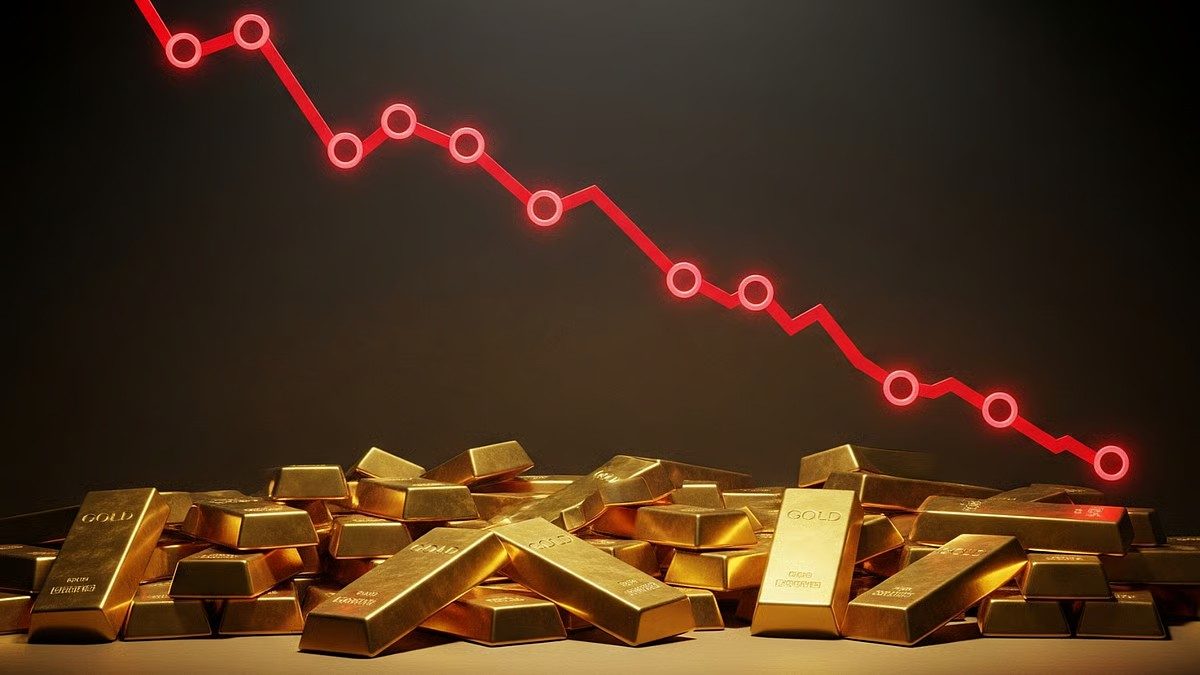
Gold Prices are back in focus. Not because they are hitting new highs—but because they are correcting sharply.
After a strong rally, gold has slipped more than 20% from its peak on the MCX. Silver has fallen even harder. The correction has triggered fresh conversations across the market.
Is this just volatility? Or a deeper shift?
Let’s break it down clearly.
Market Performance: Gold Prices and Silver See Sharp Correction
On Wednesday, February 18, MCX gold April contracts slipped to ₹1,52,719 per 10 grams in intraday trade.
That is a fall of:
- Over ₹40,000 from the all-time high
- A decline of nearly 21% from the peak of ₹1,93,096 per 10 grams
This is not a small dip. It is a meaningful correction.
Silver saw an even steeper fall.
MCX silver March contracts crashed by:
- Nearly ₹1,88,000
- About 45% lower from the peak of ₹4,20,048 per kg
These numbers clearly show that both precious metals have entered a volatile phase.
Gold Prices are no longer in a straight upward move. The market has shifted gears.
Gold Prices: From Record Highs to Consolidation
For several years, gold moved in a strong upward trend. The rally was steady and powerful. Prices touched a record ₹1,93,096 per 10 grams before turning lower.
Now, after a correction of more than 20%, the tone has changed.
This phase feels different. It is no longer about vertical gains. It is about consolidation. Short-term volatility is visible. Price movements are sharper.
Gold Prices are currently hovering around the ₹1,48,000 to ₹1,53,000 range on MCX. That zone has become important after the correction.
The bigger picture remains tied to structural factors such as:
- Continued central bank buying
- Geopolitical uncertainty
- Elevated global debt levels
- Expectations around lower real interest rates
These elements have supported Gold Prices over time. Even during sharp pullbacks, these underlying drivers remain part of the story. Silver Falls Harder: 45% Drop from Peak

Silver has taken a heavier hit compared to gold.
A fall of 45% from ₹4,20,048 per kg is significant. Silver’s nature is different. While it shares similarities with gold, it is also linked strongly to industrial demand.
That industrial connection increases volatility.
When economic activity fluctuates, silver reacts more sharply than gold. This is exactly what the recent numbers reflect.
Despite the correction, silver demand remains at record highs. The market is heading toward a sixth consecutive year of supply deficit. That creates structural support in the longer term.
But short-term swings can be wider.
Gold Prices corrected by 21%. Silver nearly doubled that percentage in decline. This gap tells its own story about relative volatility.
Why Gold Prices Are Volatile Right Now?
The recent correction in Gold Prices is not happening in isolation.
Several macro factors are influencing price movements:
- Shifts in geopolitical developments
- Movement in the US dollar
- Expectations surrounding the US Federal Reserve’s interest rate trajectory
- Elevated global debt conditions
When global uncertainty rises, gold tends to benefit. When interest rate expectations shift, price momentum changes.
At the moment, Gold Prices are responding to these shifting signals. The market is adjusting to fresh expectations.
Volatility, in this phase, appears elevated.
Understanding the Role of Central Banks
One of the consistent themes behind the multi-year rally in Gold Prices has been sustained central bank demand.
Central banks across the world have continued to accumulate gold as part of reserves. This steady buying activity has offered long-term support.
Even after the recent correction, that structural demand remains part of the broader narrative.
This is important because it shows that Gold Prices are influenced by both short-term sentiment and long-term institutional accumulation.
Silver’s Dual Nature: Monetary and Industrial
Silver behaves differently from gold.
It has two identities:
- A monetary metal like gold
- An industrial metal linked to economic growth
This dual character explains why silver prices move more aggressively.
If global growth improves, silver can outperform gold.
If economic slowdown fears increase, silver tends to underperform and become more volatile.
Currently, demand is strong. Supply deficits have persisted year after year. This structural imbalance keeps silver supported over the long horizon.
But in the short run, sharp swings are common.
The recent 45% correction reflects that heightened sensitivity.
Volatility Expected to Stay Elevated
Gold Prices and silver are not in a calm phase.
Two-sided moves are likely. Sharp declines can be followed by sudden rebounds. Price action may remain choppy in the coming months.
Physical demand from large markets can also influence price spikes. For example, when Chinese markets reopen, fresh buying momentum can drive rallies.
This means traders may experience rapid swings in both directions.
Short-term positioning remains sensitive to global signals.
Range Levels to Watch
After the correction:
- Gold Prices are seen around the ₹1,48,000 to ₹1,53,000 range as a key zone
- Silver prices between ₹2,12,000 to ₹2,30,000 are considered important after the fall
These price bands have come into focus following the recent correction.
They represent current reference levels on MCX after the sharp drop from peaks.
Gold Prices: Structural Drivers Still Intact
Even after a 20% decline, the broader foundation of Gold Prices includes:
- Persistent central bank buying
- Ongoing geopolitical uncertainty
- Elevated global debt
- Rate cut possibilities in the second half of 2026
These structural themes remain part of the metal’s long-term narrative.
Gold may correct. It may consolidate. But its global relevance has not faded.
That is why the conversation continues.
Silver Demand and Supply Deficit
Silver demand is currently at record highs.
The market is approaching a sixth straight year of supply deficit. This means supply is not fully meeting demand.
Such structural imbalances often create longer-term support for prices.
However, unlike gold, silver reacts strongly to economic performance. Growth improvement can boost prices sharply. Slowdowns can amplify volatility.
This dual impact makes silver more dynamic—and riskier in the short term.
Investing Versus Trading: Different Mindsets
The current phase in Gold Prices and silver demands clarity of purpose.
For long-term participants, the focus is often on:
- Gradual allocation
- Diversification
- Wealth protection
Instead of timing perfect entries, phased participation during meaningful pullbacks can reduce timing stress.
For traders, the landscape is different.
Given elevated volatility:
- Active management becomes essential
- Positions may require frequent adjustments
- Rapid two-sided movements are possible
Gold Prices and silver are not moving in straight lines right now. Flexibility matters.
What the Recent Correction Really Signals?
A 21% drop in Gold Prices from peak levels is significant. A 45% fall in silver is even more dramatic.
But corrections are not unusual after multi-year rallies.
Intermittent pullbacks often reflect consolidation phases rather than structural breakdowns.
Markets move in cycles. They expand. They pause. They reset.
Gold Prices appear to be in that reset phase.
Summary: Gold Prices in a Phase of Adjustment
Here’s a clear snapshot:
- MCX Gold April contract: ₹1,52,719 per 10 grams
- Down over ₹40,000 from peak
- Nearly 21% correction from ₹1,93,096
- MCX Silver March contract:
- Down nearly ₹1,88,000
- About 45% lower from ₹4,20,048 per kg
- Silver demand at record highs
- Sixth consecutive year of supply deficit in silver
- Volatility elevated due to geopolitical developments, dollar movement, and rate expectations
Gold Prices remain under pressure in the short term. Silver is even more volatile.
But the structural themes—central bank demand, geopolitical uncertainty, global debt levels, and rate cut possibilities—are still present.
The market is not in a straight rally anymore. It is in a reflective phase.
And in markets, phases change—but precious metals remain closely watched.
Gold Prices have corrected sharply. The real question now is not panic—but perspective.
Source: Livemint




 Easy & quick
Leave A Comment?