

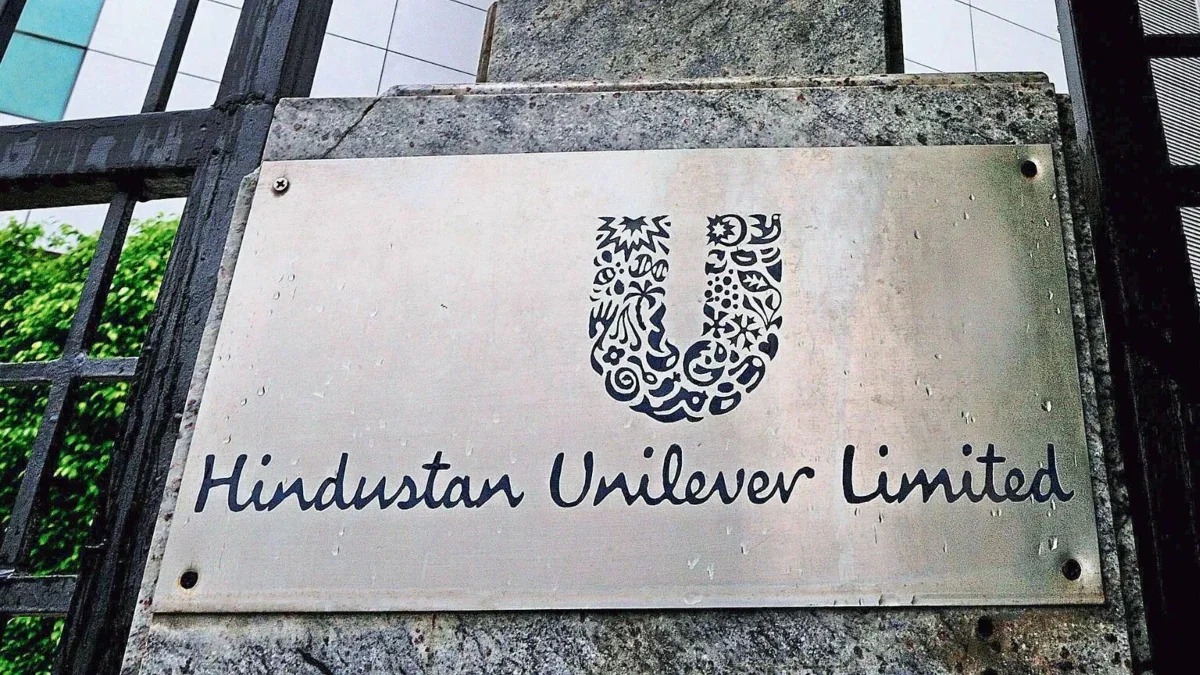
HUL, one of the most widely recognised names in the Indian stock market and consumer goods industry, plays a vital role in everyday household consumption. For investors and first-time stock researchers alike, understanding what HUL stands for, how the company operates, who owns it, and how it performs financially is essential.
In this article, we explain the full form of HUL, provide a detailed company profile of Hindustan Unilever Limited, outline its ownership structure, and highlight its latest revenue and financial performance to offer a complete snapshot of the company.
What Is the Full Form of HUL?
The full form of HUL is Hindustan Unilever Limited.
Hindustan Unilever Limited is one of India’s largest Fast-Moving Consumer Goods (FMCG) companies and a subsidiary of Unilever PLC, a global consumer goods major headquartered in the UK. HUL operates across essential consumption categories, making it a core constituent of long-term investment portfolios in India.
Company Profile of Hindustan Unilever Limited
Origin & History:
Hindustan Unilever Limited traces its origins back to 1933, with the establishment of Lever Brothers in India. Over time, multiple entities such as Indian Vanaspati Manufacturing Company and United Traders Limited merged to form Hindustan Lever Limited, which was later rebranded as Hindustan Unilever Limited (HUL).
The company is headquartered in Mumbai, Maharashtra, and has evolved into a market leader in India’s consumer goods sector.
Business Overview:
HUL operates across four major FMCG segments:
- Home Care
- Personal Care
- Foods & Refreshments
- Beauty & Wellbeing
The company’s products reach a significant majority of Indian households, supported by one of the strongest distribution networks in the country.
Brands & Products:
HUL owns several iconic brands that span mass, premium, and luxury categories. Some of its well-known brands include Surf Excel, Rin, Lux, Dove, Lifebuoy, Pears, Ponds, Lakmé, Sunsilk, Tresemmé, Knorr, Kissan, Bru, and Kwality Walls.
Geographic Reach:
HUL has a pan-India presence with extensive manufacturing facilities, R&D centers, and a robust supply chain network, enabling deep penetration across urban and rural markets.
HUL Ownership & Shareholding Structure
Hindustan Unilever Limited is a publicly listed company, trading on both the NSE and BSE.
- Promoter: Unilever PLC (via Unilever group entities)
- Ownership Nature: Subsidiary of Unilever PLC
- Other Shareholders: Domestic institutional investors, foreign institutional investors, and retail investors
The strong promoter backing provides strategic stability, governance confidence, and access to global best practices, making HUL one of the most trusted FMCG stocks in India.
Latest Revenue & Financial Highlights
HUL has demonstrated consistent financial performance despite inflationary pressures and changing consumer demand trends.
Key Financial Metrics for FY25:
Particulars | FY23 | FY 24 | FY 25 |
Revenue | 67,759 | 70,492 | 73,139 |
PAT | 10,143 | 10,282 | 10,671 |
EBITDA Margin % | 21.64 | 21.95 | 21.7% |
Earnings per Share | 43.06 | 43.7 | 45.3 |
While revenue growth has moderated due to rural demand softness, HUL has maintained strong margins and profitability, reflecting pricing power and operational efficiency.
Segment Performance & Business Drivers
Home Care: Continues to be the largest contributor, driven by brands like Surf Excel and Rin.
Personal Care & Beauty: Premiumisation and demand for specialised products support margin expansion.
Foods & Refreshments: Gradual recovery aided by price stability and innovation.
Key growth drivers include premium product launches, innovation-led growth, cost efficiency initiatives, and sustainability-focused operations.
Recent Business Developments
HUL has remained focused on:
- Strengthening premium and value-added categories
- Improving rural distribution reach
- Driving cost optimization through supply chain efficiencies
- Leadership continuity and strategic alignment with Unilever’s global vision continue to reinforce investor confidence.
HUL in the Indian FMCG Landscape
HUL is widely regarded as the market leader in India’s FMCG sector, competing with peers such as ITC, Nestlé India, and Dabur. Its unmatched brand equity, distribution reach, and steady cash flows make it a defensive yet growth-oriented stock within the FMCG universe.
Why HUL Matters to Investors?
HUL remains a core holding for long-term investors due to:
- Strong brand portfolio and pricing power
- Consistent revenue generation
- Healthy margins and return ratios
- Promoter backing from Unilever PLC
For conservative investors seeking stability and steady compounding, HUL continues to be a key benchmark stock in Indian equities.
FAQs
1. What is the full form of HUL?
HUL stands for Hindustan Unilever Limited.
2. Who owns Hindustan Unilever Limited?
HUL is a subsidiary of Unilever PLC, with public and institutional shareholders.
3. What is HUL’s latest revenue?
HUL reported a turnover of ₹73,139 crore in the latest financial year.
4. How has HUL’s financial performance trended recently?
HUL has maintained stable revenues, strong margins, and consistent profitability despite demand challenges.
Conclusion
Hindustan Unilever Limited, popularly known as HUL, remains a cornerstone of India’s FMCG sector. From its strong brand legacy and extensive distribution network to its resilient financial performance and robust ownership structure, HUL continues to command investor attention.
For investors seeking reliable fundamentals and long-term stability, understanding the full form of HUL, its company profile, ownership, and latest financials is essential.
Explore Samco’s research tools, stock screeners, and fundamental analysis platforms to evaluate HUL and other leading stocks in greater depth.



 Easy & quick
Leave A Comment?