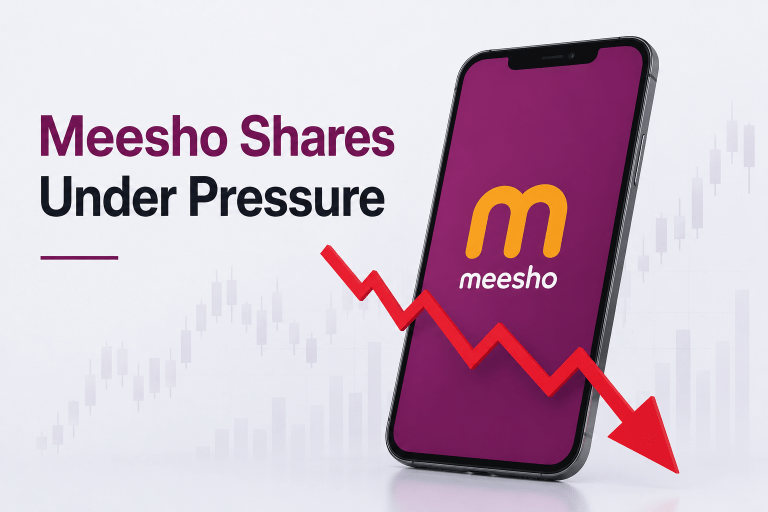
Meesho Shares Remain in Focus Amid Extended Post-Listing Correction
Shares of Meesho have witnessed continued selling pressure in recent trading sessions, drawing investor attention to the company’s post-listing performance. The recent decline comes after a strong rally following the company’s stock market debut, highlighting the volatility often seen in newly listed stocks.
Market participants are closely monitoring factors such as shareholder lock-in expiries, management updates, valuation expectations, and broader investor sentiment toward newly listed technology companies.
Why Have Meesho Shares Been Under Pressure?
Several factors have contributed to recent market activity in Meesho shares.
1. Expiry of Lock-In Period
One of the key developments has been the expiry of a shareholder lock-in period, which increased the number of shares eligible for trading in the market. While lock-in expiry does not necessarily mean shareholders will sell their holdings, it can increase available supply and influence market sentiment.
2. Leadership Changes
The company recently disclosed changes within its senior management team. Such developments often attract investor attention, particularly for recently listed companies where leadership continuity and execution are closely monitored.
3. Post-IPO Profit Booking
Following a strong post-listing rally, some investors may choose to book profits. Profit booking is a common market phenomenon, especially in stocks that experience sharp gains shortly after listing.
4. Valuation Reassessment
After an initial period of market enthusiasm, investors often reassess company valuations based on business fundamentals, earnings visibility, and future growth expectations.
Understanding Volatility in Newly Listed Stocks
Newly listed companies frequently experience higher volatility than established listed businesses.
Some common reasons include:
- Limited trading history
- Changing investor expectations
- Lock-in period expiries
- Institutional portfolio adjustments
- Profit booking after listing gains
- Market sentiment fluctuations
These factors can result in significant short-term price movements without necessarily changing the company’s underlying business fundamentals.
Meesho’s Business Performance
Despite recent share price volatility, investors continue to track the company’s operational performance.
According to recent company disclosures:
- Revenue growth has remained strong.
- User engagement and order volumes have expanded.
- The company has reported improvements in profitability metrics compared to previous periods.
- Investments continue across logistics, payments, and platform capabilities.
As with any listed company, investors often evaluate both stock price performance and underlying business performance separately.
Key Metrics Investors May Track
When evaluating e-commerce businesses, investors often focus on:
Revenue Growth
Consistent revenue growth can indicate increasing platform adoption and customer activity.
Active Users
Growth in transacting users may reflect expanding customer reach.
Order Volume
Higher order volumes can demonstrate increased platform engagement.
Profitability Path
Investors frequently monitor operating leverage, cash flows, and progress toward sustainable profitability.
Competitive Positioning
The ability to maintain market share and customer engagement remains an important factor in long-term business performance.
What Can Investors Learn From Post-Listing Volatility?
The recent movement in Meesho shares offers several lessons for investors:
Stock Prices and Business Performance Are Different
Short-term stock movements may be influenced by sentiment, liquidity, and trading activity rather than operational performance.
IPO Stocks Can Be Volatile
Recently listed companies often experience larger price swings compared to established market leaders.
Long-Term Evaluation Matters
Investors may benefit from focusing on financial performance, business execution, governance standards, and industry trends rather than short-term market reactions.
Diversification Remains Important
Diversification can help reduce company-specific risks within an investment portfolio.
India’s E-Commerce Opportunity
India’s e-commerce sector continues to benefit from:
- Growing internet penetration
- Digital payments adoption
- Expansion into Tier-2 and Tier-3 cities
- Increasing online shopping participation
- Improving logistics infrastructure
Companies operating in this sector are expected to remain closely watched as digital commerce adoption continues to expand across the country.
Conclusion
The recent correction in Meesho shares highlights the dynamic nature of newly listed stocks. Factors such as lock-in expiry, leadership changes, valuation reassessment, and profit booking have contributed to market activity. While short-term volatility remains part of the post-listing journey for many companies, investors often focus on business fundamentals, financial performance, and long-term growth prospects when evaluating listed businesses.
Disclaimer
This article is for educational and informational purposes only. It does not constitute investment advice, stock recommendations, or a solicitation to buy or sell securities. Investments in the stock market are subject to market risks. Investors should conduct their own research and consult a qualified financial advisor before making investment decisions.