RBI MPC Meeting in Focus as Investors Track Interest Rate Outlook
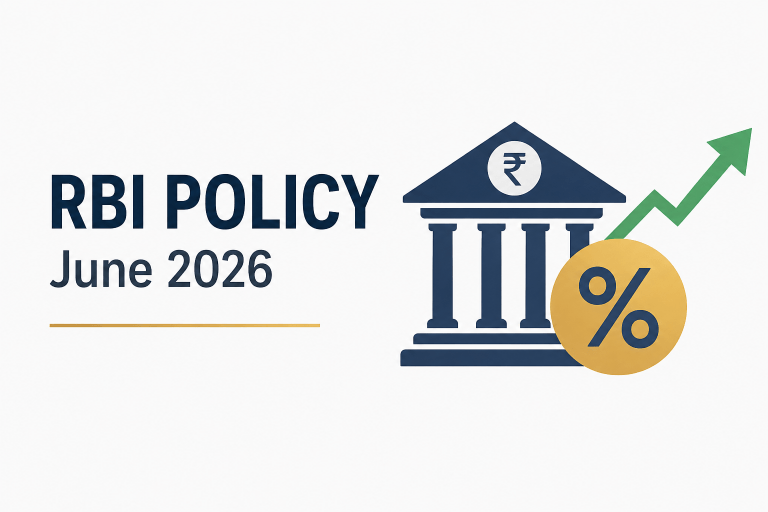
The Reserve Bank of India (RBI) is set to announce its June 2026 Monetary Policy Committee (MPC) decision, a key event closely watched by investors, businesses, and financial markets. The policy announcement comes amid concerns over rising crude oil prices, rupee volatility, inflation trends, and global economic uncertainty.
While many economists expect the RBI to maintain the repo rate at current levels, market participants are equally focused on the central bank’s commentary regarding inflation, growth, liquidity, and future policy direction.
Why RBI Monetary Policy Matters for Stock Markets
The RBI’s monetary policy directly influences borrowing costs, liquidity, and overall economic activity.
Key areas impacted by RBI policy include:
- Interest rates
- Consumer spending
- Business investments
- Corporate profitability
- Banking sector performance
- Bond yields
- Currency markets
As a result, stock markets often react not only to the policy decision itself but also to the RBI’s future guidance.
What Is the Repo Rate?
The repo rate is the interest rate at which the RBI lends money to commercial banks.
Changes in the repo rate can affect:
Borrowing Costs
Lower rates may reduce borrowing costs for businesses and consumers, while higher rates can increase loan expenses.
Economic Growth
Interest rate changes can influence spending, investments, and economic activity.
Inflation Management
The RBI uses monetary policy tools to balance economic growth with price stability.
Understanding repo rate movements can help investors better interpret market reactions during RBI policy announcements.
How Different RBI Outcomes May Affect Markets
Scenario 1: RBI Maintains Rates
A status quo decision is currently considered the most widely expected outcome by economists and market participants. If accompanied by stable economic projections, markets may focus on future growth and earnings trends rather than policy changes.
Scenario 2: RBI Signals a Hawkish Stance
Even without changing rates, the RBI may adopt a more cautious tone if inflation risks increase.
In such cases:
- Bond yields may rise
- Rate-sensitive sectors could see increased volatility
- Investors may reassess future interest rate expectations
Scenario 3: Unexpected Rate Hike
A surprise rate increase could affect sectors that are sensitive to borrowing costs, including banking, real estate, automobiles, and consumer discretionary businesses. Market participants generally evaluate such moves within the broader economic context.
Which Sectors Typically React to RBI Policy Decisions?
Banking and Financial Services
Banks are often among the most closely watched sectors during RBI announcements because interest rates can influence lending activity, margins, and deposit growth.
Real Estate
Housing demand and mortgage affordability may be influenced by interest rate trends.
Automobile Sector
Vehicle financing costs can affect consumer purchasing decisions.
Consumer-Focused Businesses
Interest rates may impact household spending patterns and discretionary consumption.
Infrastructure and Capital Goods
Long-term projects often depend on financing conditions and investment activity.
Factors Influencing RBI’s June 2026 Decision
Several macroeconomic developments are currently shaping policy discussions:
Inflation Trends
Inflation remains one of the RBI’s primary considerations when setting monetary policy.
Crude Oil Prices
India’s dependence on imported crude oil means energy prices can influence inflation and economic stability.
Currency Movement
The performance of the Indian rupee continues to be closely monitored by policymakers and market participants.
Global Economic Conditions
Geopolitical developments, global interest rates, and international capital flows may influence domestic policy decisions.
What Should Investors Focus On?
Rather than reacting solely to the headline interest rate decision, investors often evaluate:
- RBI’s policy stance
- Inflation projections
- Economic growth forecasts
- Liquidity measures
- Commentary from the RBI Governor
- Sector-specific implications
Market movements immediately after policy announcements can sometimes reflect short-term sentiment rather than long-term fundamentals.
Key Lessons for Long-Term Investors
Avoid Making Decisions Based on a Single Event
Monetary policy announcements represent one factor among many influencing market performance.
Focus on Fundamentals
Company earnings, business quality, governance standards, and sector trends remain important drivers of long-term investment outcomes.
Maintain Diversification
Diversified portfolios may help reduce the impact of short-term market volatility.
Monitor Economic Indicators
Interest rates, inflation, employment, and economic growth collectively shape investment environments over time.
Conclusion
The RBI’s June 2026 monetary policy announcement is expected to be a significant event for Indian financial markets. While the interest rate decision will attract considerable attention, investors may benefit from focusing on the broader economic outlook, policy guidance, and long-term fundamentals rather than short-term market reactions. Understanding how monetary policy affects different sectors can help investors make more informed decisions during periods of market uncertainty.
FAQ
This article is intended solely for educational and informational purposes. It does not constitute investment advice, stock recommendations, financial planning advice, or a solicitation to buy or sell securities. Market reactions to RBI policy decisions can vary based on multiple economic factors. Investors should conduct their own research and consult qualified financial professionals before making investment decisions.