

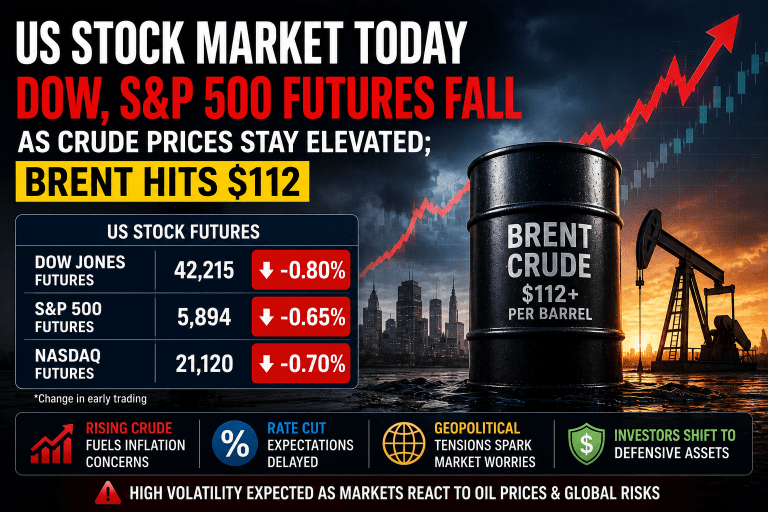
US stock market futures traded sharply lower on May 18 as rising crude oil prices, inflation concerns, and geopolitical tensions continued to weigh on global investor sentiment. Futures linked to the Dow Jones Industrial Average, S&P 500, and Nasdaq declined during early trade after Brent crude oil prices surged above $112 per barrel.
The sharp rise in oil prices triggered concerns around inflation, global economic slowdown, and potential pressure on central banks to keep interest rates elevated for a longer period.
Dow Jones and S&P 500 Futures Under Pressure
US futures markets witnessed broad-based weakness during overnight trading.
Futures Performance
- Dow Jones futures fell up to 0.8%
- S&P 500 futures declined sharply
- Nasdaq futures also traded lower
- Energy and commodity-linked stocks outperformed broader markets
The decline reflected growing investor nervousness around rising energy costs and inflationary risks.
Brent Crude Oil Crosses $112 Per Barrel
One of the biggest triggers behind the market weakness was the sharp rise in global crude oil prices.
Brent crude crossed the $112 per barrel mark amid:
- Geopolitical tensions in the Middle East
- Supply disruption concerns
- Tight global energy markets
- Strong summer fuel demand expectations
Higher crude oil prices generally impact global equities negatively because they increase inflationary pressure and raise input costs for businesses.
Why Rising Crude Prices Hurt Global Stock Markets
Crude oil prices play a major role in determining market sentiment globally.
Key Concerns for Investors
Inflation Risk
Higher fuel and transportation costs increase overall inflation.
Pressure on Central Banks
Persistent inflation may force the US Federal Reserve and other central banks to delay interest rate cuts.
Slower Economic Growth
Elevated energy costs reduce consumer spending power and corporate profitability.
Market Volatility
Energy-driven inflation often increases uncertainty across financial markets.
Analysts believe sustained crude prices above $110 could create fresh challenges for equity markets globally.
Nasdaq and Technology Stocks Face Pressure
Technology and growth stocks remained under pressure because higher bond yields and inflation concerns negatively affect high-growth valuations.
Investors reduced exposure to riskier assets amid fears that:
- Interest rates could stay elevated longer
- Economic growth may slow
- Corporate earnings could weaken
Large-cap tech stocks have become highly sensitive to interest rate expectations over the past two years.
US Treasury Yields Remain Elevated
US Treasury yields stayed firm as investors continued reassessing the Federal Reserve’s future policy path.
Higher bond yields generally reduce the attractiveness of equities because fixed-income assets start offering better risk-adjusted returns.
Rising Yields Impact:
- Technology stocks
- Growth companies
- Emerging markets
- High-valuation sectors
The bond market remains one of the key indicators influencing global stock market direction.
Wall Street Investors Turn Cautious
Market sentiment on Wall Street remained cautious as traders monitored multiple global risks simultaneously.
Key Factors Affecting Sentiment
- Rising crude oil prices
- Sticky inflation concerns
- US interest rate uncertainty
- Geopolitical tensions
- Weak global growth outlook
Investors are increasingly shifting toward defensive sectors such as:
- Energy
- Utilities
- Healthcare
- Consumer staples
while reducing exposure to speculative and high-growth stocks.
Energy Stocks Outperform Amid Oil Rally
While broader markets remained under pressure, energy companies benefited from the sharp rally in crude oil prices.
Oil producers and energy-linked businesses typically gain when crude prices rise because their revenues and margins improve significantly.
Analysts expect the energy sector to remain volatile but relatively stronger if oil prices continue staying elevated.
Impact on Indian Stock Market
Weak US futures and elevated oil prices are likely to influence Indian equities as well.
India remains one of the largest crude oil importers globally, making rising oil prices a major concern for domestic markets.
Possible Impact on Indian Markets
- Pressure on rupee
- Higher inflation risks
- Increased import costs
- FII outflows
- Weakness in rate-sensitive sectors
Oil marketing companies, aviation stocks, paint companies, and logistics businesses may remain under pressure if crude prices continue rising.
Global Markets React to Geopolitical Risks
Geopolitical tensions remained one of the biggest drivers behind commodity market volatility.
Investors globally are monitoring:
- Middle East developments
- Energy supply disruptions
- Shipping route risks
- Trade uncertainty
Any escalation in geopolitical conflict could further impact global risk sentiment and commodity prices.
What Investors Should Watch Next
Market participants are expected to closely track:
- Brent crude oil movement
- US inflation data
- Federal Reserve commentary
- Treasury yield movement
- Dollar index
- Corporate earnings
Volatility is expected to remain elevated until investors receive clearer signals regarding inflation and interest rates.
Expert View on Current Market Trend
Market experts believe global markets are currently entering a highly sensitive macroeconomic phase where commodities, inflation, and monetary policy are driving short-term sentiment more than earnings growth.
Analysts suggest investors remain cautious and focus on:
- Quality companies
- Strong balance sheets
- Defensive sectors
- Long-term investment horizon
rather than reacting emotionally to short-term volatility.
Conclusion
US stock market futures fell sharply as Brent crude oil prices surged above $112 per barrel, intensifying concerns around inflation, interest rates, and global economic growth.
Dow Jones, S&P 500, and Nasdaq futures traded lower amid weakness in technology and growth stocks, while energy companies outperformed due to rising oil prices.
Global investors are expected to remain cautious as markets continue reacting to crude oil volatility, bond yields, and geopolitical developments.
Disclaimer
This article is intended solely for informational and educational purposes and should not be considered investment advice, stock recommendation, or financial guidance. Stock market investments are subject to market risks. Investors should conduct their own research and consult a SEBI-registered financial advisor before making any investment decisions.