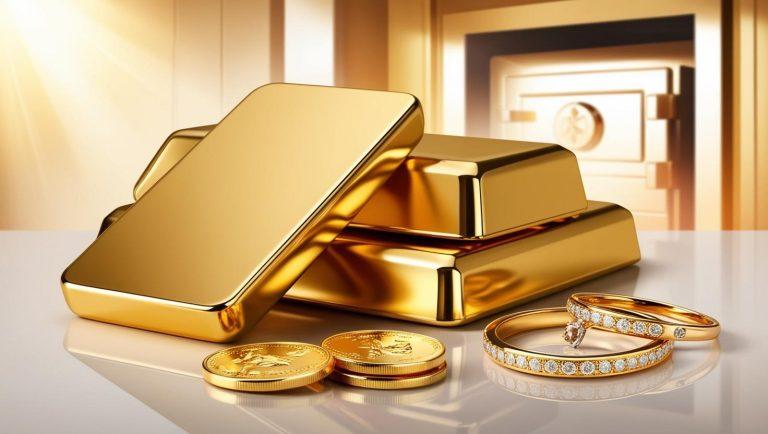
Gold has become the quiet force reshaping global market sentiment as we move toward 2026. Everywhere you look—whether it’s the global commodities market, currency chatter, or India’s own gold rate—the story feels the same. Gold is moving with a kind of conviction we don’t usually see for this long.
And with forecasts pointing toward $4,600–$4,800 in 2026 and demand holding steady, the precious metal has turned into one of the biggest talking points in the market.
This article breaks down the gold narrative in a clean, reader-friendly way—short paragraphs, crisp pointers, and a natural storytelling flow that works for both SEO and real people.
Market Performance: Gold Price Today & Recent Moves
Gold has been riding a powerful, uninterrupted wave. The metal posted nine consecutive quarterly highs, including Q4 2025—one of the longest sustained runs in modern market history.
What’s pushing gold higher today?
A mix of global and domestic pressures:
- Softening inflation signals
- Expectations of US interest-rate cuts
- Weakening dollar
- Rising economic uncertainties across major markets
This combination has built the foundation for a gold rally that refuses to fade.
Gold’s recent moves show this shift clearly:
- Gold hit a peak of $4,398 (October 20, 2025)
- Then corrected 11% to $3,891
- Regained strength and moved back toward $4,299 in December 2025
This rebound wasn’t noise—it reflected renewed confidence in lower interest rates and easing global macro stress.
Main News: Gold Price Forecast 2026 Points to $4,600–$4,800
The standout number across the board is the 2026 gold price forecast of $4,600–$4,800.
These projections are supported by familiar structural forces shaping the global gold cycle:
- Strong central-bank gold buying
- Persistent inflation pressures
- Rising concerns around US deficits
- Questions over the durability of the US economy and tariff actions
- Sustained demand from institutional and retail participants
The narrative here is simple:
When uncertainty grows, and trust in fiat weakens, gold quietly becomes the anchor.
Another major global institution has also upgraded its 2026 gold price outlook, setting a forecast of $4,450 an ounce, previously at $4,000. It now sees gold trading in a $3,950–$4,950 range next year.
It describes today’s market structure as one where:
- Heavy gold buying absorbs the available supply.
- ETF inflows continue
- Jewellery demand competes with investment inflows.
- Global uncertainties tighten the supply-demand balance.
Its 2027 estimate remains at $5,150, positioned between a normalised market setup and prolonged elevated official-sector buying.
Another major global institution sees gold nearing $4,500 by mid-2026, supported by:
- Strong physical demand from ETFs
- Continued central-bank accumulation
- A cloudy global macro-economic backdrop
It also highlighted that recent pullbacks helped reset overbought indicators, giving the market healthier positioning moving forward.
Gold Market Momentum: What’s Driving This Multi-Year Rally
Gold’s current trajectory is not just a rally—it’s turning into a structural shift in global commodities.
Several layers of demand are pushing gold into a zone where supply struggles to keep pace.
Key Drivers of Gold’s Multi-Year Upswing
- Continuous central-bank purchases
- Inflation that remains stubborn in major economies
- A weakening dollar outlook
- Expectations of 75 bps worth of rate cuts in 2026
- Institutional interest in gold as a hedge
- Retail and speculative demand are building on top
Each layer reinforces the other, creating a foundation stronger than earlier cycles.
For context:
Gold has delivered 8% annualised returns over the last five decades during periods of macro stress. This time, the ascent has been steeper and more aggressive.
Gold Price in India: Why Domestic Rates Are Even Higher
India’s gold price story has taken its own shape, influenced by the local macro setup.
Domestic gold prices currently sit around 15% higher than in Dubai.
This gap comes from:
- Import duties that inflate landed prices.
- A weak rupee that makes gold costlier locally
- A higher appetite for physical gold within India
- Cross-border bullion flows responding to price advantages.
India often amplifies global gold trends—and this cycle is no different.
When global prices rise, the domestic gold rate in India tends to climb even faster.
This is why searches for gold price today, gold rate in India, and gold price in India keep hitting new highs.
Company Details
Gold Market Structure — Key Points
- Central-bank buying remains elevated.
- ETF inflows are absorbing large portions of the global supply
- Jewellery demand is stable, but is competing for reduced metal availability.
- Investors are reacting to fiscal uncertainty across major Western economies.
- Official-sector buying continues to influence long-term price behaviour.
This supply-demand alignment is what supports the gold price forecast for 2025 and 2026.
Summary: Gold’s Long-Term Story Continues to Build
Gold is in one of its most defining cycles, and the numbers tell the story clearly:
- Forecast range for 2026: $4,600–$4,800
- Another global forecast lifted to $4,450
- Gold is expected to trade in $3,950–$4,950 range next year.
- 2027 gold outlook held at $5,150
- Nine straight quarterly highs
- Recent peak: $4,398, correction: 11%, recovery: $4,299
Gold’s momentum isn’t a short-term spike—it’s being built by structural forces that continue to shape the global commodities landscape.
For India, the story feels even more intense.
The gold price in India remains elevated due to currency pressure and import duties, making gold a dominant theme across commodities and investment conversations.
As gold moves deeper into 2026, its role in the global financial system is only.