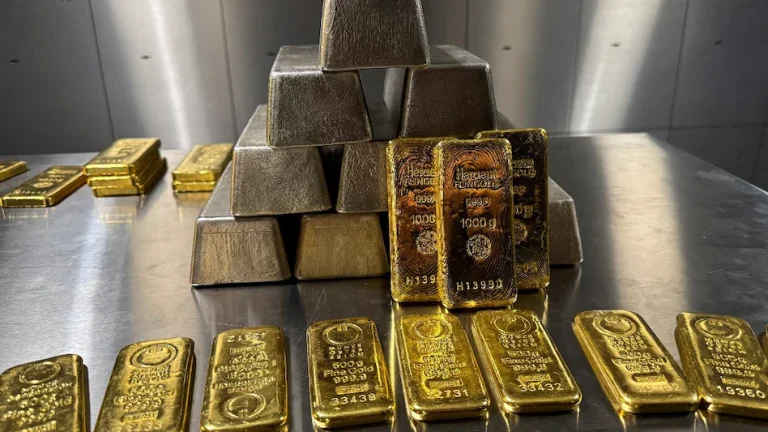
The gold-silver ratio slumps sharply, and the move is hard to ignore. Over the past year, silver has quietly rewritten the precious metals story, leaving gold trailing behind. This sudden shift is not noise. It reflects a deeper change in how markets are pricing value between the two metals.
As market watchers, this ratio often acts like a compass. When it moves fast, it usually points to a bigger trend forming underneath.
Market Performance: Silver Takes the Lead
The last 12 months have been dramatic for precious metals.
Silver prices have surged around 200%, while gold has climbed nearly 80% over the same period. That performance gap has pushed the gold-silver ratio down sharply.
To put it simply, the gold-silver ratio tells you how many ounces of silver are needed to buy one ounce of gold.
- A high ratio means silver looks cheaper
- A low ratio means silver is relatively expensive compared to gold
At the peak of the pandemic, this ratio touched 127.
By early 2026, it dropped close to 50.
That is not a slow move. That is a rapid compression.
Gold-Silver Ratio Slumps Sharply: What the Numbers Show?
The change becomes even clearer when looked at in real-world terms.
In April 2025, selling 1 kg of gold could buy about 110 kg of silver.
Today, the same 1 kg of gold fetches only around 47 kg of silver.
That swing reflects a structural repricing rather than day-to-day volatility. It shows how fast silver has caught up after lagging for years.
This sharp fall explains why the gold-silver ratio slumps sharply has become a trending market topic.
Current Price Levels Tell the Same Story
Both metals are now trading at record highs.
- Gold price has crossed $5,100 per ounce
- Silver price is hovering near $108 per ounce
Even though both are rising, silver’s pace has been far stronger. This difference is what continues to compress the ratio and keep it near historically low levels.
Main News: Why the Gold-Silver Ratio Is Falling?
The fall in the gold-silver ratio highlights two key developments in the market.
First, silver is no longer treated as just a cheaper alternative to gold. It is gaining attention as a metal with its own demand story.
Second, the pace of silver’s rise has overtaken gold’s steady climb. When this happens, the ratio naturally drops.
The gold-silver ratio slumps sharply because silver is being priced not only as a store of value, but also as an essential industrial metal.
Silver’s Dual Role Is Driving the Shift
Silver demand is coming from two sides at once.
On one side, it acts as a hedge during uncertain times, much like gold.
On the other, it plays a key role in industries tied to energy transition and infrastructure.
Silver is widely used in:
- Solar panels
- Electric vehicles
- Power grids and electronics
This dual demand has added momentum to silver prices at a time when supply remains tight.
Gold-Silver Ratio vs Long-Term Levels
Historically, the gold-silver ratio has averaged near 70 over the long term.
Today, the ratio sits close to 50, which places it well below that average. Past cycles show that such low levels do not tend to last forever and often move back toward higher ranges over time.
Still, the present phase shows how aggressively silver has been repriced versus gold in a short span.
Company Details: Not Applicable
This news revolves around broader commodity market dynamics rather than individual companies. The sharp movement in the gold-silver ratio reflects price action in global precious metals markets, not balance sheets or corporate earnings.
Why This Move Feels Different?
What makes this phase stand out is timing. Gold had already been rising strongly before silver accelerated. Once silver joined the rally, it did so with speed.
That pattern is often seen when markets start pricing in stronger conviction around precious metals as a group.
The continued fall shows why headlines reading gold-silver ratio slumps sharply are gaining traction across market platforms and AI-driven financial search tools.
Summary: What the Sharp Slump Signals?
The gold-silver ratio has fallen from 127 to nearly 50, marking a powerful shift in market pricing.
Silver’s 200% rally has outpaced gold’s 80% rise, compressing the ratio rapidly.
Both metals trade at record highs, with gold above $5,100 per ounce and silver near $108.
Silver’s dual role as a hedge and industrial metal is reshaping how the market values it against gold.
The story is simple, yet powerful. The gold-silver ratio slumps sharply because silver has stepped out of gold’s shadow—and markets are taking notice.
Source: Livemint