
Rising Crude Prices Hit Airline Economics
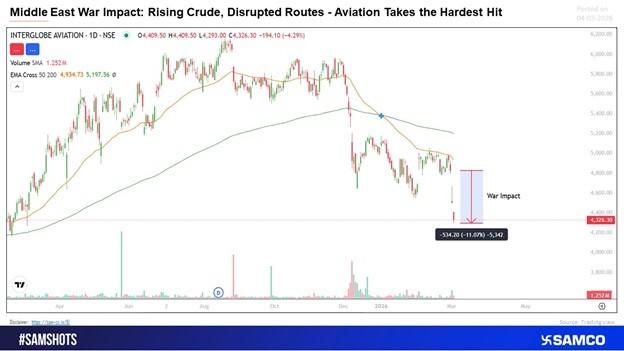
The ongoing tensions in the Middle East are sending shockwaves through global energy markets, with India’s aviation sector emerging as one of the most vulnerable industries. Airlines are extremely sensitive to fluctuations in crude oil prices because aviation turbine fuel (ATF) a derivative of crude typically accounts for 35–40% of an airline’s operating costs.
As Brent Crude Oil experiences heightened volatility due to geopolitical uncertainty, airlines face a direct increase in fuel expenses. Higher fuel costs quickly compress operating margins, especially in a competitive market like India where ticket pricing power remains limited.
Strategic Importance of Middle East Routes
India’s aviation network has deep operational ties with the Middle East. Nearly 50% of India’s international passenger traffic connects to destinations in the region, with the United Arab Emirates corridor ranking among the busiest international routes.
The region also functions as a global transit hub connecting India with Europe and North America. This makes uninterrupted access to Middle Eastern airspace critical for maintaining efficient flight operations.
Operational Challenges from Route Disruptions
Any disruption caused by geopolitical risks, airspace closures, or rerouting requirements forces airlines to operate longer flight paths. This leads to:
- Higher fuel consumption
- Extended travel time
- Increased crew and operational costs
- Lower aircraft utilisation
These inefficiencies directly erode profitability and complicate scheduling for airlines operating long-haul and transit-heavy routes.
Impact on IndiGo and Indian Aviation
Major carriers such as InterGlobe Aviation — which operates IndiGo — rely significantly on international growth via Middle East connections. Any sustained disruption in this corridor could translate into rising operational costs and short-term pressure on earnings.
Given the sector’s dependence on fuel prices and global route stability, aviation stocks tend to react quickly to geopolitical developments in the region.
Sector Outlook
While passenger demand remains structurally strong, the Indian aviation sector remains highly exposed to geopolitical shocks, especially those impacting crude oil prices and Middle Eastern air corridors. If tensions persist, airlines may face continued cost pressures and operational challenges in the near term.