
Rising Crude Prices Trigger Market Reaction
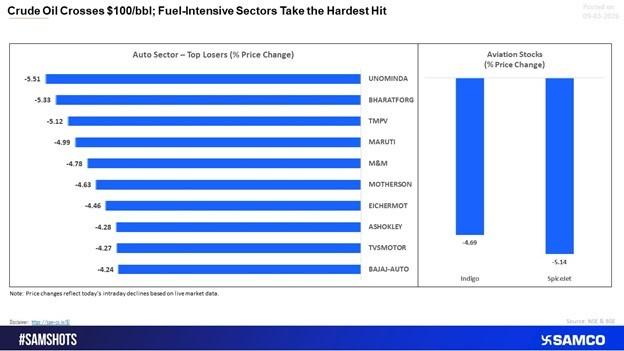
Global crude oil prices crossing the $100 per barrel mark have started to impact fuel-sensitive sectors in the equity market, particularly automobiles and aviation. Rising energy prices typically increase operating and input costs for companies that depend heavily on fuel, leading to margin pressure and negative sentiment in related stocks.
The latest market reaction shows that auto and airline stocks were among the worst performers, reflecting investor concerns about rising fuel costs and potential demand slowdown.
Auto Sector Sees Sharp Declines
The automobile sector witnessed notable selling pressure as higher crude prices often translate into increased logistics, raw material, and production costs.
Several major auto-related companies recorded significant declines:
- UNO Minda: -5.5%
- Bharat Forge: -5.3%
- Tata Motors (TMPV): -5.1%
- Maruti Suzuki: -4.9%
- Mahindra & Mahindra: -4.7%
- Motherson: -4.6%
- Eicher Motors: -4.5%
- Ashok Leyland: -4.3%
- TVS Motor: -4.3%
- Bajaj Auto: -4.2%
Higher fuel costs can increase vehicle ownership expenses, which may reduce consumer demand if fuel prices rise sharply.
Aviation Stocks Also Under Pressure
The aviation sector is even more sensitive to crude oil price movements, as fuel accounts for nearly 35–40% of airline operating costs.
As crude prices surged, airline stocks saw immediate selling pressure:
- IndiGo: -4.7%
- SpiceJet: -5.1%
Rising crude oil prices typically push up Aviation Turbine Fuel (ATF) costs, which directly impacts airline profitability unless carriers pass the increased costs to passengers through higher ticket prices.
Why Crude Oil Prices Matter for Stock Markets?
Crude oil is one of the most critical macroeconomic variables influencing global markets. When prices surge:
- Corporate margins shrink in fuel-intensive industries
- Transportation and logistics costs rise
- Inflationary pressure increases
- Consumer spending power weakens
These factors often lead investors to reassess earnings expectations, resulting in short-term stock price corrections.
Market Outlook: Fuel-Sensitive Sectors May Face Headwinds
If crude oil prices remain above the $100 mark, fuel-dependent sectors such as automobiles, aviation, logistics, and chemicals could continue to face near-term pressure.
However, the impact will depend on:
- The duration of elevated crude prices
- The ability of companies to pass on higher costs
- Global demand trends and macroeconomic conditions
Investors may remain cautious toward fuel-sensitive sectors until crude oil prices stabilize.
Conclusion
The surge in global crude oil prices above $100 per barrel has already started to impact equity markets, with auto and aviation stocks leading the decline. Rising fuel costs pose a risk to corporate margins and demand outlook, which explains the sharp reaction in these sectors.
If crude prices stay elevated, fuel-intensive industries may continue to face volatility and earnings pressure in the near term.