Rupee Depreciates Amid Global Macro Pressures
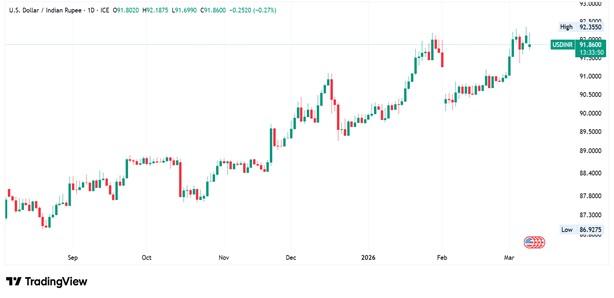
The Indian rupee recently touched historic lows near 92 against the US dollar, raising concerns across currency and bond markets. The sharp depreciation reflects the impact of two major global forces: surging crude oil prices and broad-based strength in the US dollar.
These external pressures have intensified volatility in emerging market currencies, with the rupee facing significant downside pressure in recent trading sessions.
Rising Crude Oil Prices Increase Dollar Demand
One of the primary drivers behind the rupee’s weakness has been the sharp rise in global crude oil prices. Oil prices surged after US–Israeli airstrikes on Iran, triggering fears of potential supply disruptions through the Strait of Hormuz, one of the world’s most critical oil transit routes.
For India, the impact is particularly significant because the country imports nearly 85% of its crude oil requirements. When oil prices rise, Indian refiners require more dollars to pay for imports, increasing dollar demand in the foreign exchange market and putting structural pressure on the rupee.
Strong US Dollar Adds Further Pressure
At the same time, the US dollar has strengthened globally, driven by rising geopolitical tensions and risk-off sentiment among investors.
The Dollar Index (DXY) has rallied as investors moved toward safer assets, which has put additional pressure on emerging market currencies, including the Indian rupee.
This combination of higher oil prices and dollar strength has created a challenging environment for the rupee in recent weeks.
RBI Intervenes to Stabilize the Currency
The Reserve Bank of India (RBI) responded quickly to curb excessive volatility in the currency market.
Key Measures Taken by RBI
1. Dollar Sales in Forex Market
The RBI sold dollars through state-run banks in both spot and non-deliverable forward (NDF) markets, increasing dollar supply to stabilize the rupee. This intervention helped pull the currency back from around 92 per dollar to nearly 91.6 levels.
2. Open Market Operations (OMO)
The central bank also announced open market operations worth ₹1 lakh crore, purchasing government bonds to inject liquidity into the banking system and provide indirect support to bond yields.
3. Restructuring Short Dollar Forward Book
Another strategic step was the restructuring of the RBI’s short dollar forward positions, where near-term obligations were rolled further into the future. This move helps the central bank preserve its intervention capacity if currency pressure intensifies again.
RBI Signals Commitment to Prevent Disorderly Moves
The RBI’s actions indicate a clear message: the central bank is willing to actively intervene to prevent disorderly depreciation of the rupee.
However, the currency remains vulnerable due to ongoing external risks such as:
- Volatility in crude oil prices
- Escalating geopolitical tensions
- Continued strength in the US dollar
Market Outlook for the Indian Rupee
Going forward, the rupee’s trajectory will largely depend on global macroeconomic developments. If crude oil prices remain elevated or geopolitical tensions escalate further, downward pressure on the rupee could persist.
At the same time, the RBI’s proactive intervention strategy and liquidity measures may help limit extreme volatility.
For now, investors and market participants are likely to closely monitor oil prices, global risk sentiment, and central bank actions, as these factors will determine the near-term direction of the Indian rupee.