

The global energy market is once again at the center of geopolitical turmoil as tensions between the United States and Iran intensify around the Strait of Hormuz.
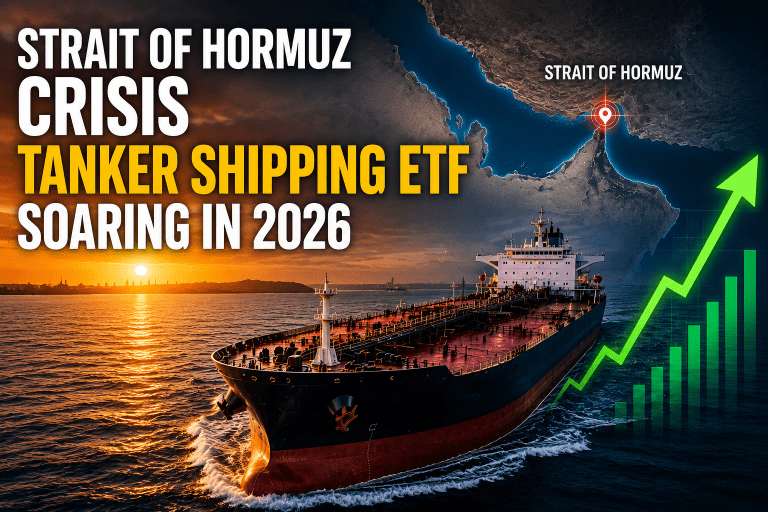
What initially appeared to be a regional conflict has now evolved into a full-scale disruption of global oil transportation, tanker freight markets, and energy supply chains. One of the biggest beneficiaries of this crisis has been the Breakwave Tanker Shipping ETF, which has emerged as one of the strongest-performing thematic investment products of 2026.
As tanker freight rates surge and oil transportation becomes increasingly expensive, investors across the globe are closely tracking shipping ETFs, tanker stocks, crude oil prices, and maritime trade developments.
Summary
- The Strait of Hormuz crisis has disrupted global oil transportation
- Tanker freight rates surged due to shipping risks and supply constraints
- Breakwave Tanker Shipping ETF rallied sharply amid rising freight prices
- Oil tanker stocks are benefiting from higher transportation demand
- Crude oil prices and war-risk insurance premiums are increasing
- Investors are viewing shipping ETFs as geopolitical hedge opportunities
- Any diplomatic breakthrough could quickly reverse the rally
What Is the Breakwave Tanker Shipping ETF?
The Breakwave Tanker Shipping ETF is a specialized exchange-traded fund that tracks tanker freight futures rather than directly investing in shipping company stocks.
Unlike traditional shipping ETFs that hold shares of logistics or transportation firms, this ETF is designed to reflect changes in global tanker freight pricing.
This means the ETF tends to rise when:
- Oil transportation demand increases
- Tanker availability declines
- Shipping routes become disrupted
- Freight costs surge globally
As geopolitical tensions escalated in the Middle East during 2026, tanker shipping rates experienced extraordinary volatility, pushing the ETF significantly higher.
The rally has attracted both institutional investors and retail traders looking to capitalize on rising energy transportation costs.
Why the Strait of Hormuz Matters to the Global Economy
The Strait of Hormuz is one of the world’s most important maritime oil chokepoints.
Located between the Persian Gulf and the Gulf of Oman, the route handles nearly 20% of global crude oil trade every single day.
Major oil-exporting nations dependent on this route include:
- Saudi Arabia
- United Arab Emirates
- Kuwait
- Iraq
- Qatar
Any disruption in this region immediately impacts:
- Global oil prices
- Energy supply chains
- Shipping costs
- Fuel inflation
- Freight markets
- Global stock markets
Because of its strategic importance, the Strait of Hormuz has historically been one of the most closely monitored regions during geopolitical conflicts.
What Triggered the Tanker Shipping Rally?
Rising US-Iran Tensions
The recent escalation between the United States and Iran significantly increased concerns around maritime security and oil transportation safety.
Several reports suggested:
- Increased naval activity
- Cargo inspections
- Shipping restrictions
- Vessel rerouting
- Export disruptions
As uncertainty rose, shipping companies began charging substantially higher freight rates to compensate for operational risks.
Tanker Freight Rates Have Exploded
Freight rates are the prices charged for transporting crude oil via tanker ships.
When shipping becomes risky or tanker supply tightens, freight rates can surge dramatically.
Current market conditions created the perfect storm:
- Fewer available tankers
- Higher insurance costs
- Longer shipping routes
- Increased transportation demand
This pushed tanker day rates sharply higher.
In some shipping routes, freight charges reportedly surged multiple times above historical averages.
Understanding Different Types of Oil Tankers
The tanker shipping industry operates through multiple vessel categories, each serving different transportation routes and cargo capacities.
VLCC (Very Large Crude Carrier)
VLCCs are among the largest oil tankers globally and are commonly used for transporting crude oil between the Middle East, Asia, and Europe.
These ships typically carry around 2 million barrels of oil.
Suezmax Tankers
Suezmax vessels are medium-sized crude carriers designed to pass through the Suez Canal efficiently.
They are heavily used in Europe-bound oil transportation.
Aframax Tankers
Aframax tankers are smaller vessels often used for shorter regional routes and flexible delivery operations.
During supply disruptions, all tanker categories may experience rising freight demand.
Why Insurance Costs Are Rising
One major reason behind higher shipping costs is the sharp increase in war-risk insurance premiums.
Shipping companies operating near conflict zones must pay significantly higher insurance fees due to:
- Military threats
- Vessel seizure risks
- Drone attacks
- Naval confrontation fears
These additional costs are eventually passed on through higher freight charges.
Why Alternative Shipping Routes Increase Costs
Many shipping operators are now avoiding high-risk zones and taking longer international routes.
This creates several problems:
- Increased fuel consumption
- Longer delivery timelines
- Reduced vessel availability
- Higher operational expenses
Longer voyages effectively reduce global tanker capacity, which further supports rising freight rates.
Impact on Global Oil Prices
The shipping disruption is directly influencing global crude oil markets.
Whenever transportation routes become unstable, traders fear potential supply shortages.
This often pushes oil prices higher because:
- Supply delivery slows down
- Transportation becomes expensive
- Inventory risks increase
- Market uncertainty rises
Historically, geopolitical disruptions involving major oil transit routes have triggered strong rallies in energy prices.
How Indian Markets Could Be Impacted
India is one of the world’s largest crude oil importers and remains highly sensitive to disruptions in global oil transportation.
Indian companies likely affected include:
- Indian Oil Corporation
- Bharat Petroleum
- Hindustan Petroleum
- Reliance Industries
Potential impacts on India include:
- Higher fuel prices
- Rising inflation
- Increased import costs
- Pressure on airline and logistics sectors
- Volatility in energy stocks
Indian equity markets often react sharply when crude oil prices surge unexpectedly.
Tanker Stocks Benefiting From the Crisis
Several tanker companies are attracting investor attention due to rising freight rates.
Popular tanker-linked companies include:
- Scorpio Tankers
- Frontline plc
- Euronav
These firms generally benefit when:
- Vessel utilization rises
- Freight rates increase
- Tanker demand surges
- Oil transportation capacity tightens
As a result, tanker stocks are increasingly being viewed as tactical geopolitical investment opportunities.
Why Investors Are Buying Shipping ETFs
Shipping ETFs are currently gaining popularity because they offer exposure to:
- Freight market volatility
- Oil transportation demand
- Energy supply-chain disruptions
- Geopolitical uncertainty
Unlike traditional oil investments, tanker ETFs directly benefit from higher transportation costs rather than only rising crude oil prices.
This makes them unique market instruments during shipping crises.
Historical Examples of Shipping Market Surges
The tanker industry has historically witnessed sharp rallies during periods of geopolitical conflict.
Examples include:
- Gulf War disruptions
- Russia-Ukraine energy crisis
- Red Sea shipping attacks
- OPEC supply tensions
During such periods, freight markets often experience extreme volatility due to uncertainty surrounding global energy transportation.
Risks Investors Should Know
Despite the extraordinary rally, tanker ETFs remain highly volatile.
Key Risks Include:
- Sudden diplomatic agreements
- Falling oil prices
- Reduced freight demand
- Restoration of normal shipping routes
- Government intervention
- High speculative trading activity
If geopolitical tensions ease quickly, freight rates could decline sharply, potentially causing heavy losses for shipping-focused investors.
Should Investors Buy Tanker Shipping ETFs Now?
Investors considering tanker ETFs should understand that these are momentum-driven and event-sensitive investments.
Bullish Factors
- Rising freight rates
- Continued geopolitical tensions
- Oil transportation bottlenecks
- Higher tanker demand
Bearish Factors
- Peace negotiations
- Falling crude oil prices
- Shipping normalization
- Reduced energy demand
These ETFs may suit aggressive investors comfortable with high volatility and short-term market swings.
FAQs
Why is the Breakwave Tanker Shipping ETF rising?
The ETF is rising because tanker freight rates surged amid disruptions in oil transportation caused by escalating US-Iran tensions near the Strait of Hormuz.
What is the Strait of Hormuz?
The Strait of Hormuz is a critical global oil transit corridor through which nearly 20% of global crude oil trade passes daily.
Are tanker ETFs risky investments?
Yes. Tanker ETFs are highly volatile because they depend heavily on freight rates, geopolitical developments, shipping demand, and energy market conditions.
Which tanker stocks may benefit from rising freight rates?
Companies like Scorpio Tankers, Frontline plc, and Euronav often benefit from higher tanker demand and rising freight pricing.
How does the Strait of Hormuz affect oil prices?
Any disruption in the Strait of Hormuz can slow global oil transportation, tighten supply availability, and push crude oil prices higher worldwide.
Final Thoughts
The ongoing Strait of Hormuz crisis has transformed tanker shipping into one of the biggest market themes of 2026.
As geopolitical uncertainty disrupts global energy transportation, tanker freight rates, shipping ETFs, and oil tanker stocks are witnessing extraordinary momentum.
However, the sector remains highly sensitive to diplomatic developments and global energy demand trends.
For investors, the current rally highlights how quickly geopolitical events can reshape global financial markets — especially in the energy and shipping sectors.