A major shift is unfolding in global energy markets.
The United Arab Emirates has decided to exit OPEC after decades of membership — signalling a move toward prioritising its own production strategy over cartel quotas.
This is not just a geopolitical headline.
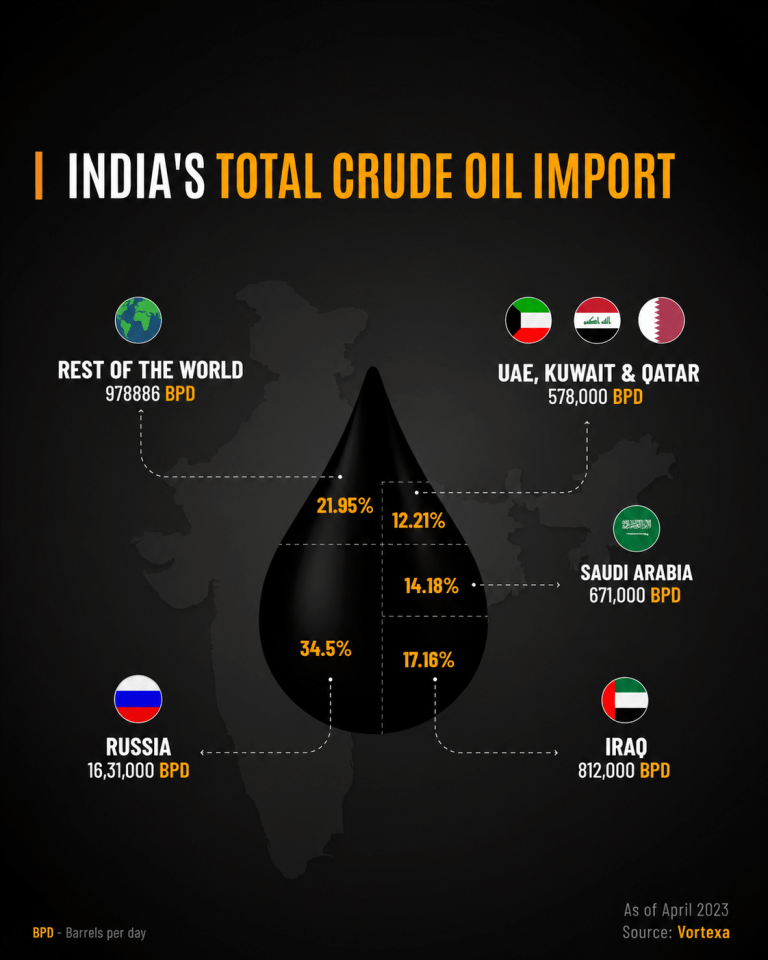
For India — a country that imports nearly 85% of its crude oil — this development could reshape energy security, pricing dynamics, and sectoral stock performance.
What Happened: UAE’s Exit from OPEC Explained

The UAE had:
- Production capacity: ~4.8 million barrels per day
- OPEC quota: ~3.2 million barrels per day
By exiting OPEC, the UAE gains:
- Freedom to increase production
- Control over pricing strategy
- Flexibility to align output with national economic goals
This marks a shift from collective supply control → individual production strategy
Why UAE Left OPEC: The Real Reason
At its core, the decision reflects a conflict between capacity and restriction.
- UAE has invested heavily in expanding production
- OPEC quotas limited its ability to fully utilise capacity
- National revenue optimisation became a priority
👉In simple terms:
Higher capacity + restricted output = incentive to exit
Why This Matters for India
India’s crude oil ecosystem is deeply linked to the Middle East.
Key implications:
1. Potential Supply Flexibility
If UAE increases production independently:
- More oil supply could enter global markets
- Potential easing of supply constraints
2. Pricing Dynamics May Change
OPEC traditionally influences prices through coordinated cuts or increases.
With UAE acting independently:
- Price volatility may increase
- Cartel control weakens slightly
3. Energy Security Rebalancing
India may:
- Diversify sourcing strategies
- Strengthen bilateral energy ties
- Reduce dependency risks over time
This shifts India’s oil strategy from dependence → diversification
Impact on Indian Stock Market
This is where macro meets markets.
Oil price direction — not just supply — will determine sectoral performance.
Sectors That Could Benefit
Upstream Oil & Gas
Companies involved in exploration and production may benefit if:
- Oil prices remain elevated
- Realisations improve
Stocks to watch:
- ONGC
- Reliance Industries
Gas & Distribution Ecosystem
If pricing dynamics stabilise or diversify:
- GAIL
- Petronet LNG
- Indraprastha Gas Limited
These companies operate within the broader energy value chain and may see indirect impact.
Sectors to Track Closely (Sensitive to Oil Prices)
- Aviation
- Paints
- Chemicals
- Logistics
Their performance will depend on whether oil prices stabilise or remain volatile.
Samco Research Desk View: This Is a Structural Shift, Not a One-Day Event
Markets may not react sharply immediately — but this is a long-term structural development.
What to watch going forward:
- Global oil supply trends
- OPEC’s ability to control prices post-exit
- Bilateral agreements between India and UAE
- Crude price trajectory
The key variable is not the event — but how oil prices behave after it
Framework: How to Read This as an Investor
Instead of reacting to headlines, track:
- Supply expansion vs demand trends
- Price stability vs volatility
- Sectoral sensitivity to crude
Focus on:
- Businesses with pricing power
- Companies with low input cost volatility
- Energy-linked firms with direct benefit from price cycles
KyaTrade: Decode Macro Moves with Data, Not Noise
Macro events like these often create confusion.
KyaTrade by Samco helps you:
- Track sectoral shifts in real time
- Identify data-backed opportunities
- Avoid narrative-driven decisions
Built on algorithms. Not opinions.
Frequently Asked Questions
Why did UAE exit OPEC?
UAE exited OPEC to increase production flexibility and align output with its national economic interests rather than cartel-imposed quotas.
How does UAE leaving OPEC impact India?
It may affect oil supply dynamics, pricing stability, and India’s energy sourcing strategy.
Will oil prices fall after UAE exits OPEC?
Not necessarily. Prices depend on global supply-demand balance, not just one country’s production decision.
Which Indian stocks are impacted by oil price changes?
Upstream oil companies, gas distributors, and sectors like aviation and paints are directly or indirectly impacted.
Disclaimer
This article is for educational and informational purposes only. It does not constitute investment advice or recommendations. Investors should conduct their own research or consult a SEBI-registered financial advisor before making investment decisions. Market conditions are subject to change.