


Introduction: Why Breakouts Matter in Trading
In financial markets, most significant price movements begin with a breakout. Whether it is a stock hitting new highs after months of consolidation or an index breaking below a crucial support level during a market correction, breakouts often mark the start of a strong directional move.
For traders, understanding what a breakout is is essential because it helps identify moments when demand and supply move out of balance. These moments often lead to rapid price expansion, offering attractive risk-reward opportunities when traded correctly.
In the Indian stock market, breakout trading is widely used across:
- Equities
- Index futures and options
- Sectoral indices
- Short-term positional and swing trading
However, not every price move above resistance or below support is a genuine breakout. Many traders lose money by entering false breakouts without confirmation. This article explains what breakouts are, why they occur, how to confirm them, and how to trade breakouts systematically with discipline and risk management.
What Are Breakouts in Trading?
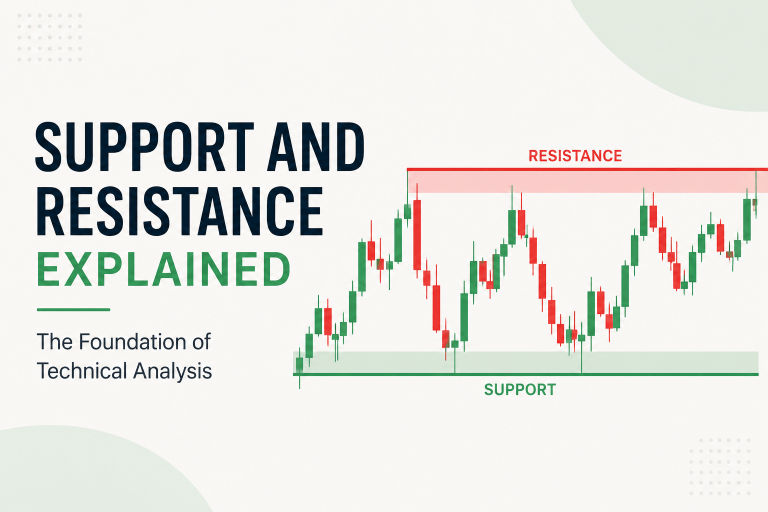
A breakout occurs when the price of a stock, index, or any tradable instrument moves decisively above a resistance level or below a support level, accompanied by increased participation.
In simple terms:
- A resistance breakout happens when price moves above a level where selling pressure previously stopped rallies.
- A support breakdown happens when price falls below a level where buying interest previously prevented declines.
Why Are Breakouts Important?
Support and resistance levels represent zones of agreement between buyers and sellers. When price breaks out of these zones, it signals that:
- Buyers have overwhelmed sellers (upside breakout), or
- Sellers have overwhelmed buyers (downside breakout)
This shift often leads to trend initiation or trend continuation.
Breakout vs Normal Price Fluctuation
Not every move beyond a level is a breakout. A genuine breakout usually shows:
- Strong candle close beyond the level
- Expansion in volume
- Follow-through price action
A mere intraday spike without confirmation is often just volatility, not a breakout.
Types of Breakouts in Technical Analysis
Breakouts come in various forms. Traders should understand different breakout types to apply the right strategy.
-
Resistance Breakout
Occurs when price breaks above a well-defined resistance zone. Often seen after consolidation.
-
Support Breakdown
Occurs when price falls below a strong support level, indicating increasing bearish pressure.
-
Momentum Breakout
Happens when price accelerates sharply with strong momentum, usually supported by indicators like RSI or MACD.
-
Volatility Breakout
Occurs when price moves out of a narrow range after a period of low volatility, often leading to sharp expansion.
-
News or Event Breakout
Triggered by earnings, RBI policy announcements, budgets, or global cues.
-
Chart Pattern Breakouts
Common patterns include:
- Triangles (ascending, descending, symmetrical)
- Flags and Pennants
- Channels
- Double Top and Double Bottom
These patterns reflect compression of price before expansion.
Why Breakouts Happen: Market Psychology Behind Breakouts
Breakouts are not random. They are driven by human behaviour and institutional activity.
Buyer and Seller Pressure
When the price approaches resistance repeatedly, sellers start exhausting. A strong buying push finally breaks the level, leading to panic among sellers.
Fear of Missing Out (FOMO)
Once a breakout occurs, traders who missed earlier entries rush in, adding fuel to the move.
Short Covering and Long Unwinding
- In upside breakouts, short sellers rush to exit, accelerating gains.
- In downside breakouts, long positions unwind rapidly.
Institutional Participation
Large institutions accumulate positions quietly during consolidation. Breakouts often occur when institutions start deploying capital aggressively.
How to Confirm a Breakout (Critical for Avoiding False Signals)
One of the biggest mistakes traders make is entering breakouts without confirmation.
- Volume Expansion
A genuine breakout is usually supported by higher-than-average volume, indicating strong participation.
- Candle Close Beyond the Level
A breakout is more reliable when price closes above resistance or below support, not just spikes intraday.
- Retest of the Breakout Level
Often, price breaks out and then retests the previous resistance (now support). Holding this retest strengthens the breakout.
- Trend Indicators
Indicators like:
- 20-EMA and 50-EMA alignment
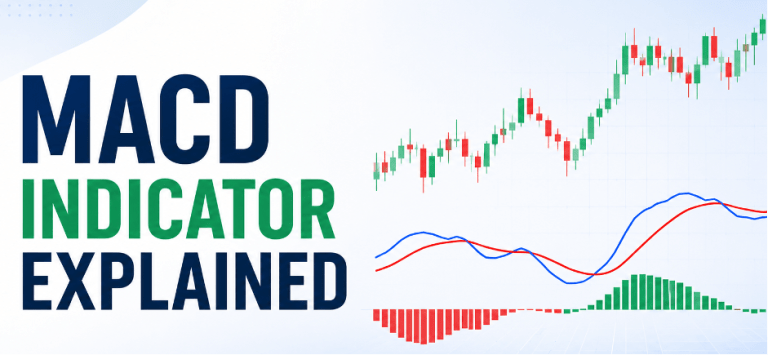
- MACD crossover
- RSI holding above 60 (for bullish breakouts)
These help confirm momentum.
- Broader Market Context
Breakouts work better when aligned with:
- Index trend (Nifty, Bank Nifty)
- Sectoral strength
Trading breakouts against the broader trend increases failure probability.
How to Trade Breakouts: A Step-by-Step Process (Trading Breakouts)
Step 1: Identify Key Zones
Mark:
- Horizontal support and resistance
- Trendlines
- Chart patterns
Focus on levels tested multiple times.
Step 2: Wait for the Breakout
Avoid anticipation. Let price close beyond the level.
Step 3: Confirm the Breakout
Check:
- Volume expansion
- Candle structure (strong body, small wicks)
- Market and sector alignment
Step 4: Entry Strategy
Two common entry methods:
- Breakout close entry (aggressive)
- Retest entry (conservative)
Step 5: Stop-Loss Placement
Logical stop-loss levels include:
- Below breakout candle low
- Below retest support
- Below last swing low (for upside breakouts)
Step 6: Target Setting
Targets can be calculated using:
- Range measurement (height of consolidation added to breakout point)
- Previous swing highs/lows
- Fibonacci extensions
Realistic Examples of Breakout Trades
Example 1: Resistance Breakout After Consolidation
A stock trades between ₹480–₹500 for several weeks. Volume contracts. Price finally closes above ₹500 with strong volume.
Entry above ₹502, stop-loss below ₹495.
Target calculated using range = ₹520.
Example 2: Support Breakdown in a Downtrend
A stock finds repeated support at ₹1,200. Broader market weakens. Price closes below ₹1,200 with heavy volume.
Entry below ₹1,195, stop-loss above ₹1,215.
Example 3: Ascending Triangle Breakout
Higher lows meet flat resistance. Breakout occurs on volume expansion, leading to trend continuation.
Common Mistakes Traders Make While Trading Breakouts
Entering Too Early
Anticipating breakouts without confirmation often leads to losses.
Trading Every Breakout
Not all breakouts are tradable. Quality matters more than quantity.
Ignoring False Breakouts
Low-volume breakouts often fail.
No Stop-Loss Discipline
Breakouts can fail quickly. Stop-loss is non-negotiable.
Chasing Price
Late entries reduce reward-to-risk and increase emotional stress.
How Samco Helps Traders Identify Breakouts
Samco provides tools that assist traders in:
- Identifying trend strength
- Analysing volume behaviour
- Tracking price action across timeframes
- Planning trades with better risk control
These tools help traders filter high-probability breakout setups instead of reacting impulsively.
FAQs on Breakouts in Trading
What are breakouts in trading?
Breakouts occur when the price moves decisively above resistance or below support, signalling potential trend initiation.
Are breakouts reliable?
Breakouts are reliable when confirmed with volume, candle close, and market alignment.
How do beginners trade breakouts?
Beginners should trade well-defined breakouts with confirmation, strict stop-loss, and limited position size.
Conclusion
Breakouts are among the most potent concepts in technical analysis, but they require patience, confirmation, and discipline. Understanding what breakouts are, why they occur, and how to trade breakouts systematically helps traders avoid emotional decisions and false signals. When combined with sound risk management and a broader market context, breakout trading can become a consistent and effective trading approach in the Indian stock market.