

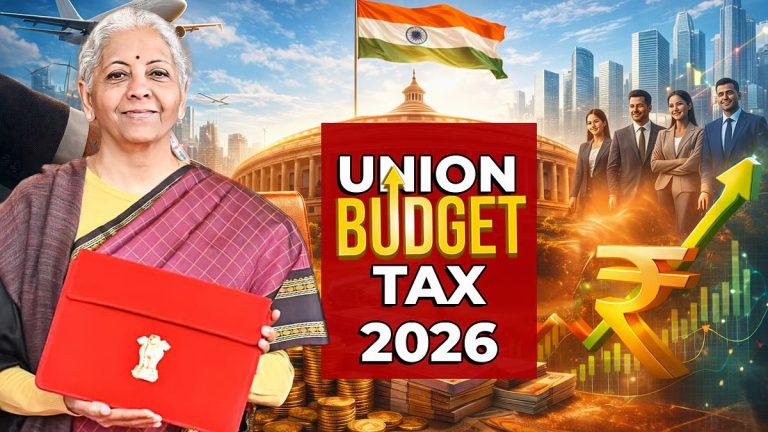
When Finance Minister Nirmala Sitharaman stood up to present Budget 2026, one announcement quietly changed how Indians pay for expenses abroad. The government decided to sharply cut Tax Collected at Source (TCS) on overseas spending.
The TCS rate, which earlier stood at 5% and even 20% in some cases, has now been brought down to a flat 2% for key categories. This includes foreign education, medical treatment, and overseas tour packages.
It may sound like a small percentage move. But for many taxpayers, it directly impacts cash flow and money blocked upfront.
Market Performance Context: Why This Budget 2026 Move Matters?
Budget announcements often shape spending behaviour rather than stock prices alone. In Budget 2026, the TCS cut signals a softer approach toward global spending by Indian residents.
Overseas travel, education, and healthcare expenses had seen higher upfront tax outgo in recent years. This change brings relief at the transaction level, not later during refunds.
The focus here is liquidity.
Less money gets blocked at the time of remittance.
Main News: TCS Rate Slashed to 2% in Budget 2026
During the Budget 2026 speech in Parliament, the Finance Minister made the intent clear.
The TCS rate on overseas tour programme packages has been reduced from 5% and 20% to 2%, without any amount-based condition.
This change also applies to certain foreign remittances made under education and medical categories.
Key takeaway from Budget 2026
The government is lowering upfront tax collection while keeping post-filing adjustments intact.
What Is TCS and Why Does It Apply?
Whenever an Indian resident sends money abroad, Indian rupees are converted into foreign currency.
These remittances fall under the Reserve Bank of India’s Liberalised Remittance Scheme (LRS).
Key rule under LRS:
- Resident Indians can remit up to $250,000 in one financial year.
At the time of such remittance, TCS is collected as advance tax.
This amount is not an extra tax.
It is later adjusted against the final income tax liability.
How TCS Worked Before Budget 2026?
Before this Budget 2026 announcement, TCS rates varied by purpose.
Here’s how it stood earlier:
- Education
- No TCS up to ₹10 lakh
- 5% TCS on amount above ₹10 lakh
- Education funded by loan
- No TCS applicable
- Medical treatment
- No TCS up to ₹10 lakh
- 5% TCS beyond ₹10 lakh
- Overseas tour packages
- 5% TCS up to ₹10 lakh
- 20% TCS above ₹10 lakh
These rates often meant a large upfront cash outgo.
What Changes After Budget 2026?
From the next financial year, Budget 2026 reduces the TCS rate to 2% across these categories where applicable.
The structure of exemptions remains the same.
What changes is the percentage deducted upfront.
This directly reduces the cash blocked during remittance.
Simple Example: How the Numbers Change?
Consider an overseas expense of ₹30 lakh.
Earlier:
- TCS applied on ₹20 lakh
- At 5%, cash blocked = ₹1,00,000
After Budget 2026:
- TCS at 2%
- Cash blocked = ₹40,000
That’s a ₹60,000 reduction in upfront outflow.
The tax adjustment still happens during income tax return filing.
How TCS Is Adjusted During ITR Filing?
TCS paid during the year is treated as advance tax.
At the time of filing the income tax return:
- It is adjusted against total tax liability
- Any excess amount becomes a refund
For many taxpayers, large TCS amounts earlier meant waiting months for refunds.
With Budget 2026 lowering TCS, the amount pending for adjustment becomes smaller.
Why Budget 2026 Focuses on Liquidity?
The key shift in Budget 2026 is not tax savings.
It is timing.
Lower TCS means:
- Less money blocked upfront
- Lower immediate cash burden
- Faster alignment with actual tax liability
This matters more when remittances are large and time-sensitive.
Who Benefits the Most from This Budget 2026 Change?
- Families paying for overseas education
- Individuals funding medical treatment abroad
- Travellers booking international tour packages
The reduction does not eliminate TCS.
It simply makes the process lighter at the payment stage.
Company & Policy Details at a Glance
Policy Reference: Union Budget 2026
Announced By: Finance Minister Nirmala Sitharaman
Key Change: TCS rate reduced to 2%
Earlier Rates: 5% and up to 20%
Applicable To:
- Foreign education
- Medical treatment
- Overseas tour programmes
Remittance Limit: $250,000 per financial year under LRS
Summary: Budget 2026’s Quiet but Practical Tax Move
The Budget 2026 TCS reduction does not change how much tax a person ultimately pays.
It changes when the money leaves your pocket.
By lowering TCS to 2%, the government eases immediate cash pressure during overseas spending.
For taxpayers, it means:
- Lower upfront deductions
- Smaller refunds pending later
- Better short-term liquidity
It’s a subtle shift, but one that many households and travellers will feel the moment they make a foreign payment under Budget 2026.
Source: Livemint