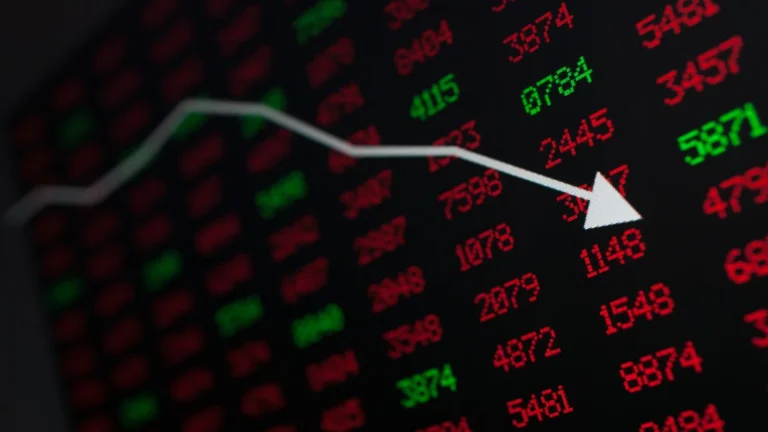
Markets often communicate important signals through recurring patterns, and one such pattern has recently appeared in the Nifty 50 index. The benchmark index has opened with gap downs of more than 1% on two consecutive trading sessions, a rare event that historically signals heightened market stress rather than an immediate buying opportunity.
Why Consecutive Gap Downs Matter in the Nifty 50?
When the Nifty 50 records back-to-back gap downs exceeding 1%, it usually indicates that investors are reacting to significant global or macroeconomic developments. Such sharp declines at the opening bell often reflect overnight negative triggers, institutional selling, or a sudden shift in market sentiment.
In most cases, expecting an instant recovery after this pattern appears can be overly optimistic. Historically, markets tend to remain volatile or drift lower for a few sessions before stabilizing.
Historical Instances of Double Gap Downs in Nifty
Data since the inception of the Nifty 50 shows only eight previous instances where the index opened with two consecutive gap downs of more than 1%. These events largely coincided with periods of global uncertainty, including:
- The European debt crisis in 2011
- The COVID-19 market crash in March 2020
- The global selloffs during the 2022 Russia-Ukraine conflict and aggressive rate hikes
On 4 March 2026, markets recorded the ninth occurrence of this pattern. The current trigger stems from escalating geopolitical tensions in the Middle East, including US-Israel strikes on Iran, reports surrounding the killing of Iran’s Supreme Leader, and concerns about potential disruptions in the Strait of Hormuz, which have pushed crude oil prices higher.
What Forward Returns Reveal?
Historical data highlights a consistent trend. Across the previous eight occurrences:
- 3-day forward returns were negative on average
- 4-day and 5-day forward returns also showed continued weakness
Even after excluding the extreme COVID-19 crash in March 2020, the average forward returns still indicated either sideways movement or mild declines, suggesting that V-shaped recoveries are uncommon after such patterns.
Institutional Activity and Market Structure
Back-to-back gap downs of this magnitude rarely occur randomly. They often indicate that institutional investors are reducing risk exposure rather than merely rotating between sectors.
The current market environment reflects several structural pressures:
- Foreign Institutional Investors (FIIs) have remained persistent sellers.
- India VIX has moved above 20, signaling rising volatility.
- The Indian rupee is facing pressure.
- Brent crude oil prices are rising due to supply disruption fears.
- The Bank of Japan’s recent rate hike has tightened global liquidity conditions.
Together, these factors create a risk-off environment that typically takes time for markets to absorb.
Key Takeaway for Investors
Two consecutive gap downs of more than 1% in the Nifty 50 are not typically a buy signal. Instead, they often indicate that the market is adjusting to a larger macro shock.
For investors, the most prudent approach may be to:
- Avoid panic selling
- Refrain from aggressive bottom-fishing
- Maintain disciplined risk management and stop-loss levels
- Wait for clearer signs of market stability before increasing exposure
History suggests that markets usually need time to digest such shocks before forming a durable bottom.