

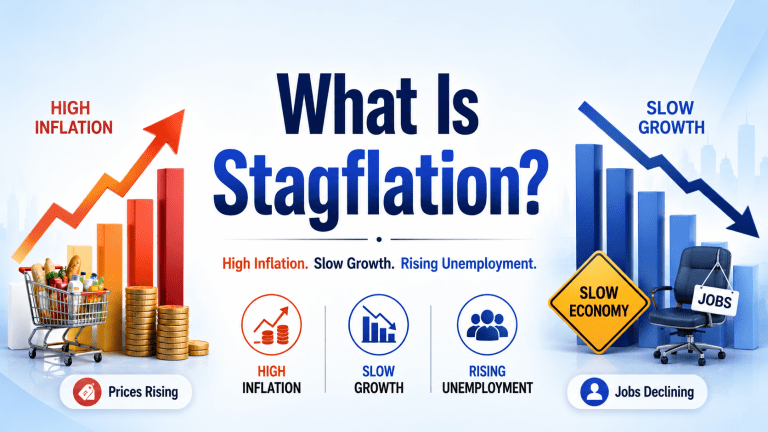
Economic terms often make headlines during periods of uncertainty, and one such term that has recently gained attention is stagflation. While inflation and slow growth are common economic challenges individually, stagflation occurs when both happen simultaneously, creating a difficult environment for consumers, businesses, and governments.
Understanding stagflation can help investors make sense of market movements and economic policy decisions.
What Is Stagflation?
Stagflation is an economic condition characterized by three factors occurring at the same time:
- High inflation
- Slow or stagnant economic growth
- Rising unemployment
Under normal circumstances, inflation tends to rise when the economy is growing strongly. However, during stagflation, prices continue to increase even as economic activity weakens and job creation slows.
This unusual combination makes stagflation one of the most challenging economic situations to address.
What Causes Stagflation?
Several factors can contribute to stagflation:
1. Rising Energy and Commodity Prices
A sharp increase in oil, gas, or other commodity prices can raise production and transportation costs across industries. Businesses often pass these costs on to consumers, leading to higher inflation while economic growth slows.
2. Supply Chain Disruptions
Shortages of raw materials, manufacturing bottlenecks, or logistics issues can reduce production capacity and increase prices at the same time.
3. Geopolitical Events
Wars, trade restrictions, sanctions, and geopolitical tensions can disrupt global supply chains and push commodity prices higher, increasing stagflation risks.
4. Policy Mistakes
Excessive monetary stimulus combined with weak productivity growth may fuel inflation without generating sustainable economic expansion.
Warning Signs of Stagflation
Investors and economists often monitor the following indicators:
- Persistently high inflation
- Slowing GDP growth
- Rising unemployment levels
- Weak consumer spending
- Increasing commodity prices
- Declining business confidence
When these factors begin appearing together, concerns about stagflation typically increase.
How Does Stagflation Affect Financial Markets?
Stock Markets
Higher costs and weaker consumer demand can pressure corporate earnings, often leading to increased volatility in equity markets.
Bond Markets
Inflation reduces the real value of fixed-income returns, making traditional bonds less attractive to investors.
Consumers
Households experience a decline in purchasing power as the cost of living rises faster than income growth.
Businesses
Companies may face shrinking profit margins due to higher operating expenses and weaker demand for goods and services.
Why Is Stagflation Difficult for Policymakers?
Central banks usually combat inflation by raising interest rates. However, higher rates can further slow economic growth and employment.
On the other hand, measures designed to stimulate growth can increase inflationary pressures. This creates a policy dilemma, making stagflation particularly difficult to resolve.
What Should Investors Do During Stagflation?
While every economic cycle is different, investors generally focus on:
- Maintaining a diversified portfolio
- Avoiding decisions based on short-term market noise
- Monitoring inflation and economic growth trends
- Focusing on fundamentally strong businesses
- Reviewing asset allocation periodically
Long-term investment discipline often becomes especially important during periods of economic uncertainty.
Conclusion
Stagflation is a rare but challenging economic phenomenon where inflation remains high even as growth slows and unemployment rises. Triggered by factors such as supply shocks, rising energy prices, and geopolitical disruptions, it can create headwinds for both consumers and financial markets.
By understanding the causes and warning signs of stagflation, investors can better interpret market developments and make more informed financial decisions during uncertain economic conditions.
Key Takeaways
✔ Stagflation combines high inflation, slow growth, and rising unemployment.
✔ Energy shocks and supply chain disruptions are common triggers.
✔ Both stock and bond markets can face pressure during stagflationary periods.
✔ Policymakers face challenges because actions to reduce inflation can slow growth further.
✔ Diversification and long-term investing remain important during economic uncertainty.
Disclaimer: This article is for educational and informational purposes only and should not be construed as investment advice, a recommendation, or a solicitation to buy or sell any securities. Investors should conduct their own research and consult a SEBI-registered investment adviser before making investment decisions. Investments in the securities market are subject to market risks. Read all related documents carefully before investing.