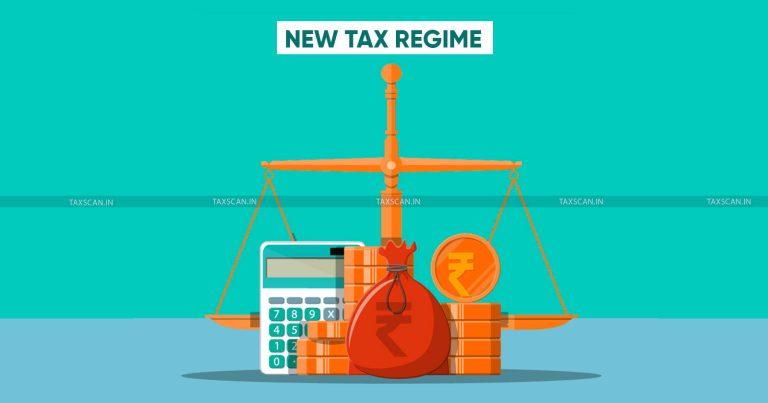
As the Union Budget 2026 approaches on February 1, personal income tax remains in sharp focus. Over the last few years, the government has steadily shifted away from the old, exemption-heavy system. Today, the New Tax Regime is positioned as the main framework for individual taxpayers, following major reforms introduced in Budget 2025.
For millions of taxpayers, this regime offers clarity, simplicity, and meaningful relief, making tax compliance smoother and more predictable.
What Is the New Tax Regime?
The New Tax Regime is a simplified tax system designed to reduce paperwork and make income tax calculation straightforward.
Key highlights:
- Lower tax rates in exchange for giving up most exemptions and deductions
- Default option for individuals from FY 2024–25
- Focuses on clear income slabs rather than multiple deductions like Section 80C, HRA, and LTA
- Taxpayers who wish to continue under the old system must opt out actively
This approach aims to streamline taxation, making it easier for taxpayers to understand and manage their liabilities.
How Budget 2025 Strengthened the Regime?
Budget 2025 introduced reforms that made the new regime more attractive, especially for middle and upper-middle-income earners.
Key changes include:
- Widened tax slabs: Reduced the burden on taxpayers earning between Rs 15 lakh and Rs 24 lakh
- Top tax rate revised: 30% now applies only to income above Rs 24 lakh (earlier Rs 15 lakh)
- Gradual progression: Smoothens tax liability and avoids sudden spikes
These adjustments made the system more equitable while maintaining simplicity.
Higher Tax-Free Income Threshold
One of the most significant reforms was the increase in Section 87A rebate:
- Taxpayers with taxable income up to Rs 12 lakh can now claim a rebate of up to Rs 60,000, effectively bringing their tax liability to zero
- Previously, the rebate applied only to income up to Rs 7 lakh
- The standard deduction for salaried employees and pensioners was raised to Rs 75,000
For instance, a salaried individual earning Rs 12 lakh before deduction now pays no tax under the new regime—a relief that was not available earlier.
Revised Slab Structure for FY 2025–26
The New Tax Regime taxes income progressively as follows:
|
Up to 4 lakh |
0% |
|
4 lakh – 8 lakh |
5% |
|
8 lakh – 12 lakh |
10% |
|
12 lakh – 16 lakh |
15% |
|
16 lakh – 20 lakh |
20% |
|
20 lakh – 24 lakh |
25% |
|
Above 24 lakh |
30% |
This structure ensures a gradual increase in tax liability, eliminating sudden jumps and making planning easier for individuals.
Marginal Relief and Surcharge Adjustments
To prevent a sharp increase in tax just above the rebate threshold:
- Marginal relief applies for incomes slightly above Rs 12 lakh, ensuring extra tax does not exceed additional income earned
- Maximum surcharge reduced to 25%, benefiting high-income earners
These tweaks make post-tax income smoother and more predictable.
Limited but Targeted Deductions Remain
While the new regime removes most exemptions, a few targeted deductions continue:
- Employer contributions to the National Pension System (NPS) under Section 80CCD(2)
- Contributions to the Agniveer Corpus Fund
- Incentives linked to employment generation
These selective deductions encourage specific savings and investment without complicating the system.
What to Expect from Budget 2026?
With the core structure already established, Budget 2026 is expected to focus on fine-tuning rather than major changes. The government continues to position the New Tax Regime as a low-tax, low-complexity framework suitable for a wide range of taxpayers.
- Clarity and simplicity remain central to the system
- Taxpayers can expect predictable liabilities and smoother planning
- The regime now stands as the preferred framework for individuals across India
Source: India Today