

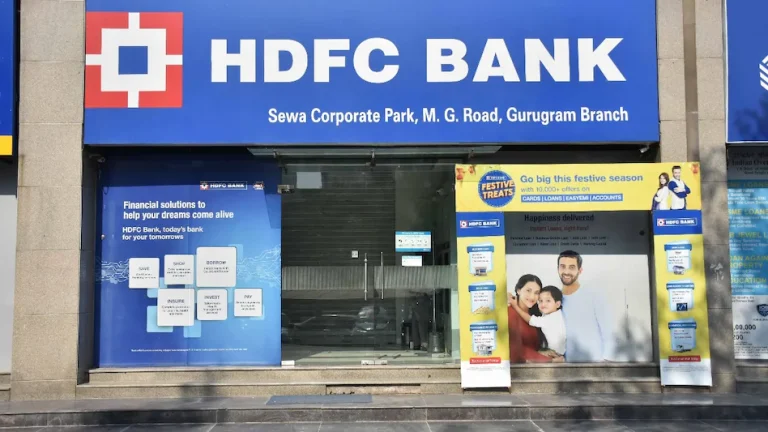
HDFC Bank is one of India’s largest and most influential private sector banks. Over the past three decades, it has built a strong reputation for consistent growth, sound risk management, and stable profitability.
This article explains the full form of HDFC, explores the HDFC Bank profile, traces its history, clarifies its position within the HDFC Group of companies, and reviews its latest financial results.
Full Form of HDFC Bank
The full form of HDFC is Housing Development Finance Corporation.
HDFC Bank originally stood for Housing Development Finance Corporation Bank, as it was promoted by HDFC Ltd, a pioneer in India’s mortgage finance sector.
HDFC Ltd was initially focused on home loans but later expanded into broader financial services. In July 2023, HDFC Ltd merged into HDFC Bank, reshaping the bank’s structure and scale.
HDFC Bank Profile
Founding & Head Office
HDFC Bank was incorporated in 1994 in Mumbai and began operations in January 1995.
Core Business
The bank operates across:
- Retail banking
- Corporate banking
- Home, auto, and personal loans
- Credit cards and digital payments
- Savings and current accounts
- Treasury and wholesale banking
Scale & Presence
HDFC Bank has one of the largest branch and ATM networks among private banks in India, serving millions of customers across urban and rural regions.
Leadership
The CEO & MD is Sashidhar Jagdishan.
History in Brief
- Incorporated in 1994 during India’s private banking liberalisation phase.
- Acquired Times Bank in 2000.
- Merged with Centurion Bank of Punjab in 2008.
- Completed a historic merger with HDFC Ltd in July 2023, creating a larger unified financial institution.
HDFC Group of Companies & Ownership
The broader HDFC Group of companies previously included:
- HDFC Ltd
- HDFC Bank
- HDFC Life
- HDFC ERGO
- HDFC Mutual Fund
After July 1, 2023, HDFC Ltd merged into HDFC Bank. Post-merger, HDFC Bank operates as a standalone listed entity with diversified public shareholding.
Latest Financial Report of HDFC Bank
FY2024-25 Highlights
- Total Net Revenue: Rs 1,68,302.4 crore (up ~6.7% YoY)
- Net Profit: Rs 67,347.4 crore (up ~10.7% YoY)
- Net Interest Income (NII): Rs 1,22,670.1 crore (up ~13%)
- Gross NPA: ~1.33%
- Balance Sheet Size: Over Rs 39 lakh crore
Quarterly Trends
In Q1 FY26, standalone profit rose about 12% to Rs 18,155 crore, reflecting steady earnings momentum and asset quality control.
Key Business Segments & Drivers
HDFC Bank’s growth is driven by:
- Strong retail and corporate loan growth
- Expanding credit card and digital ecosystem
- Stable net interest margins
- Fee-based income streams
- Focus on asset quality and deposit mobilisation
Post-merger, the bank is focused on managing its loan-to-deposit ratio and strengthening capital efficiency.
FAQs
1. What is the full form of HDFC Bank?
HDFC stands for Housing Development Finance Corporation.
2. How did HDFC Bank originate?
It was incorporated in 1994 as a subsidiary of HDFC Ltd during the private banking reforms.
3. What are the recent financial results of HDFC Bank?
In FY2024-25, the bank reported Rs 1,68,302.4 crore in revenue and Rs 67,347.4 crore in net profit.
4. What companies were part of the HDFC Group?
The group included HDFC Ltd, HDFC Life, HDFC ERGO, and HDFC Mutual Fund.
5. How did the HDFC Ltd merger change HDFC Bank?
The merger significantly expanded the balance sheet and integrated housing finance operations into the bank.
Conclusion
HDFC Bank has evolved from a newly licensed private bank in 1994 into one of India’s largest financial institutions. With strong fundamentals, diversified revenue streams, and disciplined risk management, it remains a key player in India’s banking sector.
If you want to analyse HDFC Bank or compare it with other financial stocks, explore Samco’s fundamental analysis tools and stock screener to make informed investment decisions.