

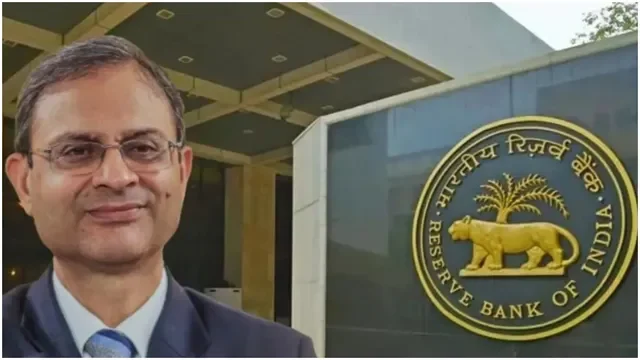
The December RBI monetary policy announcement turned into one of those rare days when the market pauses, listens, and recalibrates. The RBI MPC meeting delivered a decision that instantly became the talking point of the day — a 25 bps repo rate cut, pulling the benchmark rate down to 5.25%.
The tone from RBI Governor Sanjay Malhotra was steady and confident. The central bank highlighted easing inflation and strong growth momentum, shaping a policy outcome that blends caution with opportunity. And like every major policy day, this one too set off fresh discussions across the banking, financial, and corporate ecosystems.
Market Performance: A Policy Day That Shifted The Mood
Policy days always bring a sense of anticipation. With inflation cooling and growth staying firm, the market was already watching the RBI's monetary policy closely. But a rate cut wasn’t a widely expected move.
Once the repo rate dropped to 5.25%, the tone across sectors changed quickly. Liquidity-sensitive themes, loan-linked sectors, and macro watchers spent the morning recalculating the near-term direction of money flow in the economy.
The highlight, of course, was the rate action:
- Repo Rate: 5.25%
- SDF Rate: 5% (revised from 5.25%)
- MSF Rate: 5.50%
These operational changes guide short-term borrowing and deposit dynamics in the banking system.
Main News: RBI MPC Decision & What Was Announced
The central bank’s 25 bps rate cut set the stage for the rest of the policy. But the announcement carried deeper layers — from liquidity moves to inflation forecasts — turning this into a multi-dimensional update.
Repo Rate Reduced to 5.25%
The repo rate, the heartbeat of India’s monetary system, now stands at 5.25%.
The tone from the Governor focused on:
- Record-low inflation trends
- GDP growth at 8% in the first half of the year, creating what he called a “Goldilocks” setting
Alongside the repo rate cut, the RBI recalibrated two critical tools:
- Standing Deposit Facility (SDF): 5%
- Marginal Standing Facility (MSF): 5.50%
These shifts help fine-tune liquidity after a major rate action.
RBI’s Growth Outlook: Estimates Revised Upward
As part of the RBI MPC decision, the central bank revised India’s growth projections higher. The numbers reflect confidence in domestic drivers across consumption, agriculture, taxation reforms, and corporate balance sheet strength.
Revised GDP Growth Estimates
- FY26: 7.3% (earlier 6.8%)
- Q3 FY26: 7% (earlier 6.4%)
- Q4 FY26: 6.5% (earlier 6.2%)
- Q1 FY27: 6.7% (earlier 6.4%)
According to the central bank, India’s economy is likely to grow 6.8% in Q2 FY27.
The narrative from the Governor pointed toward supportive domestic conditions — agricultural momentum, the impact of GST rationalization, strong institutional balance sheets, and conducive monetary conditions.
Inflation Forecast: RBI Revises CPI Outlook Downward
One of the biggest anchors of this RBI monetary policy was the sharp downward revision in inflation projections. Food prices have remained exceptionally soft, helping the CPI trajectory shift to a much lower range.
Revised Inflation Estimates
- FY26: 2% (earlier 2.6%)
- Q3 FY26: 0.6% (earlier 1.8%)
- Q4 FY26: 2.9% (earlier 4%)
- Q1 FY27: 3.9% (earlier 4.5%)
RBI expects 4% inflation in Q2 FY27.
With headline inflation easing faster than previous projections, the central bank positioned these revisions as a natural response to evolving price behavior.
Liquidity Moves: OMO Purchases & USD/INR Swap
The December policy also included significant liquidity measures. To support durable liquidity and smooth monetary transmission, the RBI will roll out two key operations:
- OMO Purchases: ₹1,00,000 crore in government securities
- USD/INR Buy-Sell Swap: $5 billion for 3 years
These moves aim to ensure the banking system remains well-supplied with liquidity after the rate cut.
Consumer Protection Push: Two-Month Grievance Campaign
The RBI also turned its attention to customer grievance redressal.
A two-month nationwide campaign will begin on 1 January, focused on clearing all complaints pending for more than a month with the RBI Ombudsman.
With grievance volumes rising in recent years, this initiative is aimed at addressing the backlog efficiently by working closely with regulated entities.
Company Details / RBI Operational Framework Snapshot
Here are the policy tools and operational rates revised in the announcement:
Key Rates After the Policy
- Repo Rate: 5.25%
- Standing Deposit Facility (SDF): 5%
- Marginal Standing Facility (MSF): 5.50%
Macro Forecasts at a Glance
- FY26 GDP Growth: 7.3%
- FY26 CPI Inflation: 2%
These numbers summarize the updated foundation for monetary management in the coming quarters.
Summary
The latest RBI monetary policy turned into a headline moment, with the RBI MPC meeting delivering a 25 bps repo rate cut to 5.25%. Alongside the rate action, the central bank raised its growth outlook and sharply cut inflation forecasts, setting a refreshed tone for the economic landscape.
Liquidity measures — including ₹1,00,000 crore OMO purchases and a $5 billion USD/INR swap — add an extra layer of support to the system. And a new grievance redressal push reflects RBI’s focus on consumer-facing reforms.
In one sweep, the RBI MPC decision reshaped the interest rate outlook, liquidity framework, and growth-inflation balance, making this one of the most defining policy updates of the year.




 Easy & quick
Leave A Comment?