


Among the many tools available in technical analysis, trendlines remain one of the simplest yet most powerful ways to understand market direction. A single well-drawn line can reveal whether buyers or sellers are controlling the market and where price may react next.
Trendline trading is based on the idea that price tends to respect certain directional paths. By connecting important highs or lows on a chart, traders can visualize the underlying trend and anticipate possible entry or exit points.
Trendlines help you see the market’s structure — identifying the direction of price movement, the strength of trends, and potential reversal zones. Many professional traders rely on them because they provide clear visual guidance without requiring complex indicators.
In this guide, we will explain what trendlines are, how to draw them properly, how traders use them in real strategies, and the common mistakes beginners should avoid. By the end, you will understand how to apply trendline trading techniques to identify opportunities and manage trades more effectively.
What Are Trendlines?
A trendline is a straight line drawn on a chart to connect important price points. It helps traders visualize the direction of the market and identify areas where price may react.
Simply put, trendlines show whether the market is moving upward, downward, or sideways.
If you are wondering what are trend lines, the answer is straightforward: they are visual guides that connect multiple price levels to highlight the dominant trend.
There are three primary types of trendlines:
Uptrend Line
An uptrend line connects higher lows during a rising market. It shows that buyers continue to step in at higher prices.
Downtrend Line
A downtrend line connects lower highs during a falling market. This indicates persistent selling pressure.
Horizontal Trendline
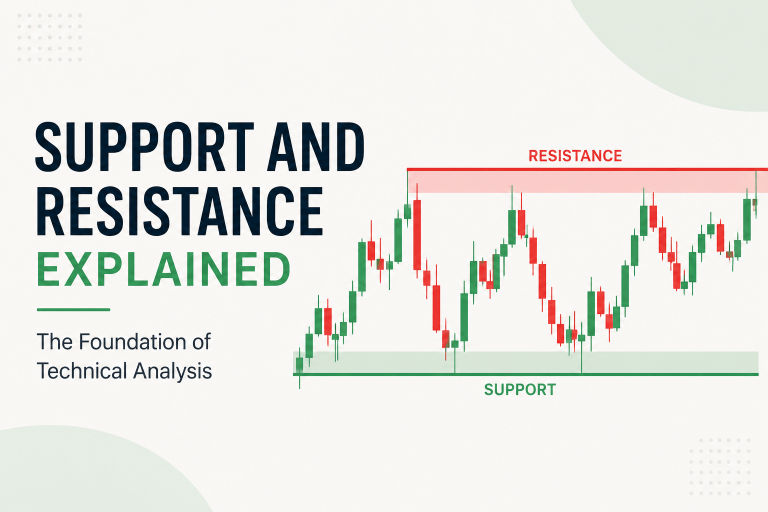
Sometimes price moves within a range rather than trending strongly. In such cases, horizontal trendlines highlight support and resistance zones.
It is important to understand that trendlines are not meant to be perfectly precise. Instead, they act as reference guides that adapt to the overall price structure.
How to Draw Trendlines Correctly?
Drawing trendlines properly is essential for effective trendline trading. Poorly drawn lines often lead to misleading signals.
Here are the key steps to draw reliable trendlines.
Identify Swing Points
The first step is to locate clear swing highs or swing lows on the chart.
For an uptrend line, connect the important swing lows.
For a downtrend line, connect the major swing highs.
These swing points represent areas where the market paused before continuing its move.
Connect At Least Two Points
A valid trendline requires at least two touchpoints.
However, most traders prefer a third touch to confirm that the trendline is respected by the market.
The more times price interacts with a trendline without breaking it, the more significant it becomes.
Pay Attention to the Angle
Trendlines that are extremely steep often break quickly because the trend cannot sustain that pace.
A moderate slope usually represents a more sustainable trend.
Use the Body or Wicks Carefully
Some traders draw trendlines using candle bodies, while others use wicks. In practice, slight variations are acceptable as long as the line captures the overall price structure.
Avoid Forcing Trendlines
One of the most common mistakes is forcing a line to fit the chart. If the price points do not align naturally, the trendline is likely invalid.
A trend line chart should look natural and clearly connect key price levels.
Types of Trendline Setups
Trendlines can form different market structures that traders use to understand price behavior.
Uptrend Lines
In an uptrend, prices form higher highs and higher lows. The trendline connects these rising lows and acts as a dynamic support level.
Traders often look for buying opportunities when price pulls back toward this line.
Downtrend Lines
In a downtrend, prices create lower highs and lower lows. The trendline connects the falling highs and acts as resistance.
Traders may look for selling opportunities when price approaches the line.
Horizontal Trendlines
When the market moves sideways, horizontal lines help identify support and resistance zones. These levels often create range trading opportunities.
Trendline Channels
Sometimes price moves within parallel lines, forming a channel. The lower line acts as support while the upper line acts as resistance.
Channel trading allows traders to buy near the lower boundary and sell near the upper boundary.
Trendline Trading Strategies
Trendlines are not just visual tools; they also form the basis of practical trading strategies.
Breakout Trading
A breakout occurs when price moves decisively beyond a trendline.
In trendline breakout trading, traders watch for a strong close above a downtrend line or below an uptrend line.
Confirmation signals such as increased trading volume or strong momentum often strengthen the breakout signal.
A common strategy is to enter a trade after the breakout and place a stop-loss near the previous trendline.
Pullback Strategy
Another popular method is trading pullbacks.
In an uptrend, price may temporarily decline toward the trendline before continuing higher. Traders often buy near the trendline if the price shows signs of support.
Similarly, in a downtrend, price may retrace toward the trendline before resuming its decline.
Channel Trading
When prices move within a channel, traders can use the boundaries for trading decisions.
Buying near the lower channel line and selling near the upper line allows traders to capitalize on predictable price oscillations.
False Breakouts
Not every breakout leads to a strong trend. Sometimes the market briefly breaks a trendline and then reverses.
To filter such false signals, traders often use confirmation tools such as candlestick patterns, momentum indicators, or volume analysis.
Combining Trendlines with Other Indicators
Trendlines become even more powerful when combined with other technical tools.
Volume
A breakout supported by strong trading volume often signals genuine participation from market participants.
Weak volume during a breakout may indicate a false move.
RSI or Momentum Indicators
Momentum indicators such as the Relative Strength Index help confirm whether the market is gaining or losing strength.
For example, if price breaks a trendline while RSI shows bullish momentum, the signal becomes stronger.
Moving Averages
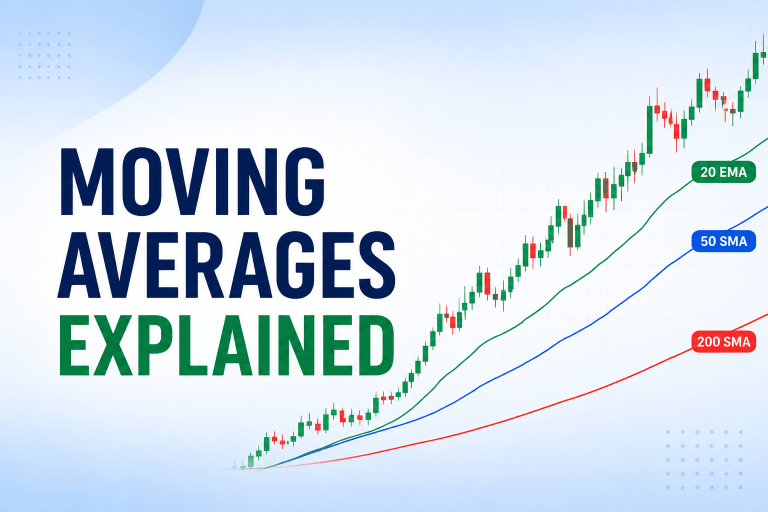
Moving averages help determine the broader trend direction. When a trendline aligns with a major moving average, the level becomes more significant.
Fibonacci Retracement
Fibonacci levels often overlap with trendlines. These confluence areas attract strong reactions from traders.
Using multiple confirmation tools improves the reliability of trendline trading signals.
Common Mistakes to Avoid
Although trendlines are simple to draw, beginners often misuse them.
One common mistake is forcing trendlines to fit price movements. This usually results in misleading signals.
Another issue is drawing trendlines using only two points without waiting for confirmation. A third touch often validates the trendline.
Many traders also ignore the broader trend context. Trading against the dominant trend increases risk.
Breakouts without volume confirmation can also lead to false signals.
Finally, traders sometimes forget to adjust trendlines as new price data emerges. Markets evolve continuously, so trendlines should be updated accordingly.
Real Chart Examples
Consider a stock that has been rising steadily for several weeks. Each pullback forms a higher low, allowing a trendline to be drawn connecting these points.
When the price retraces toward this line again, traders may anticipate support and enter long positions if the market shows signs of buying pressure.
In another scenario, a downtrend line connecting lower highs may act as resistance. If price breaks above this line with strong momentum, it could signal the start of a new bullish phase.
Channel structures offer another useful example. When prices oscillate between two parallel trendlines, traders can buy near the lower boundary and take profits near the upper boundary.
Failed breakouts also provide valuable lessons. Sometimes price briefly breaks a trendline but quickly returns within the range. These situations often trap traders and lead to sharp reversals.
Understanding these scenarios helps traders recognize how trendlines behave in real markets.
FAQs on Trendline Trading
Are trendlines subjective?
Yes, some subjectivity exists when drawing trendlines, but following clear rules reduces inconsistencies.
Do trendlines work in all markets?
Trendlines can be applied to stocks, commodities, forex, and derivatives across different timeframes.
How many touches validate a trendline?
Two touches establish a trendline, but three or more touches increase reliability.
Should every trendline breakout be traded?
No. Traders usually wait for confirmation through volume, momentum, or price structure.
Conclusion
Trendline trading remains one of the most effective and accessible techniques in technical analysis. By simply connecting key highs or lows, traders can visualize market direction, identify support and resistance, and anticipate potential breakouts or reversals.
While trendlines are powerful tools, their effectiveness improves when combined with confirmation indicators and sound risk management.
Like any trading skill, mastering trendlines requires practice. By studying charts and observing how price interacts with trendlines over time, traders can develop greater confidence in their analysis.
If you want to improve your chart reading skills, start practicing drawing trendlines on live charts and observe how markets respond to these levels. Over time, this simple tool can become a valuable part of your trading approach.